
According to the CEO of AMEE, “a Moroccan emits nine times less greenhouse gases than a Canadian. Despite this fact, Morocco has a sustainable development strategy desired at the highest level of the State.”
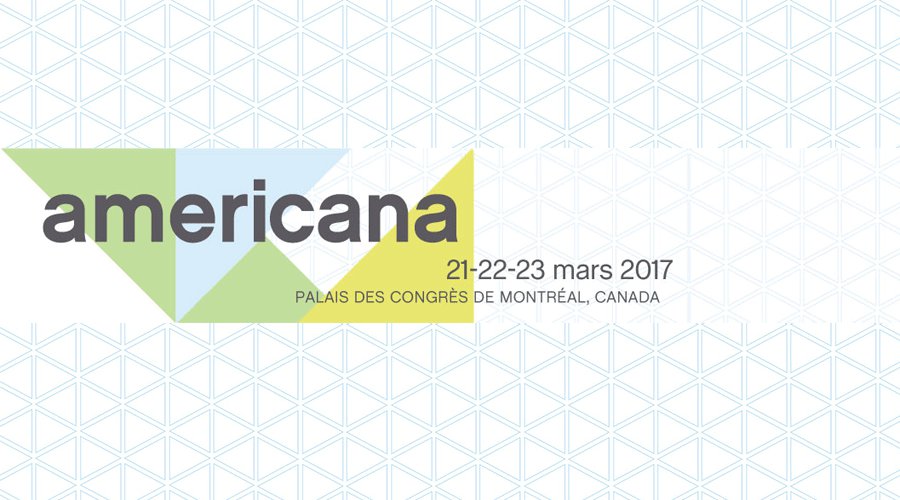
The resilience of cities in the face of impacts linked to climate change and the energy transition were at the heart of the debate this week at the Salon Americana at the Palais des congrès de Montréal.
This multi-sectoral environmental meeting was held from March 21 to 23, 2017, bringing together nearly 10,000 specialists and decision-makers in the field. An event described as major by the mayor of Montreal, Denis Coderre, given the challenges that cities, in particular, are facing in the face of the impacts linked to climate change. Also such a meeting is an opportunity for the exchange of experiences and also to draw inspiration from what is done elsewhere.
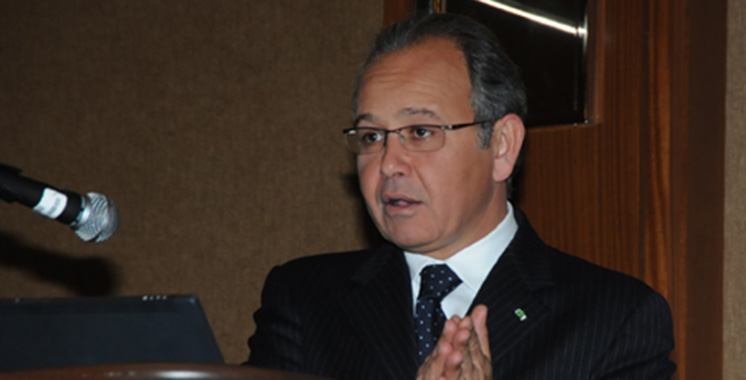
It was precisely the opportunity for Morocco to present its actions and its know-how in this area. On hand to present the proactive national energy policy, Said Mouline, CEO of the Moroccan Agency for Energy Efficiency (Amee). The speaker highlighted in this context that the Kingdom is a low emitter of greenhouse gases: “A Moroccan emits nine times less greenhouse gases than a Canadian. Despite this fact, Morocco has a sustainable development strategy desired at the highest level of the State,” he indicated. To support his presentation, the Amee leader cited the Kingdom’s solar and wind plans among others. Regarding the resilience of cities, Said Mouline discussed the Jiha Tinou program which encourages Moroccan cities to achieve energy management by optimizing the quality of public services provided. Agadir and Chefchaouen are examples in this area, said the speaker. The capital of Souss stands out for its energy management dashboard and an administration travel plan as well as a solar roof at the town hall.
For its part, Chefchaouen also serves as a model with solar heating of the municipal swimming pool. Benguerir, which positions itself as the first green city in Africa and is in the process of obtaining its LEED certification, is also a good example cited in terms of the resilience of cities during this high mass. A truly inspiring meeting for all in terms of clean technologies. It is in this sense that young Moroccan entrepreneurs, invited by the International Youth Offices of Quebec (LOJIQ) and the Regroupement des Jeunes Chambres de Commerce du Québec (RJCCQ), made the trip to Montreal. Among them, Meryam El Ouafi, CEO of the ChemSayour tourist complex, on the outskirts of Agadir, and elected representative of the Souss-Massa Chamber of Commerce. The young manager who embarked on the transformation of her establishment to make it an eco-responsible complex came to inquire about the latest clean technologies in this area. But not only that. In her discussions with Mayor Coderre, she said she was very interested in the energy transition undertaken by Montreal and the approach adopted by the metropolis towards the smart city. Its presence at the Americana Show is also to try to exhibit, during panels, a very advanced technology in terms of water saving in the agricultural sector, which it introduced in Morocco.
“Called Moistube irrigation, this nano-technological concept is imported from Hong Kong and saves between 50 and 80% water compared to current irrigation systems. It also increases productivity by 20 to 30% and saves energy usage,” she explains.
For her part, Fatima Zahra Beraich, CEO of Biodôme du Maroc in Khouribga, another young Moroccan participant at the Americana Show, made the trip to exhibit the expertise of her company. An establishment specializing in the construction and installation of “turnkey” biogas and composting installations.
For his part, Zakaria Oulad, manager of the company Soglama, specializing in semi-preserved anchovies in the seafood processing sector in Agadir, explained how his company adopted the zero waste approach by converting its waste into co-products. Suffice to say that the next generation is aware of environmental issues and that the solutions also come from the South. On the African continent, Morocco is now positioning itself as an example. Remember that during COP 22 no less than 14 agreements were concluded with neighboring countries for transfers of know-how.
source; today