
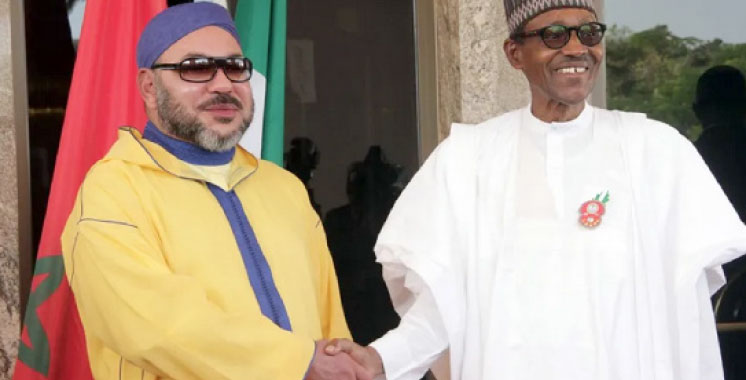
The King chairs the signing ceremony of agreements relating to the Nigeria-Morocco Gas Pipeline project in Rabat

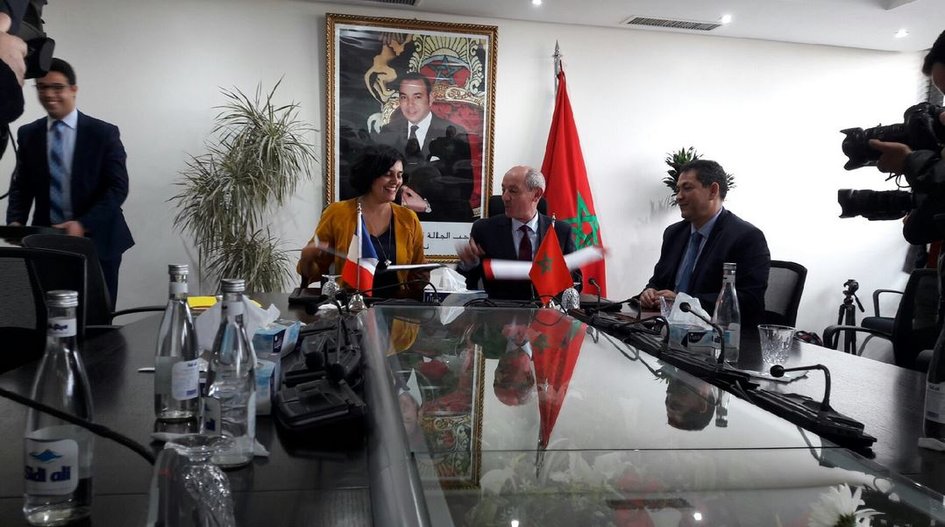
King Mohammed VI chaired, Monday at the royal palace in Rabat, the signing ceremony of agreements relating to the Nigeria-Morocco Gas Pipeline project and Moroccan-Nigerian cooperation in the field of fertilizers.
The Minister of Foreign Affairs and International Cooperation, Nasser Bourita, presented the main lines of the Gas Pipeline project to connect Nigeria and Morocco. He underlined its importance for the sustainable development of the continent. “The Nigeria-Morocco pipeline will have a direct positive impact on more than 300 million inhabitants,” he said. And to specify that it “will make it possible to accelerate electrification projects throughout the West African region, thus serving as a basis for the creation of a competitive regional electricity market”.
Mr. Bourita assured that “the Nigeria-Morocco Gas Pipeline responds to Europe’s growing need to diversify its energy sources.”
The director of the Nigerian National Oil Company (NNPC), Farouq Said Garba, presented, for his part, the broad outlines of the cooperation agreement on the pipeline, signed on this occasion, between the National Office of Hydrocarbons and Mines (Morocco) and the Nigerian National Oil Company (Nigeria).
Mr. Garba discussed the governance arrangements for the Nigeria-Morocco gas pipeline project, the planning of feasibility and engineering studies, as well as the rights and obligations of the parties to this win-win partnership.
Speaking on the subject of Moroccan-Nigerian cooperation in the field of fertilizers, the president of the Nigerian Association of Fertilizer Producers and Suppliers (FEPSAN), Thomas Ethu, highlighted the strengthening of cooperation between the OCP group and FESPAN. He underlined that « this partnership enabled, in a first phase, a real transfer of know-how in terms of developing blending, storage and transport structures. »
This cooperation will also contribute to the modernization of the agricultural sector, notably through the development of a platform of basic chemical products, the use of quality fertilizers, adapted to Nigerian soils and crops.
The Director General of the Nigerian Sovereign Investment Authority, Uche Orji, for his part, discussed the valorization of natural resources for the production of fertilizers in Nigeria. In this sense, he indicated that the collaboration between the Nigerian sovereign investment authority and the OCP Group will focus on the prospecting and valorization of phosphate reserves existing in the States of Nigeria (Sokoto, Ogun, Edo, Imo).
Nigeria will thus benefit from Moroccan experience and expertise to develop the phosphates sector in Nigeria, he added.
The President and CEO of the OCP group, Mostafa Terrab, specified that the partnership concluded between Morocco and Nigeria “covers the entire agricultural value chain, starting from the implementation of fertilizer solutions adapted to the nature of Nigerian soils and crops”. He added that this project also aims to ensure the availability of fertilizers on the Nigerian market and the implementation of support measures for local farmers (Mobile school labs, Agribooster).
This collaboration, which is entering its second phase, will also make it possible to maximize local fertilizer production. And this, through the creation of a platform of basic chemical products, and from there, securing the supply of fertilizers to the Nigerian market at competitive prices and strengthening local distribution channels.
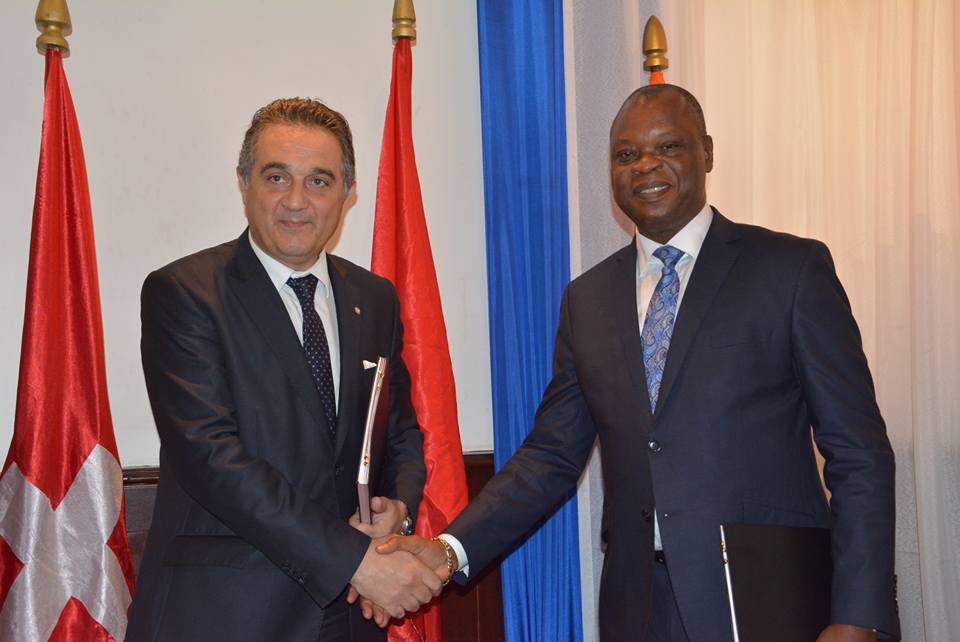
The sovereign then chaired the signing ceremony of a cooperation agreement on the pipeline between Morocco and Nigeria. It was signed by the Director General of the National Office of Hydrocarbons and Mines, Amina Benkhadra, and the Chief Executive Officer of the Nigerian National Oil Company, Maikanti Kacalla Baru.
The second instrument signed is an agreement between the OCP group and FESPAN for the strengthening of fertilizer production and distribution capacities in Nigeria. It was signed by Mostafa Terrab and Thomas Etuh.
On the occasion, two institutional films on the socio-economic benefits of the two projects and their regional and international scope.
source: huffpostmaghreb