
Tourism has been one of the sectors most affected by the crisis.
The authority is actively preparing for the recovery and has made domestic tourism a priority.
It also started the process of labeling tourist accommodation establishments in Morocco, the Welcome Safely label.
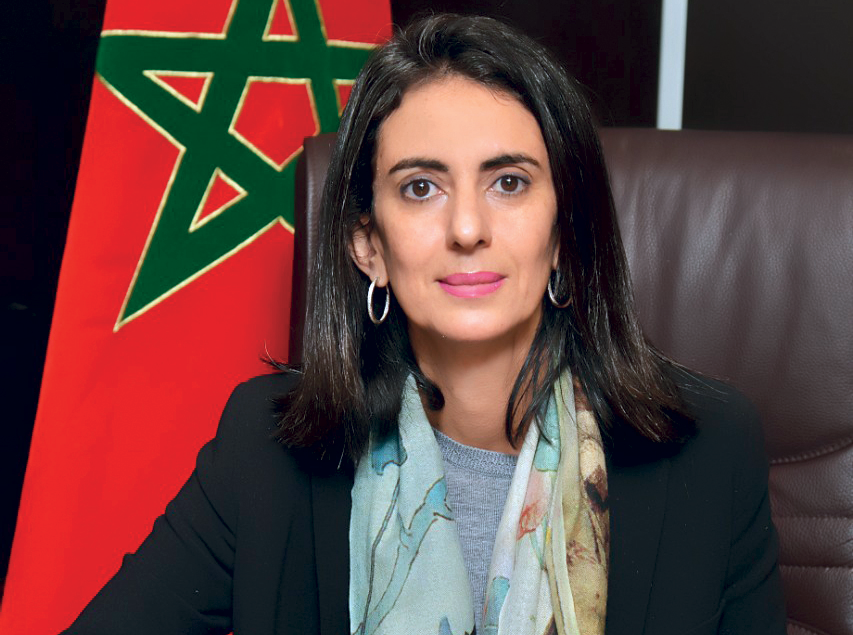
Overview with Nadia Fettah Alaoui, Minister of Tourism, Crafts, Air Transport and the Economy social.
Comments collected by B. Chaou
Finances News Hebdo: What aid is currently in place for the tourism sector and which branches benefit from it?
Nadia Fettah Alaoui: Morocco, under the Enlightened Vision of His Majesty King Mohammed VI, May God Help Him, has put the health of citizens at the heart of its concerns in the aftermath of the pandemic. It was on this occasion that a fund dedicated to the Covid-19 crisis was created to support all employees, all sectors combined, and guarantee them income in the context of a slowdown in economic activity. The tourism sector, being a sector based on proximity, mobility and sharing, has been one of the most affected sectors and will be one of the last to return to its historic pre-crisis levels. Thus, a recovery plan was designed in partnership with public and private stakeholders and resulted in the signing of a program contract in August 2020 for tourism support and recovery between 2020 and 2022, and supplemented by an amendment signed in January 2021.
This program contract provides for job preservation measures (flat rate compensation for employees in the sector) from which operators in accommodation, travel distribution, tourist transport and catering benefit. In addition to job preservation measures, this program contract provides operators with cash flow support through bank credits, moratoriums on loan maturities, and deferrals of payment of social security contributions. The recovery plan is not only a way to preserve jobs and the economic fabric, it is also a way to lay the foundations for a sustainable transformation of the tourism sector in anticipation of its post-Covid-19 crisis changes. This involves in particularprojects relating to human capital, digitalization and sector governance.
F.N.H. : The successive suspension of air connections, and most recently those with France and Spain, does not remain without impact on the tourism sector in Morocco. How much do you estimatethese impacts in terms of revenue and employment? And what measures have been taken in return to limit these effects on operators in the sector?
N. F. A.:The tourism sector has always suffered external shocks, but the Covid-19 crisis is an unprecedented crisis due to its scale, but also due to the total lack of visibility that accompanies this pandemic. At the end of 2020, and in comparison with the levels of 2019, we estimate tourist arrivals at -79% and overnight stays recorded at -72%. In terms of tourist revenue, the drop is estimated at -58%, a drop mitigated thanks to the good performance of the first months of 2020 and revenue generated deferred from certain services.
The Economic Monitoring Committee met on Friday April 2, 2021 and decided, taking into account current conditions, to extend the support mechanisms granted to the tourism sector until June 2021. This decision today constitutes a breath of fresh air both for tourism operators and for all employees of the tourism sector in Morocco. As a reminder, more than 54,000 employees benefit from the monthly flat-rate compensation of 2,000 DH, more than 1,200 benefit from financing and guarantee products.
F.N.H. : Tourist activity could also experience a sharp contraction during the month of Ramadan. What are the prospects for post-Ramadan recovery? And given this continuing global health situation, should Morocco focus more on internal tourism? Have you, in this sense, thought of a system likely to sustainably boost internal tourism?
N. F. A.:We are aware that international tourist activity will not resume at usual levels in the coming months, given health developments relating to variants and the new restrictive measures imposed in several of our source markets. The period of the month of Ramadan has historically been a low season for tourist activity. Therefore, we do not expect to achieve increased performance during this period. We have seen that domestic tourism is an important resilience factor for the industry. Mature destinations have managed to mitigate the impact of the crisis thanks to the weight of their internal tourism.
Thus, for this summer season, we will focus on the development of national tourism. A system is ready to be deployed in partnership with the territories, the ONMT and tourist operators, and will be put in place as soon as health conditions allow. The development of domestic tourism is a priority for the ministry, not only as a factor of short-term resilience, but also to make it a lever for long- and medium-term development. A market study oriented towards internal demand has been developed in this regard by the ministry and will ultimately make it possible to rethink the domestic tourism offer. In terms of international flows, the ministry has prepared a promotion plan for a rapid recovery of market shares upon relaunch. Given the importance of reassuring both our partners and international tourists, we have started the process of labeling tourist accommodation establishments in Morocco, the Welcome Safely Label. This process has now started to bear fruitand more than 100 establishments have been certified, with a capacity of more than 26,000 beds.
F.N.H. : More generally, will the lessons learned from this crisis lead to a rethinking of the national tourism offer to better address the future? If so, what levers do you plan to activate?
N. F. A.:If this crisis has taken the entire planet by surprise, the issues it reveals remain no less edifying:
• the need to reduce the weight of the informal sector and guarantee access to social coverage for all employees in the sector. Moreover, tourist guides now benefit from social protection within the framework of the program contract put in place;
• the need to intensify international strategic partnerships, by promoting cooperation and public-private partnership;
• the need to accelerate the digitalization of business operating processes, user services and, in general, across the entire tourism value chain;
• the need to promote and encourage innovation and creation by young people for better employability and attractiveness of the tourism sector for young people with high potential.
source: fnh.ma