
Based on the positive indicators of the epidemiological situation in the kingdom and the drop in the number of cases of infections with the new coronavirus, Morocco decides to resume flights to and from Morocco from June 15, 2021 or the implementation of the vaccination pass for people who have received both doses of vaccine against Covid-19. How are these measures received?
In recent days, Morocco has taken very important decisions, which are changing the prospects of several sectors of activity. This includes the implementation of the Vaccination Pass for people who have received two doses of vaccine against Covid-19, in addition to the resumption of flights to and from Morocco from June 15, 2021.
In a press release published Sunday June 6, the Ministry of Foreign Affairs, African Cooperation and Moroccans Living Abroad explains that “these measures aim to facilitate the return of Moroccans living abroad to their homeland. Given that the kingdom’s airspace is still closed, these flights will be carried out under exceptional authorizations. This operation will take place according to an approach which combines gradual opening – taking into account the evolution of the national and international epidemiological situation – and preservation of the achievements made by our country to stem the spread of the coronavirus,” underlines the press release.
Regarding the return of Moroccans residing abroad by sea, as part of the “Marhaba 2021” operation, the government indicates that it will take place from the same maritime transit points of last year, while specifying that in addition to the PCR test presented during boarding, travelers will undergo another test on board, in order to ensure maximum health security for them and their loved ones. Of course, these decisions represent a breath of fresh air for economic players.
Contacted by Les Inspirations ÉCO, Khalid Benazzouz, president of the National Federation of Travel Agencies of Morocco (FNAVM) reacts: “It’s a breath of fresh air so as not to completely agonize. The recovery is very difficult for travel agencies. We are drowning in accumulated debts, taxes, various fees and charges. Without state aid to these companies, and without tax amnesty, professional tax and other measures in this direction, the days to come will be very hard despite the strongest will in the world,” he reacts.
The manager thanks the authorities for all the efforts made for the signing of the 1st and 2nd program contracts. “I hope that the Minister of Tourism and her colleagues will continue their momentum, because what is coming is the most difficult. The pandemic is still here and until the world is cured, the risk is still present. Above all, we must remain vigilant and respect the measures and recommendations of the Ministry of Health, which I congratulate for the good management of the health crisis,” he adds.
For its part, “the National Federation of the Hotel Industry has very favorably welcomed all the reductions which have just been announced, since they can only favorably affect a resumption of activity which will also be very difficult and delicate given the financial state of our structures induced by the 15-month cessation of activity”, declares Nidal Lahlou, vice-president of the National Federation of the Hotel Industry (FNIH). Our interlocutor would like to point out that the FNIH has campaigned for several months for the establishment of a reopening agenda and reduction of health precautionary measures. “This would have made it possible to prepare for this long-awaited resumption of activity,” defends Lahlou.
Vaccination pass: instructions for use
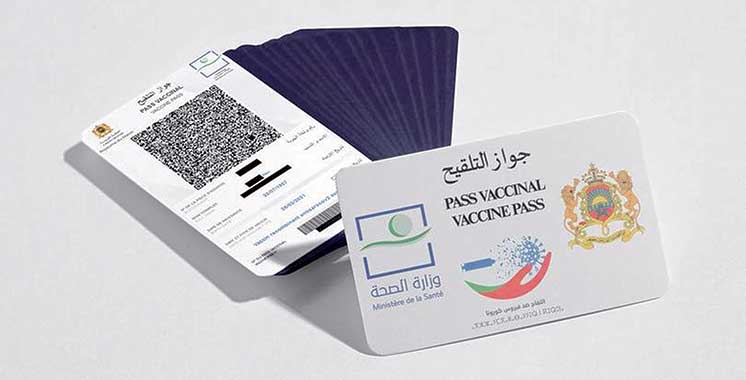
In application of the recommendations of the Scientific Committee, the government has set up a vaccination pass that people who have received two doses of vaccine against Covid-19 can download from the website www.liqahcorona.ma, since June 7. A big positive point for Morocco in its management of the health crisis, but it must be said that the kingdom is not at its first attempt in adopting digital solutions in the fight against Covid.
Already last February, we conducted an interview with Dr. Mohammed Saïd Belkadi, medical director of Highkaw, integrator of the apTeleCare software solution, selected by Morocco for remote medical monitoring of the Covid-19 vaccination campaign. Please note that the pass comes at the end of the vaccination process, once the second dose is taken.
“Until now, citizens were entitled to a certificate produced by the Ministry of the Interior. Today, the vaccination pass replaces this certificate. The only change is that it is equipped with a QR code, so that in airports, ports and everywhere, control agents can swipe a QR reader over the document to verify its authenticity.
Everyone agreed, internationally, that there should be a QR code processed in such a way as to be checked and authenticated by control agents,” explains Dr. Belkadi. There was therefore a global consensus on the integration of this code, which makes it possible to verify that the identity of its holder corresponds to that of the passport and also provides details on the issuing country. Objective: to prevent fraud, since attempts at falsification will certainly be detected.
In a press release, the government specifies that this vaccination pass is an official, secure document recognized by the authorities, which allows its holder, without any need for an additional document, to travel throughout the national territory without restriction, to travel beyond 11 p.m. and to travel abroad. Likewise, thanks to its QR code, the pass can be authenticated via an application provided for this purpose. It can be downloaded in printable or electronic format to be presented on a smartphone.
It can also be collected, in paper format, from the local authorities where the vaccination center of the person concerned is located. So what about the risks of personal or other data leaks? With the help of the CNDP, Morocco has certainly put in place all the necessary measures to ensure technical security and the protection of personal data.
“A” or “B”: which list are you on?
Regarding people wishing to leave or rejoin the national territory, and despite having a vaccination pass, another determining criterion remains: that of the epidemiological situation of the country of departure. With the resumption of flights to and from Morocco from June 15, countries were classified into two lists, in accordance with the recommendations of the Ministry of Health, based on official epidemiological data published by the World Health Organization (WHO) or by these countries themselves via their official websites.
The “A” list includes all countries with positive indicators regarding the control of the epidemiological situation, in particular the spread of virus variants. As for list “B”, it is intended to be restrictive and concerns countries experiencing a spread of variants or the absence of precise statistics on the epidemiological situation. Travelers from countries on this list must obtain exceptional authorizations before traveling, present a negative PCR test less than 48 hours from the date of entry into the national territory, then undergo health isolation for 10 days. The Ministry of Health specifies that the two lists will be updated regularly at least twice a month, as necessary.
More than 500,000 jobs threatened!
As the summer season approaches, professionals in the tourism industry are raising awareness among Moroccans about the challenges of national tourism and, in particular, its social dimension. In a communication campaign, these invite us to think about travel agencies.
“Go through a travel agency, you will save more than 500,000 jobs! This summer, those who will be able to travel within Morocco will perform not only a patriotic act but also an act of saving the entire Moroccan tourism chain,” they invite, specifying that this summer will be crucial for the sustainability of the entire tourism industry of the country, for a new encounter between Moroccans and their infrastructure, their heritage and their human resources.
On this subject, Khalid Benazzouz responds with an appeal to all Moroccans, asking to ensure that “national tourism is no longer a crutch, a buffer local market that operators call for help at every moment of crisis”. The president of the FNAVM explains that by staying exclusively in classified hotels and guest houses (therefore officially declared), we save more than 500,000 jobs. However, he advises avoiding informal rentals at all costs in favor of travel agencies and consuming in order to “help hundreds of families to live”.
Nidal Lahlou.
Vice-president of the National Federation of the Hospitality Industry (FNIH).
When reading press releases and press articles, we can see the use of certain terms such as “special flights”, “list A”, “list B”, “containment”, “health passport”, “state of emergency” etc. which tell us on the one hand that nothing is certain and above all that the recovery will be difficult and long. Even if it is confirmed, it will certainly not be enough to save a dying sector. We should undoubtedly think responsibly about measures to support and assist the recovery. However, we will have to make do with what we have and mobilize stakeholders around the ramp-up of Welcome Safely.
It will also be necessary to prepare the price-product mix for the targeted clientele for this resumption of activity and the summer season. That is to say, focus on internal tourism and Moroccans around the world. We invite them, as such, to take civic action by participating and assisting in this recovery. Finally, we obviously hope that the health situation continues to improve and that the vaccination campaign comes to an end to return to normal as quickly as possible.
source: leseco.ma