
Economic intelligence: “On the verge of taking the step from a simple discipline to a real science”

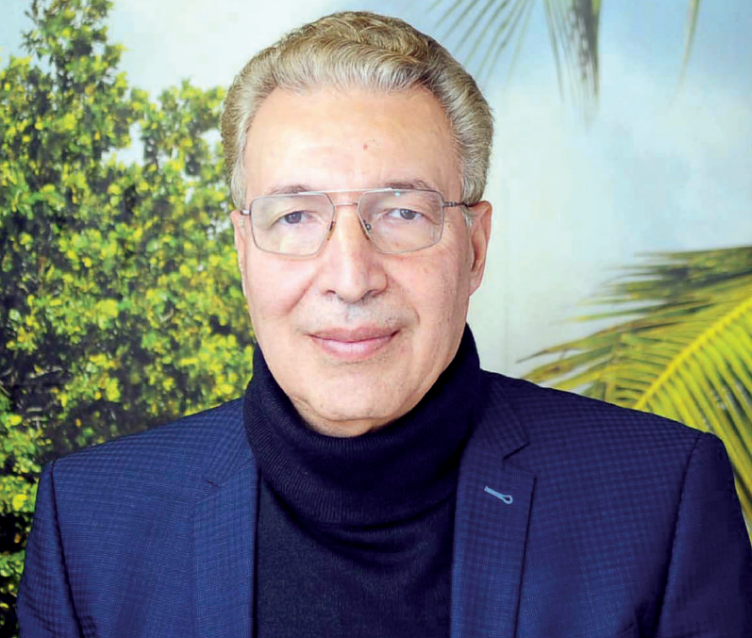
Business intelligence strengthens competitiveness and activates business development. It is based on a triptych, namely monitoring, information protection and influence. Interview with Taoufiq Boudchiche, economist.
Business intelligence is a concept that covers multiple realities and can even present itself as multifaceted, multi-objective… The most important term in the concept is the word “intelligence”. It refers to a historical dimension regarding the origins of the concept imported from the Anglo-Saxon world “Intelligence”, in the sense of information, intelligence…. for decision support. It can therefore be applied to different areas. Economists have taken advantage of this concept to make it a very useful working tool for strategic decisions at the microeconomic level (business management, management, market studies, competitive analyses, etc.) and at the macroeconomic level (study of the national and international economic environment, strengths and weaknesses of the national economy, etc.). Its use has become widespread in the context of globalization, particularly in the context of the development of competitiveness strategies at national, regional and local scale (competitiveness poles, clusters, industrial districts, etc.). The concept has had some success in Morocco due to the fact that several organizations (public and private institutions, civil society in the business community, associations of experts, etc.) have adopted it since the 1990s. Particularly in the field of territorial development. New territorial approaches inspired by economic intelligence have introduced a sort of revolution in the conception of territory. This is no longer reduced to its geographical dimension, but due to the dynamics and interactions between territorial actors, territorial economic intelligence encourages us to understand the territory as a true actor in its own development and not just as a passive receptacle of projects. Economic intelligence helps to highlight these territorial dynamics, place them in their context, formalize them (holistic models) and develop, on this basis, highly operational strategies for territorial development. F.N.H. : Has economic intelligence contributed to improving Morocco’s competitiveness? T. B.: In Morocco, the merit of the dissemination of this concept in the national context goes to economists and senior public decision-makers such as the late Meziane Belfquih (Advisor to His Majesty the King), Driss Guerraoui, Mohamed Mbarki and Driss Alaoui Mgadhri, who introduced this concept into public action. Initiatives which have, for example, highlighted the importance of territorial economic intelligence for a country like Morocco in its trajectory of structural transformations desired and driven by His Majesty the King from the start of the new reign. Territorial economic intelligence has been brilliantly applied in major state projects: TangerMed project, Bouregreg project, MarChica project, Med-Est project (establishment of industrial zones in the Oriental region, etc.), to name only the most emblematic. The sectoral strategies (Emergence, Maroc Vert, Plan Azur, etc.) were also exercises in territorial intelligence to position Morocco in global value chains as the economy opened up. It should be noted, for example, that the last royal speech on the occasion of the celebration of the Green March (November 6) is a magnificent example of territorial economic intelligence, encouraging the projecting of the development of the southern provinces as a strategic axis of Atlantic Africa integrated with Sahelian Africa and Central Africa. The large Atlantic port of Dakhla, which will be operational in 2030, coupled with the Nigeria-Morocco gas pipeline project and the fixed link with Spain, will be key points. then important to realize the royal vision of an Africa fully connected in infrastructure and open to the Atlantic and the Mediterranean. The potential for opportunities and African development will be further multiplied. At the institutional level, it is appropriate to highlight the avant-garde role in Morocco of the Royal Institute of Strategic Studies (IRES) in the field of economic intelligence which, since its creation by Dahir Royal in 2007, has developed very high quality analysis and strategic intelligence grids. Several institutions in Africa and the Arab world (Sahelian Africa, United Arab Emirates, Kuwait, Saudi Arabia, etc.) draw inspiration from the work of IRES as part of its cooperation with official organizations established in the countries concerned. F.N.H. : How can business intelligence help strengthen Africa’s economic resilience in the face of global challenges, such as health crises, international market fluctuations and climate change? T. B.: In Africa south of the Sahara, economic intelligence initiatives are mainly carried out by civil society (researchers, universities, associations, networks of experts, etc.). For example, the French-speaking Economic Intelligence Association played a pioneering role in the dissemination of this concept at the African level in both the French-speaking and English-speaking areas. Experts like Philippe Clerc (France), Amath Soumaré (Senegal) Driss Guerraoui (Morocco), Mounir Rochdi and Siham Haroussi (Franco-Moroccans working in Paris) who lead this association, have greatly contributed to it, particularly within the framework of the open university of Dakhla. In official circles, its distribution is more restricted because it remains the prerogative of experts versed in certain economic intelligence tools (strategic monitoring, prospective analyses, decision-making modeling, etc.). But the lines are moving quickly. In business circles within the continent and among public authorities, there is an awareness that public decisions and policies are less and less subject to controllable variables in the prevailing multi-crisis context. The decision-maker is confronted with volatile, complex and ambiguous national and international contexts (a world known as VUCA: Volatility, Uncertainty, Complex and Ambiguity). The need is therefore strongly felt to base decisions on tools that make it possible to interact with realities that are difficult to predict and elusive by anticipating situations as best as possible (monitoring and anticipation tools), planning action scenarios (prospective) and remaining relatively ready in crisis situations (crisis prevention and management). However, the threats that you cited in your question such as health crises, fluctuations in international markets, climate change, to which we must add, for example, natural disasters (the earthquake that we tragically experienced last September 8 in the Al Haouz region), represent very serious realities. There is a strong risk that they will get worse in the coming years. In addition, it is worth mentioning the accentuation of global instability due to the return of war and high-intensity conflicts in Europe, Africa, the Middle East, in addition to the growing rivalries between the great powers: United States – Europe – China. Consequently, Africa urgently needs to equip itself with appropriate expertise and conceptual tools to build public policies intended to deal with it as best as possible. Business intelligence is one of these tools, for example by mapping, in order to detect major trends, factors of change, disruptive signs, etc. likely to impact our present and future realities. Artificial intelligence it allows Africa to make technological leaps without going through the same development paths as countries, which are costly in terms of investment and energy. We have the already well-known example of mobile telephony and the Internet which allowed access to telecommunications without developing heavy infrastructure associated with landline telephones. We also see as another example the successful experience of implementing “Smart city”. The transition to the “Smart city” allows African cities a real revolution in public services provided to citizens in terms of quality, speed and good ecological governance. In Morocco, we have the example of Berkane which has acquired the status of “Smart-city” in a few years, recognized internationally thanks to the remarkable work carried out by the current team in the province. F.N.H. : Can you explain how technological advances, such as artificial intelligence and data analytics, have influenced the practice of business intelligence? T. B.: Artificial intelligence is about to revolutionize our working methods, as was the revolution in microcomputing, the Internet, mobile telephony… According to Bill Gates, who is aware of technological developments, in a few years, we will be able to have AI agents (artificial intelligence), a kind of super-intelligent assistants on an individual and/or community level. They will be equipped with an exponential intelligence capacity in speed of collection, analysis of data and exploitation of data according to the needs assigned to them in human activities. This is somewhat already the case with advanced language processing tools, such as ChatGPT. In the field of economic intelligence, this can only be beneficial for resolving the question of the mass of data to be decrypted (Big data, Deep mining, etc.) and reformatting them according to human needs. This is due to the growing computing power and impact algorithms which evolve very quickly (analysis of complex situations, programming according to desirable objectives, development of scenarios, super modeling to aid decision-making, restitution of information, etc.). And there are as many areas of application as there are subjects to be treated. F.N.H. : What would be the advantages for economic actors in Africa? T. B.: The new capacities for collecting and analyzing data will make it possible to invest in new fields of knowledge, for example those linked to adaptation to climate change, anticipation of natural disasters, sustainable agriculture, demography, urban planning, technological development, research § development, the training of human resources, the fight against inequalities and economic, social, territorial disparities… These are all essential issues whose extremes we have not yet measured. importance for progress, and if necessary for our survival on this planet. Aren’t we talking about our entry into the Anthropocene era? A new geological era in which it is human action that threatens the balance of our relationship with the planet. There are certainly CO2 emissions which accelerate global warming, but there are other phenomena, such as erosion caused by human activity on coastlines. It is 10 times faster over time than that caused by natural elements measured in decades, centuries and millennia. In terms of advantages for economic actors in Africa, we can mention, among others, the expanded accessibility to information at lower cost, the development of knowledge in areas of interest in Africa, the development of human resources and African expertise whose potential is very underexploited. New technologies associated with intelligence Artificial knowledge will allow African expertise to be better deployed in Africa and in the world through accumulated knowledge and areas of African expertise. F.N.H. : Dakhla hosted the 4th meeting of the Forum of African Economic Intelligence Associations under the theme “The new territories of economic intelligence in Africa and in the world”. How important are these kinds of debates? T. B.: I was invited to take part in the 4th meeting of the Dakhla Forum, as it is now customary to cite this event as it is anchored in the reality of the world of African economic intelligence. This forum was set up in 2010 as part of the Open University of Dakhla, chaired by Driss Guerraoui within the ENCG of Dakhla. This city has become, thanks to this initiative, the annual destination for economic intelligence, or even simply “intelligence”. As a reminder, the Dakhla Forum brought together during the previous edition, in 2022, a global coalition of scientists, former heads of state and experts on the theme of “the role of knowledge, science and education in the construction of a new world”. Among the invited scientists, eight of them are Nobel Prize winners. Consequently, the Dakhla Forum innovates every year in speakers and themes entirely dedicated to our continent. This year’s 2023 edition was dedicated to exploring new fields of economic intelligence. Several French-speaking and English-speaking African experts (Niger, Ivory Coast, Senegal, Nigeria, South Africa, etc.) were present to describe the situation of economic intelligence expertise in their countries and/or in the African continent. Workshops were organized in the presence of young students. Experts from the USA also joined this meeting. They developed a very interesting point of view on EI, which has become a particularly sought-after area of expertise in companies in this country. Among other lessons, there was, for example, the signal given that economic intelligence is on the verge of moving from a simple discipline to a true science equipped with doctrines, postulates and schools of thought. Indeed, economic intelligence is already helping to enrich the theories of economic thought, sociology, anthropology, legal sciences, diplomatic doctrines, etc. Another important lesson emerged, demonstrating that economic intelligence is evolving towards more methodologically ambitious approaches in order to embrace all of the human, technological, societal and planetary issues that intersect and interact. We are moving more and more towards so-called strategic meta-intelligence approaches. On this subject, you should consult the work of IRES (www.ires.ma). To conclude, I will add that territorial economic intelligence introduces meaning into territories. It is a conceptual basis for visionary approaches to the territory and is essentially based on local realities. It allows them to be sublimated to make them assets for development, cohesion and social adhesion. Also, it fertilizes itself through a necessary back and forth between the field, theoretical and academic reflection and operational action.
source: fnh.ma