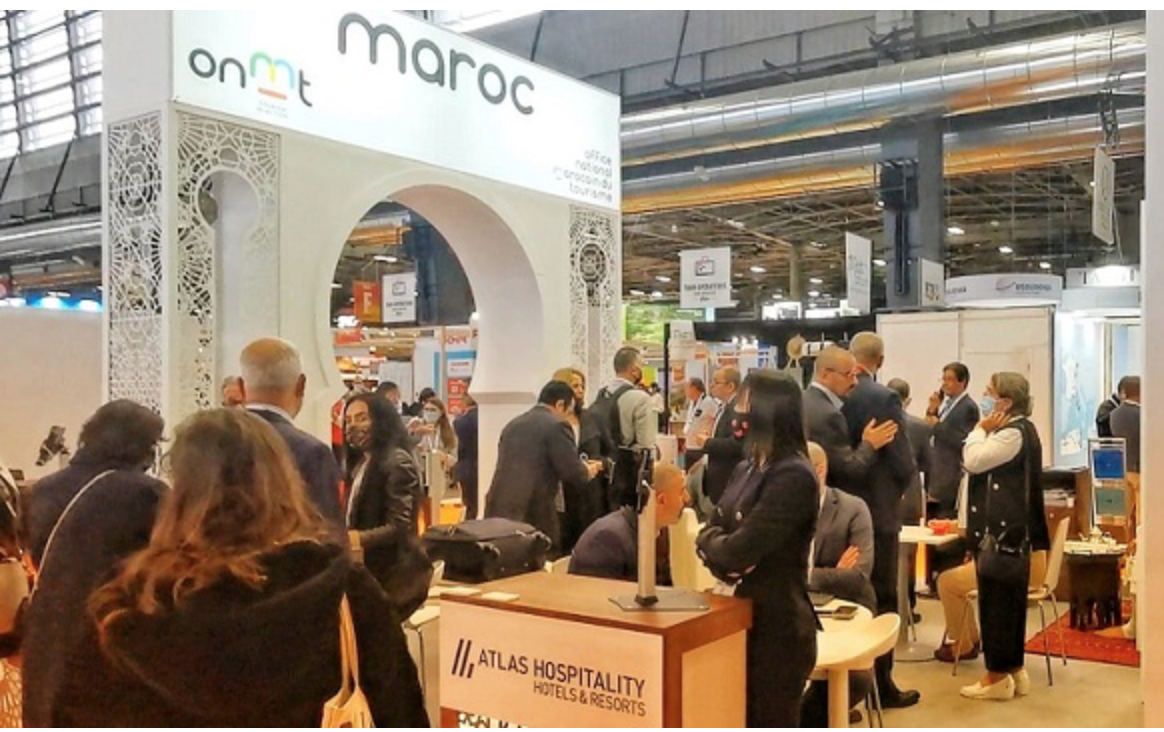

The innovation and entrepreneurship of startups helps fuel the growth of the tourism industry in Morocco. The importance of the sector to the economy is increasing as the country prepares to co-host the FIFA World Cup in 2030, AGBI points out.
“Morocco welcomed 17.4 million international tourists in 2024, an increase of 20% compared to 2023, according to the latest data from the World Tourism Organization (UNWTO),” according to a recent analysis by the economic news platform serving the MENA region, Arabian Gulf Business Insight (AGBI). “Morocco is the first country in Africa in terms of the tourism startup system and foreign direct investment (FDI) revenue,” Natalia Bayona, executive director of UN Tourism, told AGBI,” underlines a new analysis from AGBI which highlights the importance of Moroccan startups in the development of tourism in the run-up to the 2030 World Cup. Citing the UNWTO, the same source notes that Morocco recorded an average of $3.5 billion of FDI per year in all sectors of the economy over the last five years. Between 2014 and 2023, $2.2 billion in FDI was dedicated specifically to tourism. Innovation in the startup sector translates into benefits for the Moroccan economy, underlines this specialized site based in London, reporting that tourism revenues reached more than 11 billion dollars in 2024. Quoted by AGBI, the executive director of UN Tourism noted that tourism startups are successful in Morocco because they rely on the cultural heritage of the country and commercialize it, thus offering a competitive advantage. “They focus on preserving heritage and promoting local small and medium-sized businesses,” she said. Vincenzo Zappino, senior partner of the Italian tourism consultancy Target Euro, cited by AGBI, estimated, on the other hand, that Morocco is experiencing rapid growth, but it is only just beginning compared to the more mature ecosystems of Europe or North America. “The start-up culture in the sector is still developing,” he noted. He admits, however, that the growing culture of Moroccan tourism startups is helping the country diversify its offering, extend visitors’ stays and open new markets beyond traditional tourist centers such as Marrakech and Fez. “The growing number of incubators, accelerators and funding programs are further accelerating this positive development,” he said. 4 billion dollars to expand airports Another element raised by AGBI: Morocco is also preparing for a further expansion of its tourism industry. “Last month, the Minister of Transport and Logistics said the country would invest around $4 billion in airport expansion projects by 2030, in anticipation of the World Cup which Morocco is hosting alongside Spain and Portugal,” reports AGBI. It should be remembered that Abdessamad Kayouh, Minister of Transport and Logistics, declared, last January, in the House of Representatives, that a budget of 42 billion dirhams is planned for airport expansion projects by 2030. The future vision notably includes the development of Casablanca airport in order to increase its capacity to 44 million passengers per year. He also announced that a new terminal will be built at Rabat-Salé airport to accommodate 4 million passengers, while Fez airport will be developed to increase its capacity to 5 million passengers per year. In In the context of this strategic vision, the minister mentioned support for the development plan of Royal Air Maroc, by expanding its fleet and strengthening its competitiveness through an ambitious program for the acquisition of modern aircraft and varied capacities. This strategy also includes supporting the rapid growth of air traffic through the modernization and expansion of the main Moroccan airports, such as those of Marrakech, Tangier, Agadir, Fez and Rabat, in order to make them regional reference hubs. This will require an increase in their capacity to meet the growth in passenger traffic. In addition, the development of domestic transport will be strengthened by encouraging the opening of new lines aimed at opening up remote regions and supporting their economic development. Thus, Casablanca airport will continue to be positioned as a gateway connecting Morocco to the rest of the world, with the opening of direct lines to the main strategic airports. More than 32 million passengers, both international visitors and national travelers, used Moroccan airports in 2024, recalls AGBI, stressing that the authorities expect this figure to almost double to reach 60 million in 2030 and triple to reach 90 million in 2035. A. CHANNAJE 414 startups preselected to boost the destination Morocco The incubation program launched by the Ministry of Tourism, Crafts and the Social and Solidarity Economy in partnership with the Moroccan Society of Tourism Engineering (SMIT) has taken a new step with the preselection of 414 innovative tourism projects. This system, integrated into the 2023-2026 roadmap, aims to modernize the national tourism offer and strengthen its attractiveness through new experiences. With a budget of 156 million dirhams, this incubation program, launched in September 2024, focuses on three strategic axes: gastronomy, leisure gamification and digital. The aim is to attract investment in innovative concepts that enrich the traveler experience. Innovations in gastronomy highlight Moroccan culinary heritage through restaurant concepts revisiting traditions, culinary fusion experiences and regional gastronomic tours. In the gaming segment, projects explore immersive experiences, including scripted escape games, cultural treasure hunts and interactive augmented reality tours that retrace the history of the country’s emblematic monuments. The digital aspect, for its part, focuses on solutions that facilitate the traveler’s journey, such as new generation digital concierge services and intelligent reservation platforms for riads and tourist establishments. This initiative (incubation program) is part of Morocco’s vision to welcome 26 million tourists by 2030, focusing on innovation and digital transformation to improve the visitor experience.