
Known since the 1980s for its winter sunshine, three and a half hours from Paris, Agadir has assets that economic operators struggle to highlight. The mountainous hinterland and the coast to the south of the city have retained a natural character that competing destinations, such as Antalya in Turkey or the Canary Islands, would not hesitate to promote internationally. The emergence of a “natural” hotel industry in Taghazout, an emerging development center 20 kilometers from Agadir, marks the beginnings of this new identity which would allow the seaside resort to reconnect with the dynamism of the end of the 20th century. Despite these advantages, the statistics are slipping: in 2015, attendance at Agadir fell by 10%. The city’s hotel portfolio, half of its capacity (34,000 rooms) no longer meets the expectations of international customers, has not been modernized and the collective revival is overdue. Local authorities are still hesitating, in their prospecting policy, between the African market and the rest of the world. Spared since 2011 by the attacks which targeted tourist sites in Tunisia, Morocco is putting forward a more successful security policy. Solidarity and partner, TUI France anticipated a rebound in attendance with an upgrade of its Marmara offer, in a completely renovated club inaugurated in June 2015 for an investment of more than €7 million. The commercial relaunch this summer was supported by strong promotions. The winter season, which is currently starting quite slowly for Morocco, should confirm the return to favor of Agadir and its surroundings.
AGADIR, RETRO BUT NOT TOO
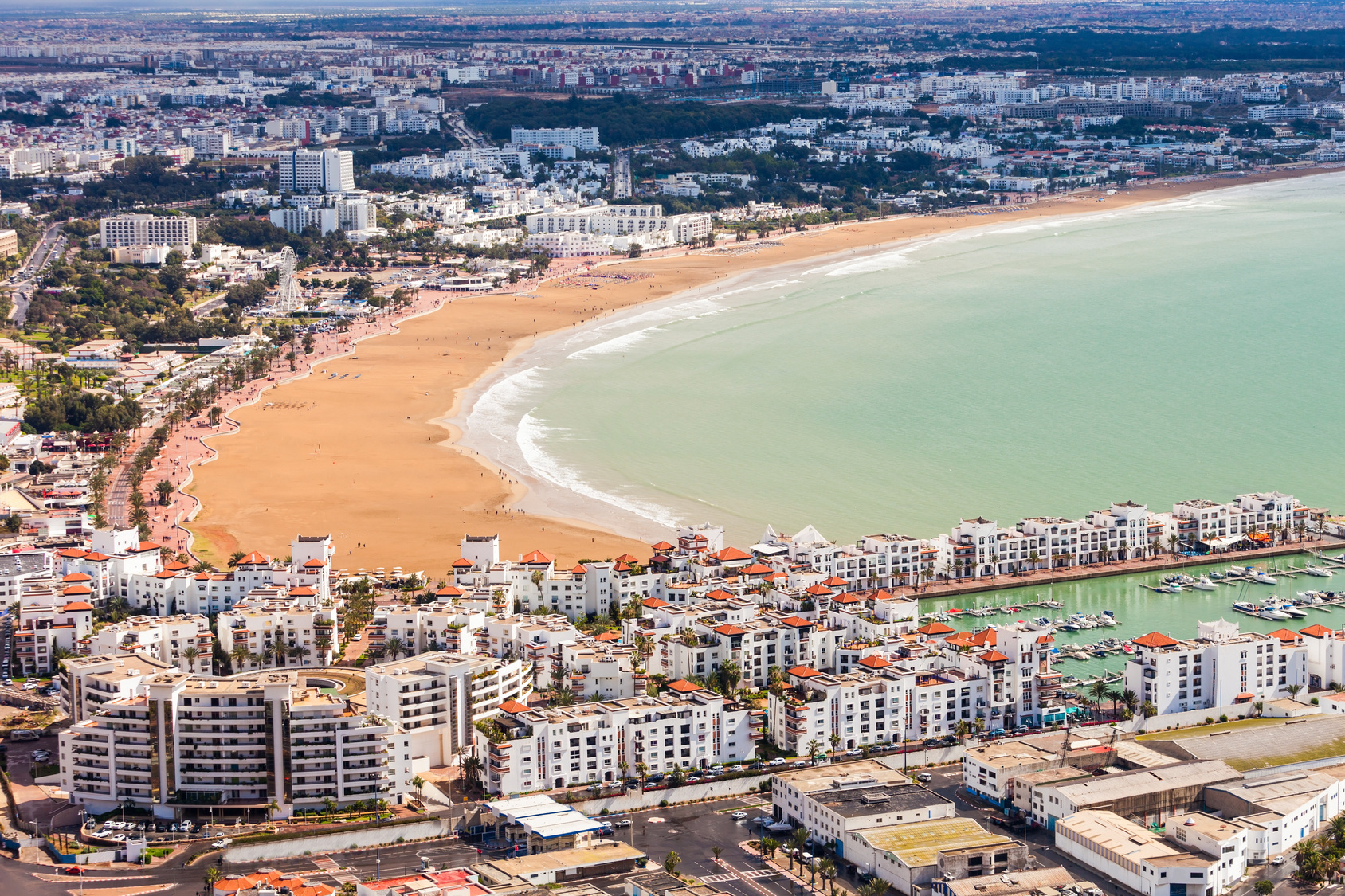
Welcome to Morocco, in the largest city on the Atlantic coast south of Casablanca. From the airport, six or eight lane boulevards were drawn, red lights were installed and the edges of the roundabouts were painted red and white, like a racing circuit. Town planning remained frozen in the 1970s, when it was necessary to hastily build a seaside resort near the ruins left by the earthquake of February 29, 1960. On the seafront, developers have recently corrected the situation. Four straight kilometers, facing the ocean, were organized as a walk for the numerous pedestrians and joggers. A good initiative even if, due to lack of entertainment, this walk has not become the colorful and festive meeting place that Agadir needs. Near the marina, the restaurants look a little sad. Fortunately, there is the beach and its deckchairs facing out to sea which have nothing to do with the inaction of local town planners and the decline of small businesses. Tourists continue to come, for the big blue.
Good to know: neglected by foreign customers, who prefer the all-inclusive buffets of international hotels, restaurants on the beach have turned their back on Moroccan gastronomy to embrace the fast-food trend.
DISCOVERING SOUSS-MASSA
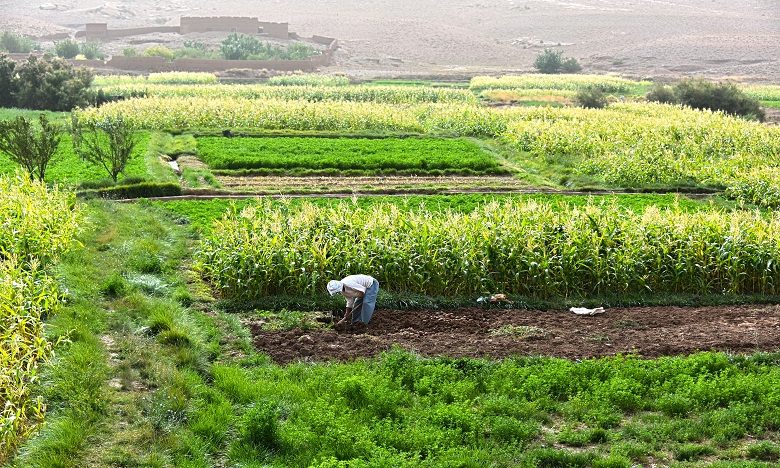
Cliffs, dunes, beaches and an oasis… The Souss-Massa national park has all the ingredients to become a bestseller in southern Agadir. In and around the estuary, for several kilometers approaching the Atlantic, ornithologists enjoy a corner of paradise. In the alluvial meadows, ancestral agriculture feeds the local economy. Fruit trees flourish, and alfalfa grows ten times a year. The hotel infrastructures, which are very rare, are there only for connoisseurs. Patrice, a French expat, operates four guest houses. “From my terrace, we observe bald ibises and 150 varieties of passerines. The wild beach is ten kilometers away. In the evening, we take a bike ride in the palm grove and cook fresh fish on the barbecue,” he sums up, all smiles. Officially, the Souss-Massa park can be visited in 4×4, in expedition mode, accompanied by a guide. Relaxation and wild beauty are less than an hour’s drive from a seaside destination in need of diversification, the growth opportunity is there.
Explore: the El Oued association and the Souss-Massa national park guides offer thematic visits (birds, trekking, culture, etc.).
TAGHAZOUT, TAKEOFF
The multi-colored signs of sports equipment manufacturers color the center of Taghazout, a famous surfing spot. Shops, bars, open-air music, this former fishing village, which became a hippie haunt when Agadir opened up to international tourism, is in turn transformed into a seaside hotel zone, along a beautiful beach. With the economic crisis, the change has just experienced its first hiccups. At the side of the road, behind the promoters’ signs, some construction sites are at a standstill. Other projects, bungalow villages with their feet in the sand or near the golf course, are planned. International brands like Hyatt are betting on this modern extension of Agadir, half an hour from the city towards Essaouira. What remains are habits and culture, which cannot be shaken up. This summer, when the young people of the village opposed the presence of the first vacationers with bare breasts, the tourism promoters came to stammer a few words of appeasement. It will take time to achieve the balance between Taghazout and its new visitors.
To do: an excursion along the Atlantic coast to Essaouira, via Taghazout, with local incoming agencies departing from the main hotels in Agadir.
My travel diary… The call of the Atlas
The road to Imouzzer winds through the foothills of the Middle Atlas. Farmers sell argan oil, honey, olives and almonds, installed on the side of the road in makeshift huts. They wave to passing motorists, without stopping too much. The mountain environment is miles away from the Europeanized atmosphere left half an hour earlier in Agadir. Below the ribbon that zigzags through the Paradise Valley, children do pirouettes in the river. Emerging from their beds last winter, the flowing waters washed away the asphalt, leaving only a track and potholes. It takes two hours to arrive at Imouzzer, 1,200 meters above sea level, at the foot of the waterfall and cliff that locals compare to Acapulco. In the clearing which serves as a wild car park, at the entrance to the village, the fake guides share the work, each in turn, they accompany visitors to turquoise blue pools where the young people, climbed on overhanging rocks, perform dangerous aquatic stunts. The village and its deprivation generate opposing feelings, harmony and poverty. On the way back, at the end of the afternoon, do not hesitate to take on board one of these hitchhikers who, during the discussion, will open our eyes to the destitute living conditions of the mountain farmers.