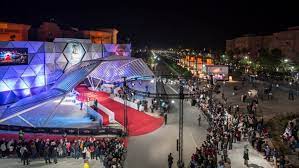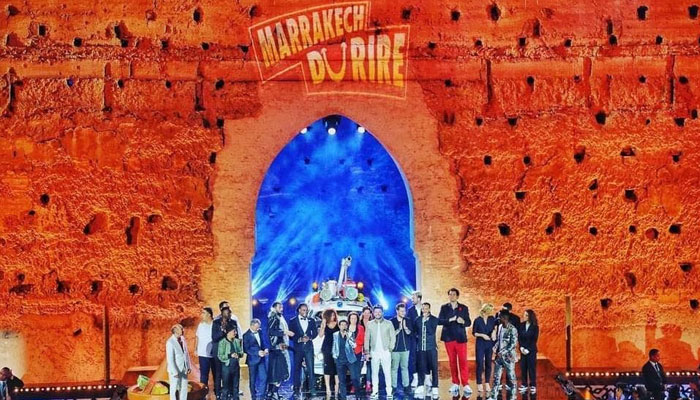

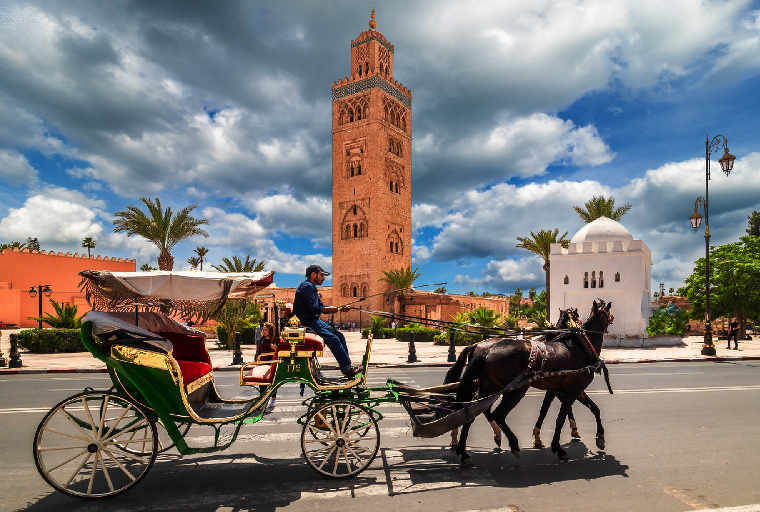
The ONMT has just launched a national communication campaign encouraging people to visit Marrakech. Beyond this initiative, internal tourism must move away from this logic of one-off and episodic actions to plug the holes in the event of a crisis.
Support Marrakech. Continue to promote the destination so as not to see tourism, the heart of the economic activity of the ocher city, collapse. Since the terrible Al Haouz earthquake, this has been one of the main concerns of authorities and operators in the sector. Thus, after initiating a series of actions to reassure international partners, the Moroccan National Tourism Office (ONMT) decided, this time, to address national tourists. The ONMT has just launched a national communication campaign encouraging people to visit Marrakech. Entitled “Ntla9awfMarrakech”, this unique campaign aims to perpetuate the solidarity movement of Moroccans by encouraging them to come to Marrakech and share a moment of life with the Marrakchis in this particular period, indicates the Office. Will this initiative, which is a continuation of the various measures it has taken to support the tourism sector in general, bear fruit? In other words, will Moroccans respond to the ONMT’s call? Weak link These questions are far from superfluous. At least for two main reasons. The first is that domestic tourism has always been the weak link in national tourism policy. It is considered an important resilience factor for the sector and a lifeline, particularly in the event of an external shock. This was the case during the pandemic. It is also distinguished by the successive failure of the various programs and campaigns put in place (Kounouz Biladi operations, among others) to make it a locomotive for sustainable development of the tourism industry. This means that Moroccans would like to show solidarity and demonstrate economic patriotism by staying in Marrakech for this long weekend ahead, but the tourist offer must also be in line with their needs and expectations. And that’s the whole problem: there is a glaring disconnect between supply and demand from Moroccan households, both in terms of accommodation infrastructure and price. If, as the latest survey by the Sunergia Group reveals, almost half of Moroccans (49%) do national tourism at least once a year, apart from family visits and invitations from friends, the fact remains that accommodation structures are not adapted to Moroccan families. In addition, prices also remain high and out of reach of all social categories. This is why Othman Cherif Alami believes that “the development of domestic tourism must be housed in a real division within the ONMT, the Moroccan Society of Tourism Engineering (SMIT), the Ministry of Tourism and Regions”. According to the president of the Casablanca-Settat Regional Tourism Council, for it to become a real permanent engine of Moroccan tourism, “each region must take charge of the promotion and development of tourism products in its own territories.” Likewise, he continues, “adapted financing is needed, with a sustainable connotation (sustainable tourism) which could do good and trigger real creativity among all entrepreneurs in new national tourism products”. Furthermore, Alami recommends that “the municipalities of all tourist areas can offer land through concessions over 30, 60, 90 years and thus allow operators, young entrepreneurs, to invest”. Finally, the president of the CRT–CS recommends that the Academies of rural tourism professions, which are currently ephemeral because they are open just during school holidays, can also be used to promote national tourism. In addition to the shortcomings of domestic tourism, there is another reality linked, this time, to the economic situation: we are still in the middle of an inflationary period, with a consumer price index up 5.0% year-on-year during the month of August 2023. Even if inflation has decreased, the price level remains high. In addition, the month of September coincides with the start of the school year and is marked, this year, by a sustained increase in prices at the pump. Households are therefore still faced with the high cost of living and the erosion of their purchasing power, and have been doing so for several months. In this respect, the ONMT’s appeal can certainly find a favorable response, but only among a certain category of citizens, notably those who are a little more well-off. Except that in general the latter prefer foreign tourist destinations, generally more competitive in terms of services and prices. This crowding out effect is somewhat confirmed by the figures: Moroccans are blowing their piggy banks abroad, with travel expenses for the first seven months of 2023 standing at 14.4 billion DH, an increase of 49% compared to the same period last year. It will therefore take a powerful patriotic burst for Moroccans to rush to Marrakech this weekend. And this, while waiting to finally find the right formula to make the domestic tourist offer sustainably attractive.
source: laquotidienne.ma