
From Tangier to Marrakech via Fez, Larache or Tizkmoudine, in the South, five hotels to taste the Cherifian kingdom, between novelties and icons.
when he entered for the first time, in 1997, in this modernist house from the 1940s, Yves Saint Laurent was seduced by the gardens and the view of the sea, which reminded him of his childhood memories in Algeria, the perfume bougainvillea, jasmine, and Mediterranean colors a little faded by time. For its renovation, the designer then gave decorator Jacques Grange “the home of an eccentric Englishman” as a working theme. This prophecy came true in 2019, when fashion designer Jasper Conran, already the owner of an establishment in Marrakech, became infatuated with the villa and acquired it from the Majorelle Foundation. The idea was to transform it and open it to the public while preserving its heritage soul. Inaugurated a few months ago, the hotel respects a final wish of Yves Saint Laurent: to give a different color to each room. The furniture in the hotel’s twelve rooms is decorated in shimmering shades, the Marrakech suite evokes buckthorn green while Meknes is golden yellow. As for the park, now dotted with several thousand trees and plants, it has been restored to its original splendor thanks to landscaper Madison Cox. Far from the classic hotel world and in the spirit of a large holiday home, the magic of the villa operates again, and the tea time offered in the floral-decorated Mynott pavilion, facing the fragrant gardens, is worth the trip in itself. J.-M. A.
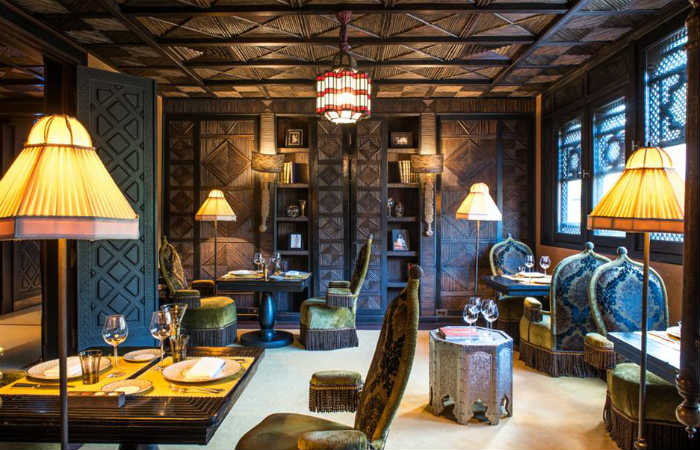
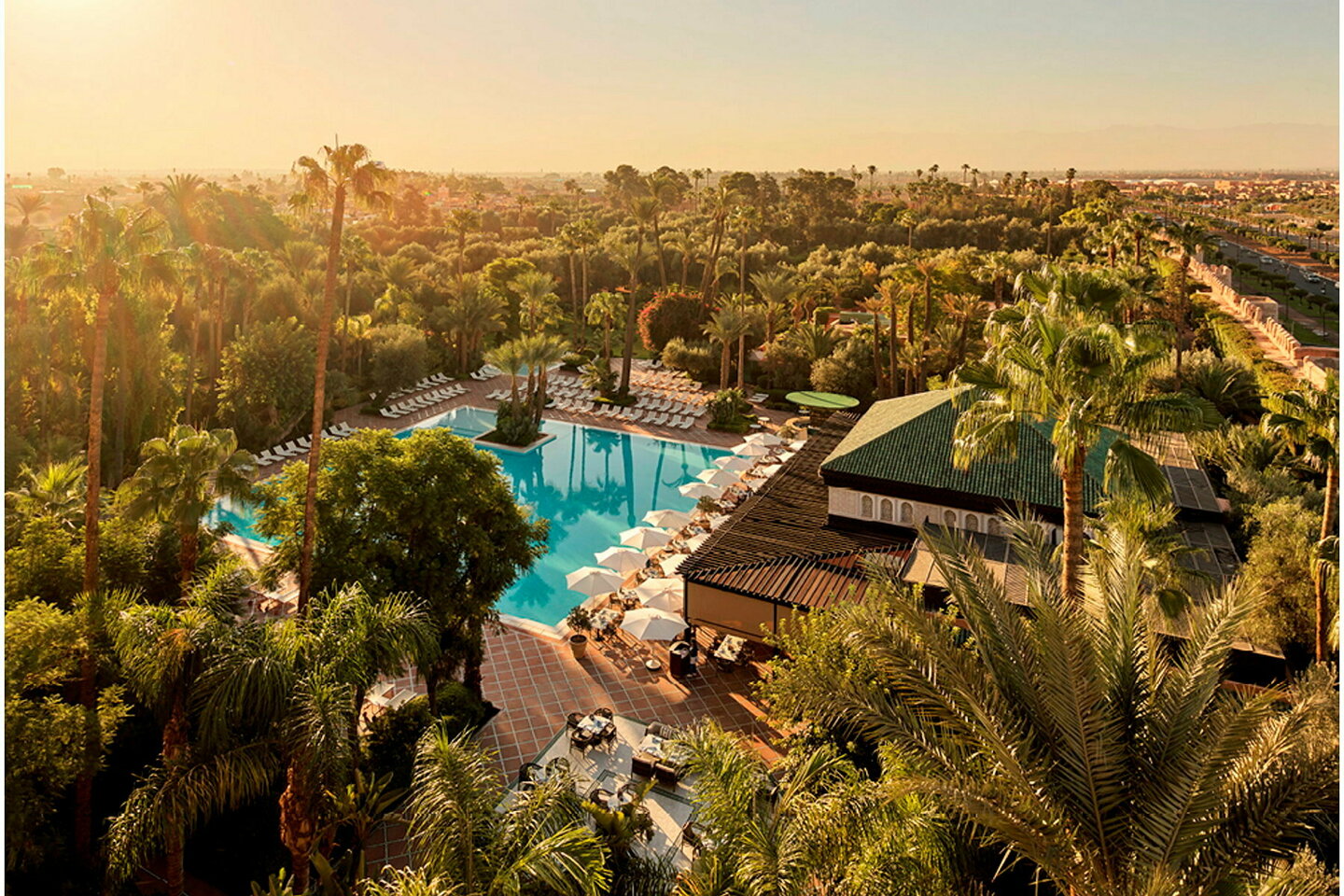
We could exhaust ourselves drawing up a list of those who have crossed its threshold: at 100 years old, La Mamounia has seen all the planet’s powerful people, artists and aesthetes pass by, from Churchill – who painted it – to the stars of the seventh art who have made it their favorite address in the red city. Everyone was seduced. Everyone returned as if magnetized by the light of these 13 hectares planted with olive trees, orange trees and cacti, a miracle of hydraulic ingenuity and a fragrant garden, created in the 18th century by the young prince Al-Mamoun. Since then, nothing has disturbed the peace of the park, enclosed within the city walls. Without doubt, in 1923, the first hotel, whose plans and elevations are still on display, allowed travelers to come and enjoy this incredible tranquility, between zelliges and modern comfort. Without doubt, it has since been enlarged and renovated – the designers Patrick Jouin and Sanjit Manku have just reorganized the public spaces, daring to recall Art Deco details, rethinking the gallery decorated with a fresco by Majorelle, the bars and restaurants placed under the direction of Jean-Georges Vongerichten, deploying from the entrance a sort of immense necklace of Berber inspiration around which the perspectives leading from the spa to the living rooms, from the city to the park. In this evolution we can see the liveliness of a place that has always rhymed with Marrakech. Despite the hazards and natural disasters – which have spared its buildings – the city has never been so vibrant – Louis Vuitton has just dedicated its latest City Guide to it… G. D.
There are those who speak and those who do. Thierry Teyssier is one of the latter. In the 2000s, while the hotel industry hummed in its standardization, he designed immersive experiences that were renewed every day within his properties in Morocco and Portugal. And, when the competition follows suit, it is already one step ahead and takes its “members” from country to country via its traveling hotel, putting down its trunks one day in a traditional house, another in a preserved site, in direct contact with local communities. This time, it goes even further with a new model of so-called “regenerative” hospitality: 700,000 hours Impact. “Here, it is no longer just a question of limiting the negative effects of tourism but of recreating life, of giving back to populations and the planet more than what has been consumed,” he explains in one voice with his partner Diane Binder, founder of the organization Regenopolis, which has been supporting local initiative projects in Africa for two years between the protection of biodiversity and the regeneration of territories. First illustration of this commitment: the village of Tizkmoudine, in the great oases of southern Morocco, which 700,000 Hours is working to resurrect hand in hand with the inhabitants. “We help them develop different activities so that they become independent. » Among them: comfortable 5-room accommodation created on site and limited to 50 customers per year; a weaving cooperative whose creations partly decorate the hotel; training in reception services but also in heritage restoration; projects to optimize crops in the palm grove… So many actions which interact together but also with the outside world – and which no longer depend solely on tourism. M. T.
It is on the aristocratic heights of the largest medina in the world that the Biehn Garden is hidden. When so many places pass themselves off as riads, here is one which was from the start designed as an exceptional place: when the Biehn family discovered it, in 2010, the old annex of the immense El-Mokri palace was in ruins. Logically, this pleasure residence, built in 1906 by the son of the Grand Vizier El-Mokri to enjoy a little privacy and arranged around a vast garden, was abandoned at the end of the 1940s… By imagining it again, Michel Biehn gave free rein to his passion as an antique dealer and textile collector: with his wife Catherine, he imagined each of the six rooms and eight suites as so many invitations to travel, from Chinese silks to Central Asian brocades and Fez stitch embroidery. From the dreamed memory of Léon the African to the dream of a circus girl, including a nod to the Turk in love, the Sultan or Persian Letters, it distills a rare romantic scent because it is paradoxically authentic, each setting inventing the spirit of the place, between zelliges, the twittering of fountains and a balcony overlooking the city. Far from all bling-bling, from any vain attempt at reconstruction, an esthete’s project and the passion of a lifetime. G. D.
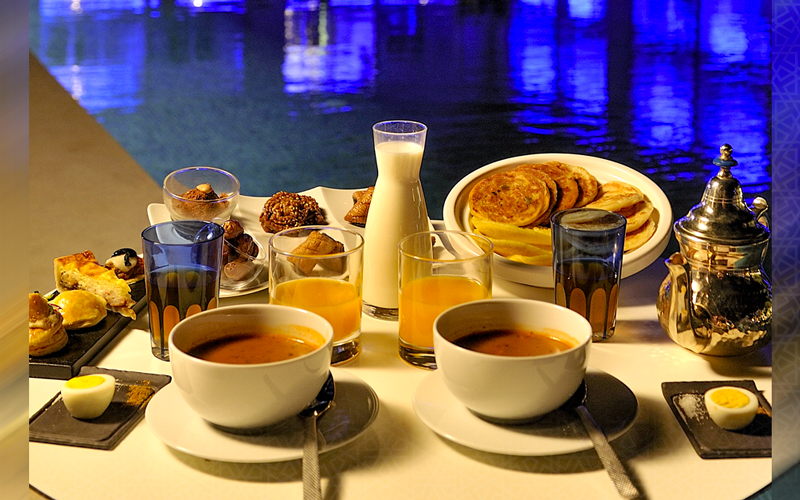
The coastal region of the small town of Larache, in the northwest of the kingdom, has long been forgotten by travelers. If its medina deserves a major restoration, its beaches to the north, vast expanses of sand facing the ocean, are exceptional. The places also appealed to Yasmina Fiermonte and Fouad-Giacomo Filali, art collectors and owners of a small hotel group, La Fiermontina, created a few years ago in Puglia, Italy. For their establishment in Morocco, they wanted to celebrate nature: the hotel, bathed in light, overlooks the Khemis Dunes regional park, where all motorized activity is prohibited, quads and jet skis in the lead. Signed by the Laboratoire Design studio, based in Rabat, the decoration combines the best of Moroccan craftsmanship in the rooms with a more contemporary spirit in the common areas. Many experiences are offered to discover the surrounding villages, involved to varying degrees in the operation of the hotel, including a typical breakfast at the locals’ home. J.-M. A.
source: lepoint.fr