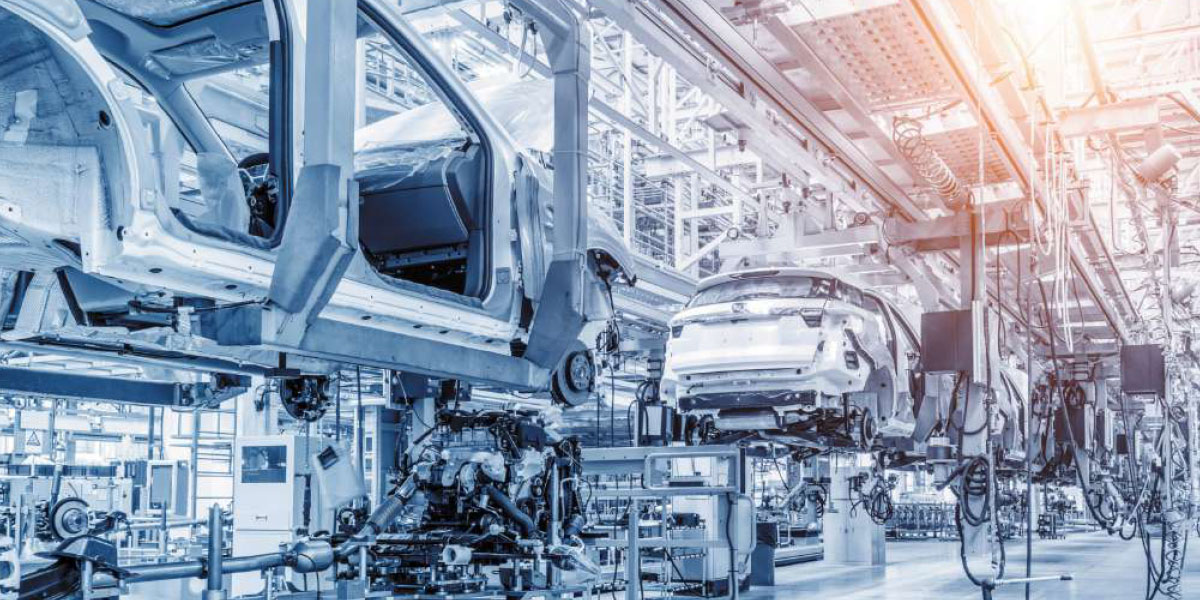


Under the title “How, in 25 years, Mohammed VI transformed the economy of Morocco”, the Ecofin Agency devoted a file to Morocco, published in two parts, and the second part of which has just been taken up by the Congolese Press Agency (ACP). In our turn, we reproduce, below, this part of the file, published Wednesday July 10 by the Ecofin Agency and reprinted Thursday July 11 by the ACP: “Since his accession to the throne in 1999, King Mohammed VI has transformed the Moroccan economy through significant investments in infrastructure and constant efforts in economic diversification. Thanks to a wave of large-scale projects such as the Tangier Med port, the high-speed train network and even wind and solar farms, Morocco has become a modern country, attractive to foreign investors. At the same time, the development of the automobile industry, aeronautics, agriculture and information technology sectors has enabled the kingdom to diversify its economy. This second part of our series examines how these initiatives have boosted growth and strengthened the kingdom’s competitiveness. According to a World Bank report published in 2019, Morocco has “invested heavily in all sectors of economic infrastructure over the past two decades”. The document estimates at 11.2% the share of GDP devoted over the period to investments in public establishments and enterprises (EEP) in the transport, water and sanitation, irrigation, information and communication technologies, and electricity sectors. Transport infrastructure These investments have borne fruit since the Moroccan authorities indicate that approximately 62.7% of the national road network was in good condition in 2020, representing an improvement of 9.2% compared to 2012. These rates are expected to continue to increase thanks to the Roads Plan for 2035, which provides for the upgrading of 7,000 km of national roads, 2,000 km of expressways and 45,000 km of rural roads. Morocco has invested heavily in its road infrastructure. A strategic pillar for the multimodality of the current system, rail transport has experienced remarkable development over the last two decades, with a network now more dense and modern, which includes electric and high-speed lines. The extent of rails for the entire country amounts to more than 2,110 km, including 600 km two-way and 1,284 km of electrically powered lines, according to data from the Ministry of Transport. The emblematic project of this modernization is the Al Boraq high-speed line between Tangier and Casablanca, with a construction cost of more than 3 billion dirhams. In 2023, this line will transport 5 million passengers out of a total of 52.8 million for the entire rail network. And the outlook for the rail sector is ambitious. In the Morocco 2040 Rail Plan, the kingdom plans to increase the rail interconnection threshold to 43 cities compared to 23 currently, i.e. a service rate of 87% of the population. Additionally, public transportation has also improved as urban centers have grown. For example, Casa Transports, the main operator of public transport services, is working on expanding its tram and busway (BRT) networks. In Rabat, a 20 km tram extension project is underway, while similar projects are in preparation in Agadir, Fez, Marrakech and Tangier. The digital sector Under the reign of Mohammed VI, digital became a priority, with the creation of a solid legal and regulatory framework to attract investments. This strategy allowed Morocco to become the country with the highest level of ICT development in Africa, according to a report published in December 2023 by the Uni on International Telecommunications (ITU). The Shereef kingdom displays a score of 85.1 points out of 100 taking into account indicators such as the percentage of individuals using the Internet, the penetration of mobile broadband telephony, mobile broadband Internet traffic, the price of mobile data and voice services and the rate of ownership of mobile phones. According to statistics from the National Telecommunications Regulatory Agency (ANRT), Morocco had 55.2 million mobile telephone subscribers as of December 31, 2023 for a penetration rate of 149.06%. The country also had 38.3 million Internet subscribers, including 31.86 million 4G subscribers. The Moroccan fiber optic network, built in particular by the telecommunications operators Maroc Telecom, Orange Maroc and Inwi, is today one of the most developed in Africa. In 2020, Maroc Telecom had 45,000 km of cables, while Orange Maroc and Inwi each claimed 12,000 km. The Moroccan government also seeks to support the development of the local fiber optic production industry. In November 2023, Moroccan MPs approved a measure to limit the import duty on fiber optic cables to 10% as part of the 2024 Finance Law. In addition, Morocco plans to launch 5G by 2030, in accordance with the “Maroc Digital 2030” strategy and as part of the bid to host the 2030 World Cup, jointly with Spain and Portugal. Projects are underway to reconfigure the frequency spectrum, connect base stations to fiber optic links and establish a suitable economic model. Another booming digital sub-sector in Morocco is that of data centers. According to data from Arizton Advisory & Intelligence, the Moroccan data center market has a size of $27 million in 2022. It is expected to grow to reach $51 million in 2028. With its 23 certified installations, Morocco ranks first for the number of Datacenters compliant with Tier standards in Africa, according to the Uptime Institute. The country thus exceeds, in number of certified Datacenters, South Africa which is the leader in activity on the continent, denoting the quality of national installations. Beyond infrastructure, a diversified Moroccan economy Beyond the development of infrastructure, the 25 years of Mohammed VI at the head of Morocco will also have been placed under the sign of the diversification of the economy, making the country a major industrial and technological platform in Africa. This strategy was structured around the development of key sectors. The automobile industry has become an important pillar of Moroccan industrial policy. Between 2012 and 2022, Morocco almost quadrupled its vehicle production, reaching 465,000 units, and thus positioning itself as the 23rd largest automobile manufacturer in the world and the second in Africa. In 2022, the sector’s exports generated 111 billion dirhams, representing around 8% of GDP. This success is largely attributed to the establishment of large foreign groups such as Renault and Stellantis. Renault, with its Tangier factory inaugurated in 2012, has produced more than 2.36 million vehicles in ten years, while Stellantis launched an industrial complex in Kenitra in 2015, doubling its production capacity from 2022 thanks to an additional investment of 300 million euros. Morocco is also positioned as a major player in the electric battery industry. In 2023, Gotion High Tech signed an agreement to build a battery mega-factory in Bouknadel, with a production capacity of 100 GWh per year and a total cost of $6.3 billion. BTR New Material Group also announced an investment of $500 million for a manufacturing plant cathodes in Tangier Automotive City. These investments, motivated by Morocco’s strategic position and its advantages in terms of costs and skilled labor, strengthen the country’s positioning in this emerging industry. Since 2003, the aeronautics industry in Morocco has experienced remarkable growth, attracting investments from major foreign manufacturers such as Boeing, Safran, and more recently Pratt & Whitney. In December 2023, the latter announced a 715 million dirham project for the construction of a factory to manufacture parts for aircraft engines. In 2024, the Spanish Aciturri (manufacture of engine structures and components), the Canadian Shimco (aerospace industry) and the German Böllhoff signed agreements with the Moroccan authorities between February and March to install new factories in the country. The other sector that has become a pillar for the Moroccan economy is the agri-food industry, which represents 26% of industrial GDP. The sector has recorded average growth of 6% per year over the last ten years. Agricultural valorization units have been created, supported by public and private investments, making it possible to increase national production and target a valorization rate of 70% by 2030. The Moroccan textile industry has also experienced sustained growth, with a constant increase in production and exports. In 2021, the sector had more than 1,628 companies employing 189,000 people. The mining sector, also essential for the Moroccan economy, contributes around 10% of the national GDP and employs 42,500 people. Morocco, which hosts around 70% of the world’s phosphate reserves, is the world’s leading exporter of this raw material. Strategies like the Morocco Mines Plan 2021-2030 aim to boost the sector by diversifying the exploitation of mining resources and attracting new investments. The pharmaceutical industry in Morocco has also attracted significant investment in recent years, with the country becoming the second largest pharmaceutical producer in Africa after South Africa. In 2023, the sector’s turnover will exceed 21 billion dirhams. The government supports this strategic sector through performance contracts and incentive programs, aiming to increase turnover by more than 15 billion dirhams by 2027.”