
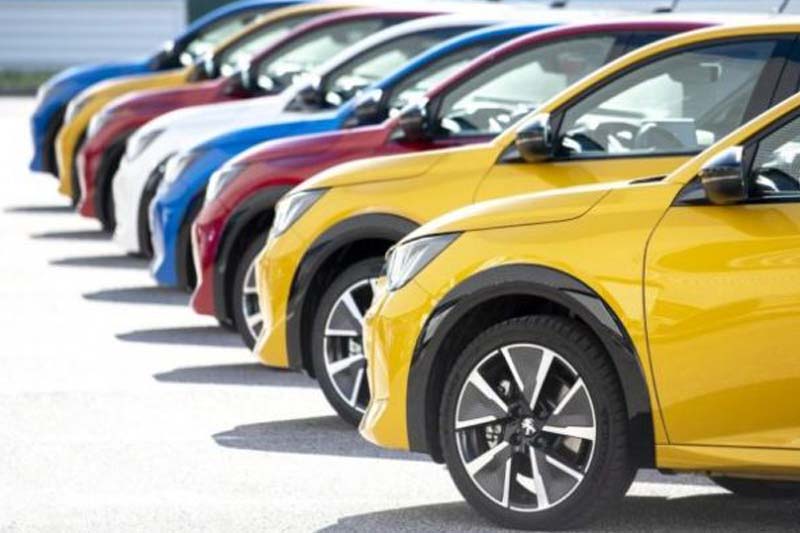
Since the start of 2023, Morocco has established itself as the largest exporter of cars to the European Union, overtaking giants of the automobile industry such as China and Japan. This remarkable turning point is highlighted by a report from the Automotive Logistics platform, which predicts a continued expansion of Moroccan trade with Europe, as long as the country maintains this dynamic trajectory. According to data provided by Automotive Logistics, specializing in news and analysis of the automotive industry and its supply chains, Moroccan car exports to the European Union have experienced a spectacular increase, reaching more than 160 billion dirhams (or 15.1 billion euros) in 2023. Such performance reflects growth of around 30% compared to the previous year, according to the Moroccan Foreign Exchange Office, the entity responsible for the country’s foreign trade. In total, 536,000 cars were delivered this year. Spain is positioned at the top of the markets for Moroccan sales, closely followed by France, Turkey, Germany and Italy. The forecast for 2024 is equally promising: the report indicates that Morocco is on track to surpass South Africa to become the leading manufacturer of finished vehicles in Africa. Published on Thursday October 31, 2024, this study highlights that the growing success of the Moroccan automotive industry is closely linked to the geographical proximity of the Kingdom to Spain, which acts as a natural gateway to the European market. Modern ports and continuous improvement of infrastructure play a crucial role in facilitating rapid and efficient access to major European markets, thereby reducing delivery times and optimizing logistics costs. It is noted that Morocco exports around 80% of the 700,000 finished vehicles produced locally to the European Union. While sales on the local market remain around 150,000 units per year, stable forecasts are expected for the coming years according to government guidelines. On the other hand, a clear ambition is emerging: to increase the production of finished vehicles to one million units by 2025. The report also highlights the port of Tangier Med, which constitutes the main transit point for vehicle exports to Europe. This port is already equipped to handle the increase in trade flows, with a capacity to accommodate around one million new vehicles per year. The division of the finished vehicle transport station at the port is structured around two terminals: that of Renault and a multi-use terminal. Together, these facilities handled approximately 600,000 vehicles in 2023, representing an increase of 21% compared to 2022, according to the Tangier Med Port Authority. Among these exports, 341,000 vehicles came from the Renault factories in Melloussa (Tangier) and Somaca (Casablanca), while 176,000 vehicles were shipped from the Stellantis factory in Kenitra. Andréa Maria Serbu, director of external relations at the Association of European Vehicle Logistics Services (ECG), highlighted that trade flows between Morocco and Europe have existed for a long time, with Stellantis and Renault producing a significant volume of cars for the European market. Tayeb Dahalal, operational director of Austex Group, a Moroccan company specializing in automotive logistics services, commented: “Morocco’s geographical proximity to Europe naturally facilitates trade. However, other strategic elements are also crucial, such as the political stability of the country and attractive incentives. ives for multinationals wishing to establish themselves in Morocco. In addition, the availability of a moderate-cost workforce constitutes a major asset for attracting foreign investment and making the Kingdom a nerve center of the automobile industry.” Dahalal described the current situation in the automotive logistics services sector as “tense and demanding,” adding: “We have established ourselves as experts in managing the pressure of meeting tight deadlines, while ensuring safe and efficient delivery of vehicles across complex logistics chains.”