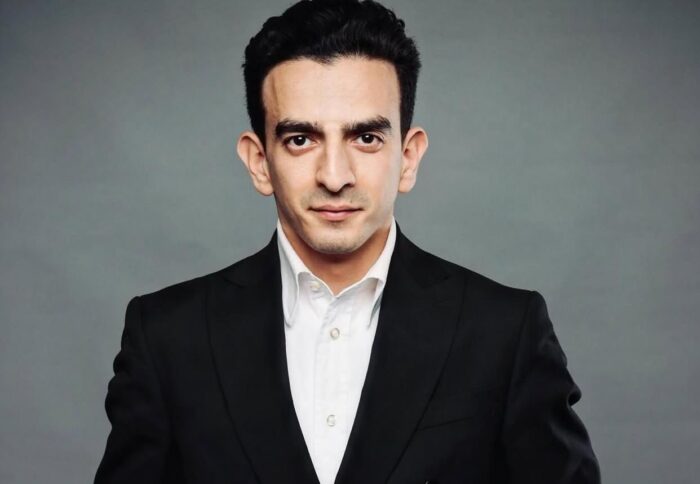

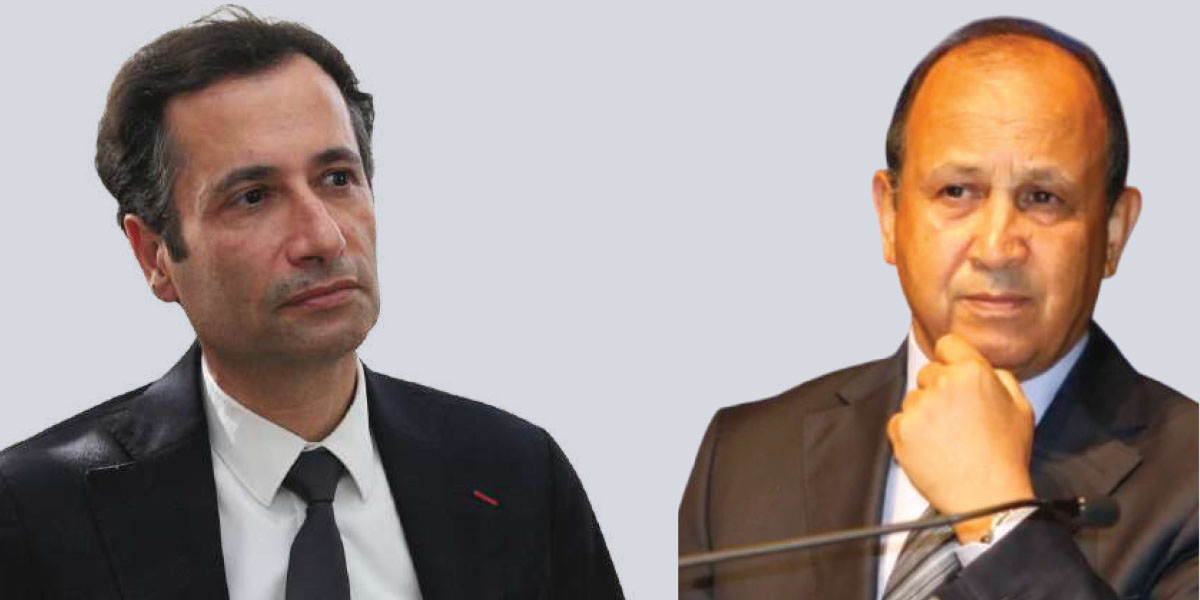
The boss for twenty-seven years of the historic operator of the kingdom is replaced by the former Minister of Finance Mohamed Benchaâboun. By turning the “Ahizoune” page, the Moroccan telecoms giant wants to enter a new era.
After nearly three decades at the head of Maroc Telecom, Abdeslam Ahizoune is leaving office, leaving behind a legacy marked by ambitious pan-African expansion and major digital transformation. Mohamed Benchaâboun takes over, with dual expertise in telecommunications and finance. This change in governance marks a strategic turning point for Maroc Telecom, whose future will depend on its ability to adapt to a rapidly changing market. The history of Maroc Telecom is inseparable from that of Abdeslam Ahizoune, who led the historic operator for nearly 27 years. His presidency was marked by a profound transformation of the company, an ambitious international expansion and a modernization of the Moroccan telecom network. Today, a turning point is taking place with the appointment of Mohamed Benchaâboun at the head of the group, a handover which takes place in a particular context, notably after the payment of a heavy fine for the benefit of Wana. Abdeslam Ahizoune, the architect of a telecom empire When Abdeslam Ahizoune took the helm of Maroc Telecom in 1999, the operator was still a public company. It was under his leadership that the privatization of the company began with the arrival of the French group Vivendi in 2001, marking a strategic turning point. His leadership allowed Maroc Telecom to move from the status of a national monopoly to that of a pan-African telecom player. His vision of expansion was not limited to the Moroccan market. He led the acquisition of several African operators, notably Mauritel (Mauritania), Onatel (Burkina Faso), Gabon Télécom and Sotelma (Mali), thus consolidating the group’s presence on the continent. This external growth strategy has positioned Maroc Telecom as a regional hub, capable of exporting its expertise and standing out from the competition. Under his leadership, the company also experienced two key moments: the IPO in 2004, which allowed the operator to access new financing, and the entry of the giant Emirates Telecommunications Corporation (Etisalat) in 2014, after the withdrawal of Vivendi. Ahizoune was able to manage this shareholder transition skillfully, maintaining a coherent strategy despite the change in supervision. However, his tenure was not without turbulence. Maroc Telecom has been regularly criticized for its dominant position on the national market, particularly by regulators. The fine of 6 billion dirhams, the price of a contested monopoly In July 2024, the Casablanca Commercial Court of Appeal confirmed the decision of the Rabat court ordering Maroc Telecom to pay 6.4 billion dirhams (billion dirhams) to Wana Corporate for anti-competitive practices. This amount, one of the largest ever imposed on the telecommunications sector in Morocco, sanctioned an abuse of a dominant position having hindered the development of competition in fixed Internet. This sanction had a direct impact on the profitability of the group, which saw its net profit fall by 65.9% in 2024, going from MAD 5.3 billion to MAD 1.8 billion. This file marked a setback for Maroc Telecom, forced to review its positioning and adopt an approach more in line with market requirements. As a result, the operator was forced to review its dividend distribution policy, reducing its dividend per share from 4.2 dirhams in 2023 to only 1.43 dirhams in 2024. It is in this context that Mohamed Benchaâboun takes d the reins of the group. Its arrival would be part of a logic of reorganization and adaptation to new market rules. Benchaâboun, a return to the roots for a new direction On February 25, 2025, the Supervisory Board of Maroc Telecom formalized the appointment of Mohamed Benchaâboun as Chairman of the Management Board, for a two-year term, replacing Abdeslam Ahizoune. Former Minister of Economy and Finance (2018-2021), ex-president of the Banque centrale populaire (BCP) and above all former director of the ANRT (2003-2008), he knows the workings of the telecom sector perfectly. His return to this universe can be seen as a return to his roots, but also as a strategic choice to negotiate the future of the group. His knowledge of regulatory mechanisms and his expertise in finance are undeniable assets for repositioning Maroc Telecom in a more competitive context. Its main challenge will be to restore trust with regulatory authorities and ease tensions with competitors. It should also accelerate the diversification of revenues, by focusing on digitalization, optical fiber and B2B services, three major axes, considered by sector observers as being important to maintain the group’s growth. Another major issue: the evolution of Maroc Telecom’s economic model. The group’s profitability still relies heavily on mobile telephony, a market close to saturation. The future therefore hinges on new infrastructures and digital transformation. Benchaâboun could be the man for the job, given his managerial profile and his ability to carry out in-depth reforms. Towards a new strategy for Maroc Telecom? The handover between Ahizoune and Benchaâboun marks a turning point for Maroc Telecom. The company, which is emerging from a phase of consolidation after years of expansion under Ahizoune, is entering a period of readjustment where competition, innovation and regulation will play a key role. The coming months will be decisive in observing the trajectory that the historic operator will take under this new governance. If Benchaâboun manages to meet the challenges that await it, it could breathe new life into the operator and allow it to maintain its leadership in the Moroccan and African market. This transfer of power marks the end of a cycle and the opening of a new chapter, where strategy and regulation will be the keys to the future success of Maroc Telecom.