DISCOVER MOROCCO
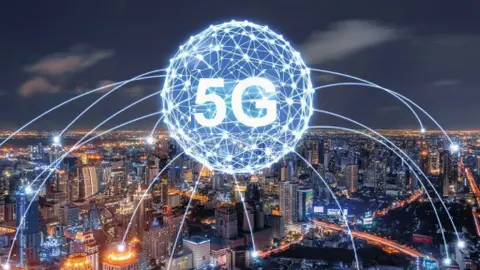
With the simultaneous launch of 5G networks by the three national operators, Morocco has taken a decisive step towards a faster and better connected digital future, this transformation is not limited to technological advancement or commercial expansion, but marks a major turning point in the “Digital Morocco 2030” strategy, where the country is banking on technology as a lever for competitiveness and digital sovereignty
Thanks to the offers from “Maroc Telecom” starting from 119 dirhams with the “El Manzil 5G” device, to the coverage of “Orange Maroc” which extends over more than a hundred cities via a fiber network of more than 12,000 kilometers, to the “Inwi 5G i-Box” solution and the “Inwi 5G i-Box” services. 5G Business Connect », the telecommunications sector illustrates its maturity and its capacity to transform technology into daily service for citizens and businesses
However, despite this positive momentum, this transition raises a necessary debate on the capacity of the national system to fully exploit the potential of 5G, as well as on the social and economic impact of this development on Moroccans, economic indicators show that 5G networks will constitute a real driver of growth, with value creation estimated between $4 billion and $6 billion by 2030, and improved productivity in key sectors such as logistics, manufacturing, agriculture, health and education
5G also opens up broad prospects for startups, digital industries and the Internet of Things, while supporting the transformation towards smart cities and public services digital, this advancement is of particular importance in the national context: the organization of the 2025 Africa Cup of Nations and the 2030 World Cup requires high-quality broadcast platforms, secure data, robust infrastructure and intelligent solutions for the management of major events
For individuals, 5G offers a faster and more stable connection experience, promoting distance learning, broadcasting live and digital activities, thus placing Morocco among the leading countries in Africa and the Arab world in terms of communication technologies
Despite this positive aspect, 5G in Morocco faces several concrete challenges. The high cost of devices and packages may limit access to this technology to a certain social category, thus accentuating the digital divide; unequal coverage between the urban center and peripheral areas, with an initial concentration on large cities, risks deepening geographic disparities in digital access
Increased data consumption requires greater financial capacity on the part of users, raising questions about the economic model future offers. Furthermore, infrastructure requires considerable investments, estimated at nearly 40 billion dirhams, particularly in optical fiber, data centers and cloud solutions.
Added to this are the issues of digital sovereignty in a context of strong dependence on multinationals and foreign technologies, which requires strengthening national investment in local innovation. ale
Finally, health and security concerns, although not scientifically supported about the harmful effects of 5G, are an integral part of the public debate, the launch of 5G is not an isolated technical event, but a strategic step in a historic moment where Morocco is preparing its new place on the map of the global digital economy
The success of this initiative will depend on the capacity of actors and institutions to extend coverage to rural and marginal areas, reduce costs to guarantee digital justice, train national skills, develop Moroccan technological solutions and strengthen cybersecurity and data protection
Thus, 5G goes beyond the framework of a simple network; it constitutes a societal project which requires a balance between the ambition of innovation and the requirements of digital justice, between economic attractiveness and the purchasing power of citizens, between technological sovereignty and openness to the world
If Morocco manages to seize this opportunity, 5G could become a real tipping point towards a new era of intelligent economy, connected services and digital governance modern