
World

Italy: Surge in number of Moroccan victims of human trafficking, with forced labour in the lead
ROMA/ MOHAMED OUBAADI
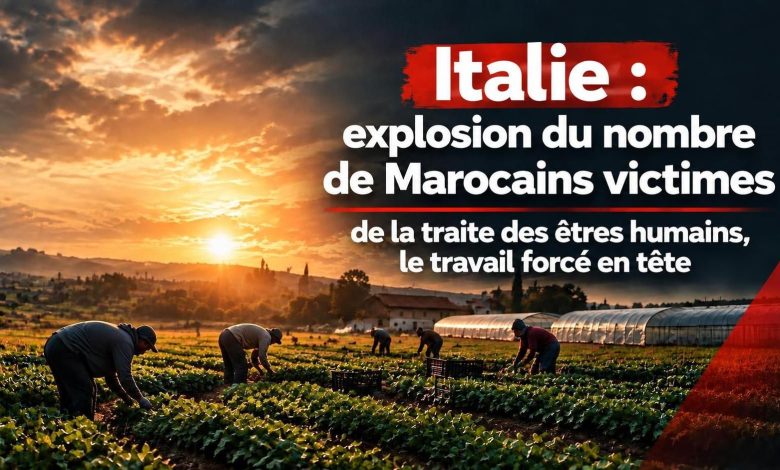
Official statistical data published by the Italian National Institute of Statistics (ISTAT), in collaboration with the Department for Equal Opportunities of the Presidency of the Council of Ministers, reveal an alarming rise in the number of Moroccan nationals who are victims of human trafficking networks. This figure rose from 70 cases recorded in 2021 to 368 last year, with over 80% linked to labour exploitation.
According to the report entitled « Human Trafficking in Italy 2021-2025 », compiled using data from the Information System of the Italian Anti-Trafficking Network (SIRIT) as well as the Ministries of the Interior and Justice, Moroccans top the list of victims exploited in the agricultural sector, with 88 cases out of a total of 324. They also hold first place among recorded victims in the construction sector, with 29 cases.
The document highlights a structural shift in the phenomenon in Italy over the period studied: the detection rate of potential victims surged by 46.8% compared to 2021. Labour exploitation (forced labour) targeting adult men now surpasses the sexual exploitation of women, which historically constituted the predominant form on the peninsula. Consequently, the number of recorded men has reached 1,848 individuals, compared to a slight decline among women (falling from 1,697 to 1,564 cases). At the same time, the number of minor victims has skyrocketed by more than 270% to stand at 174, the vast majority of whom are boys.
In terms of formal identification, ISTAT counts 1,964 officially recognised victims (966 adult men, 915 adult women and 53 minors), with a rise of over 32% in cases of economic exploitation. As for the apparent drop in figures related to sexual exploitation, the report warns that this may reflect a shift by criminal networks towards enclosed spaces and digital platforms that are more difficult to detect on the ground, rather than a genuine decline in the phenomenon.
Other forms of exploitation recorded notably concern forced domestic work — where women originally from Côte d’Ivoire are the most affected — and coercion into criminal activities, which primarily targets Tunisian nationals. The report also notes 8 cases of forced begging and one case of trafficking for the purpose of organ removal.
Finally, as a telling element of changing operating methods, the report specifies that 342 victims entered Italy legally with seasonal work visas under the « Flows Decree » (Decreto Flussi), demonstrating that exploitation networks are now also targeting regular migrants. On the law enforcement front, the authorities arrested or reported 2,428 suspects, predominantly men, nearly half of whom are of Italian nationality.