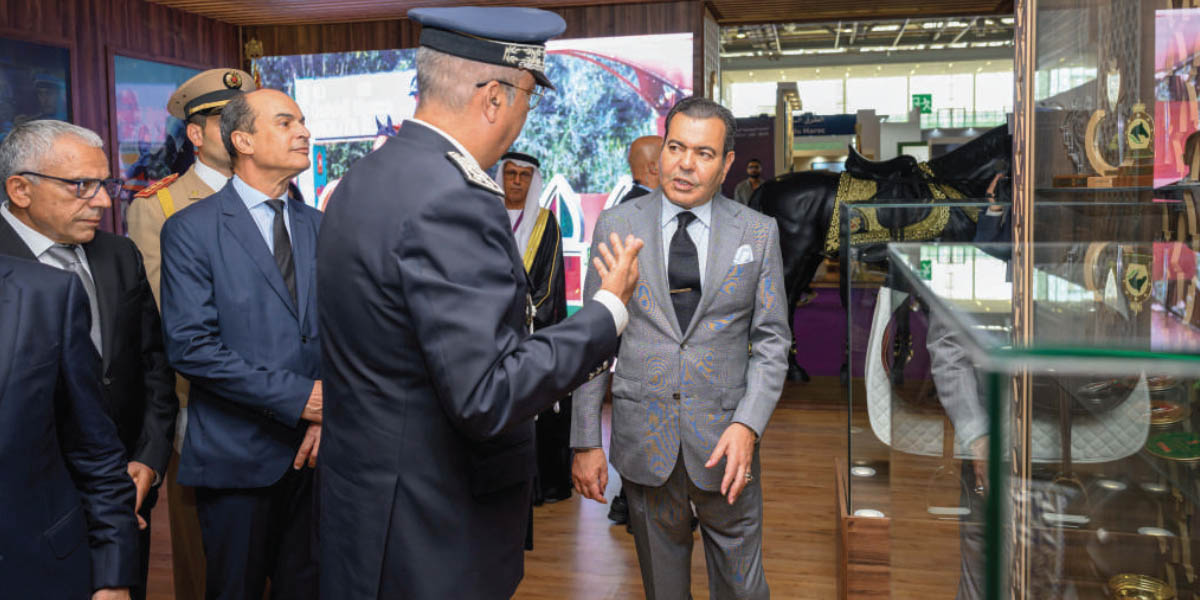

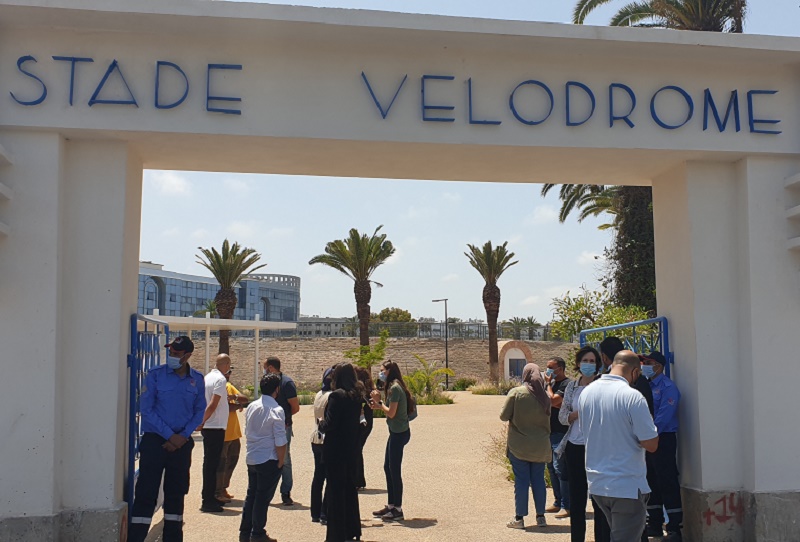
On Thursday March 30, the Sovereign launched the rehabilitation work on the Vélodrome stadium in Casablanca. The restoration of this architectural jewel from the 1920s, which extends over an area of more than 2.1 hectares, plans to restore this historic monument to its vocation as a major place for sports and leisure activities for the people of Casablanca.
The renovation of the site, which will be completed in 18 months, will require a budget of 15 million DH. The Vélodrome will include, in addition to an urban park which integrates sports and leisure areas, a body of water, walking and jogging circuits, a children’s play area, a skate park, green spaces as well as commercial premises (cafes/restaurants).
The Vélodrome/cynodrome is, remember, a classified site, registered in the BO of December 9, 2013. It is also one of the rare green spaces in the heart of the metropolis, surrounded by palm trees and eucalyptus, with a concrete track on which cycling legends such as Coppi, Bobet, Robic…
SDL Casa Patrimoine is responsible for its rehabilitation. Among the other Casablanca sites affected by the development work are the old slaughterhouses, the Mauritania cinema, the central market, the Sacré-Cœur church, the Karl Fick villa, the Agadir market and the municipal library.
But the rehabilitation process is more advanced for certain sites including the Sacré-Cœur church, the Karl Fick villa, the Zevaco dome, while studies are underway for the renovation of the central market (see edition of March 16, 2017).
The Sovereign proceeded, on the same day in the Al Hanaa district (Aïn Sebâa), to the inauguration of a local sports field, built within the framework of the INDH. This project is part of a global program relating to the development of 23 local sports fields in different neighborhoods of the districts of Roches Noires, Aïn Sebâa and Hay Mohammadi, for a total investment of around 27.4 million DH. This local social policy aims to develop the sporting skills of children and young people, fight against delinquency and guarantee the social inclusion and development of residents, by giving them access to basic equipment and services.
source: leconomiste