
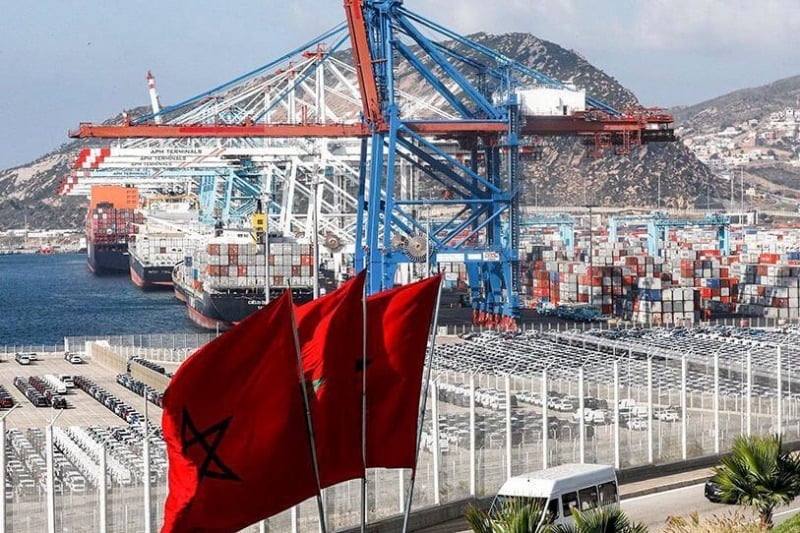
In the regional panorama of transformation, Morocco has marked significant progress on the economic and governance levels, positioning itself as a leader in this area, affirms the latest annual report of the BTI Global Transformation Index for the year 2024. The Bertelsmann Stiftung’s Transformation Index (BTI) 2024 examines and compares the transition dynamics in 137 changing nations based on data collected between 2021 and 2023. In its tenth version, it establishes itself as an observatory of underlying trends and global developments, offering through the analysis of time series an informed vision of long-term issues. This comparative analysis instrument assesses the political, economic and governance development of nations according to pre-established criteria, drawing on both quantitative and qualitative data. According to the index, Morocco is at the head of the pack of Arab nations in the field of governance, rising to 71st place in the world, followed by Tunisia in 78th place and Algeria in 80th place. Mauritania ranks fourth at 90th place in the world, while Libya brings up the rear at 125th place. Regarding the economic transformation index, Morocco shines at the top of the Maghreb ranking, occupying 60th place in the world, followed closely by Tunisia in 63rd place and Algeria in 66th place. Mauritania is positioned in fourth position at the Maghreb level, at 102nd place in the world, while Libya occupies 128th place. In terms of political transformation, Tunisia stands out as a leader in North Africa and the Arab world, rising to 68th place in the world, followed closely by Algeria in 74th place. Mauritania ranks third in the region and 80th globally, while Morocco ranks fourth at 106th globally. Egypt is in sixth position in North Africa and 109th in the world, while Libya is in 130th place in the world. The BTI 2024 notably highlights the urgent social challenges facing Morocco, notably the prevalence of poverty. Between 2019 and 2022, the pandemic and inflation led to a decline in living standards of 7.2% nationally, affecting an additional 3.2 million people. Furthermore, income inequalities remain among the highest in North Africa. The results of the report thus reveal that Morocco is emerging as a country where economic progress coexists with persistent social and political challenges, thus offering a complex and nuanced picture. Although the country has seen many remarkable advances economically, with stable and diversified growth in key sectors, progress supported by structural reforms and investments in infrastructure, the Kingdom still faces significant social challenges that it must address.