
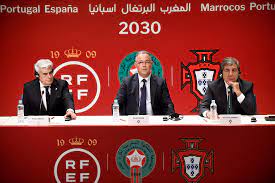
During a meeting organized by the General Confederation of Moroccan Enterprises (CGEM) around the provisions of the 2025 Finance Law, Fouzi Lekjaa, Minister Delegate in charge of the Budget, analyzed the multiple economic and strategic issues linked to the joint organization of the 2030 World Cup. This transcontinental edition promises to be a major lever for economic development, the modernization of infrastructure and the strengthening of the diplomatic positioning of the Kingdom. A look back at the main points of his intervention.
The 2030 World Cup is distinguished by its unprecedented format: 104 matches over seven weeks, spread across three countries and attracting more than 10 million spectators. Fouzi Lekjaa recalled the logistical and organizational scale of this event, made possible thanks to synergies between Morocco, Spain and Portugal. “With this unique configuration, we expect record attendance, particularly due to the geographic proximity and shared infrastructure,” he said. He also highlighted the historic selection process, marked by the unanimous vote of the 211 FIFA member federations, establishing the tripartite candidacy as a response to growing demands for inclusiveness and sustainability. Lekjaa insisted on the legacy that the World Cup will leave for Morocco, presenting three major investment areas: • Modernization of sports and urban infrastructure: The program provides for the renovation of existing stadiums in Rabat, Casablanca, Marrakech, Fez, Tangier and Agadir, as well as the development of 32 base camps spread throughout the country. Each camp will include training grounds that meet international standards and high-quality hotel facilities, ensuring a balanced distribution of economic benefits across the entire territory. “These projects will help revitalize often marginalized regions, while meeting FIFA’s requirements,” explained Lekjaa. • Development of transport infrastructure: Among the flagship projects, the high-speed line (LGV) linking Kenitra to Marrakech, as well as RER links to Mohammed V airport, are at the heart of an urban transformation. These projects, already launched with the support of the banking sector, aim to streamline mobility and strengthen connections between the main cities. • Expansion of airport infrastructure: The airports of Marrakech, Tangier, Fez and Rabat will be subject to major work. Casablanca will see the construction of a new airport, aiming to make it a strategic hub in line with the expansion of the Royal Air Maroc fleet, which aims to reach 200 aircraft by 2035. A unique economic and diplomatic opportunity The World Cup represents significant economic potential for Morocco. Taking inspiration from the 2022 edition in Qatar, which generated a net turnover of $15 billion for FIFA, Lekjaa estimates that the direct and indirect benefits could amount to several billion dollars for the Kingdom, positively impacting key sectors such as tourism, hospitality, transport and services. In addition, the event will be a global showcase for Morocco. “After the 2026 World Cup, all football posters will display the “Morocco” logo, which will provide invaluable visibility for our country,” adds the Budget Minister. Lekjaa also called for multi-sector mobilization, insisting on the involvement of Moroccan companies in carrying out the projects. “It is essential that our companies are prepared to meet the demands and position themselves effectively « We will focus on these opportunities, » he said, adding that information sessions will be organized to clarify needs and schedules. For Fouzi Lekjaa, the 2030 World Cup is not just a sporting event, but embodies a national vision. By focusing on sustainable investments and national synergy, Morocco aspires to position itself as a model of international co-organization, capable of redefining its status on the global stage. “This challenge must be met collectively, with the support of all economic and social actors,” he concluded.