
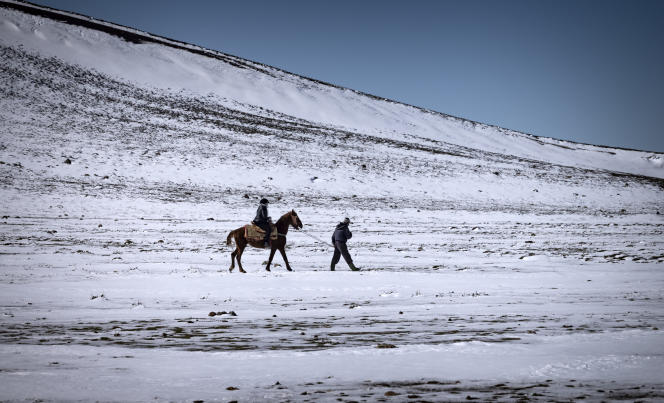
In the snowy massifs of the Middle Atlas, in the Morocco, the desertion of foreign visitors linked to the Covid-19 pandemic leaves the local population, who derive most of their income from tourism, desolate and idle. The closure of borders due to the health crisis more than a year ago blocked international customers traditionally attracted by the beauty of the landscapes. The mood remains gloomy in the mountain range which stretches some 350 km from the southwest to the northeast of the country, despite the heavy snowfall in recent weeks.
Only the last hoarded monkeys in Morocco are benefiting from the lull. “The fact that there are very few tourists is ultimately a good thing for the monkeys, who have been able to resume a healthier life” in the Ifrane national park (north-east), welcomes Mustapha Oukannou, of the Dutch NGO AAP. Many visitors, in fact, feed the primates without listening to the advice of those who, like him, work for the protection of this endangered species.
Keep boredom
In the heart of the immense cedar forest located near Azrou, near Ifrane, equestrian guides wander aimlessly. Some do not hesitate to wander alone in the cedar grove reciting Amazigh poetry to relieve boredom. “We had a good start, especially with foreign visitors, but the pandemic stopped our activity in its tracks”, laments Youssef Mouhyi, director of the Maison de la Cédraie, an ecomuseum opened in January 2020. Group walks, seminars and other collective meetings are all at a standstill because of health restrictions.
Moulay Abdellah Lahrizi, 55, owner of the Jardins d’Azrou inn, lost 70% of his customers. “Today we have to adapt to a local clientele”, told AFP the Swiss-Moroccan who returned to his native country to launch into tourism. “The proximity to large cities and the epidemiological situation in the region, where very few cases are recorded, encourage people to come. But we are far from the mark because the influx is episodic”, continues the owner of the inn, nestled a few kilometers from Ifrane.
In the Azrou cedar grove, Rachid Hamidi, mineral stone seller, is slumped on a plastic chair in front of his small shop. “The few passing tourists take photos and move on. I sometimes go home without having sold anything”, this 34-year-old man reports, worried.
“The city is empty”
In Ifrane, located at an altitude of 1,800 meters and often nicknamed “Little Switzerland” because of its proximity to a small area with a few ski slopes, the atmosphere is completely different, at least on weekends. “Before the pandemic, I instinctively spent my holidays abroad. But coronavirus obliges, I decided to explore the region”, testifies Ayman, 30 years old, intern in intensive care in a hospital in Rabat: “There is a lot to see in Morocco and what’s more, I help to drive the country’s tourist economy, hard hit by the crisis. »
The small Ifrane market is teeming with people on weekends, with its restaurants offering traditional dishes and its shops offering warm clothes to passers-by frozen by the cold. Restaurants, cafes and hotels are almost all full. A record attendance was even recorded at the beginning of January, with an occupancy rate of 95%, according to the tourism department.
But “it’s the only destination in Morocco that has achieved this feat during a pandemic”, underlines Mariem Ouadaani, director of the Ifrane Provincial Tourism Delegation. Especially because access has not been prohibited, unlike the Oukeimeden station – the most famous ski area in the country, in the heights of Marrakech – which has been isolated for several weeks by decision of the local authorities.
The weekend influx will not save the winter season in Ifrane. “During the week, the city is empty. This is problematic because our expenses are fixed but our revenues are not”, underlines the manager of a restaurant.
source: lemonde.fr