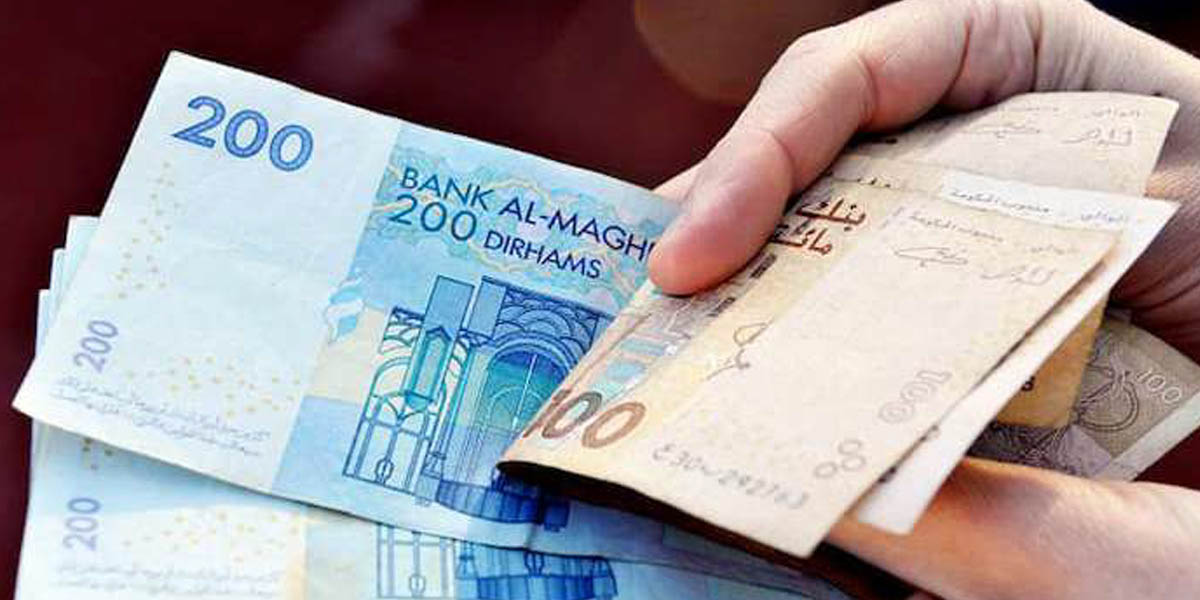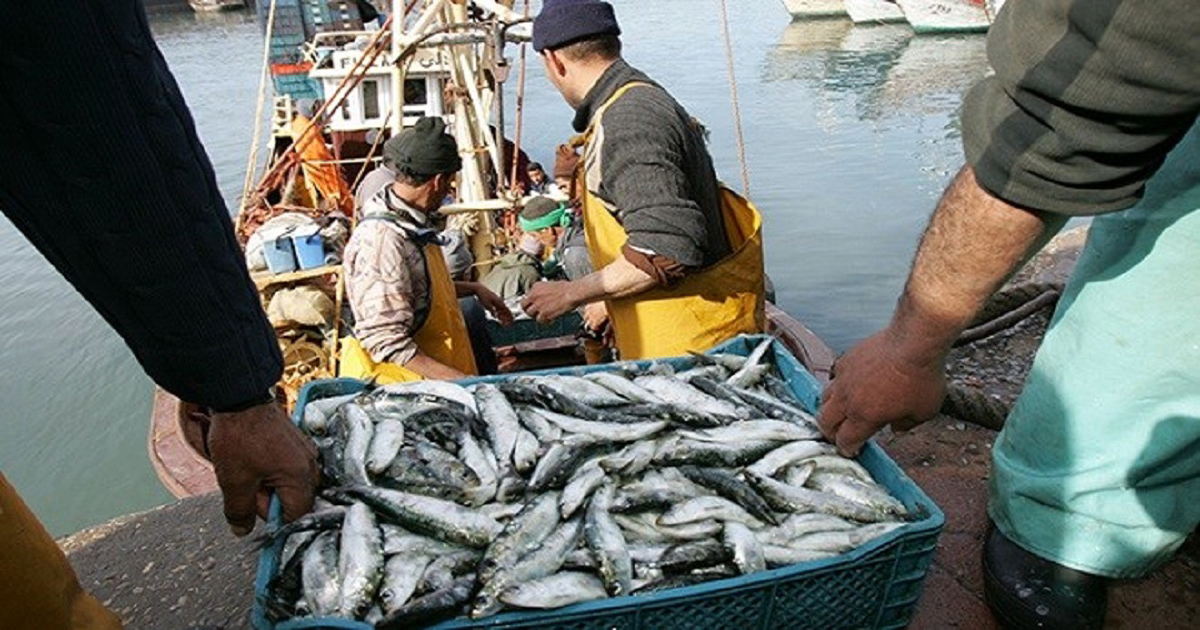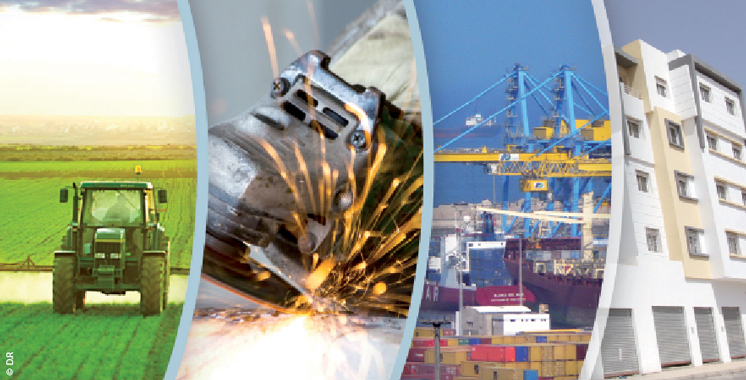


According to the latest barometer of country and sectoral risks published by Coface, Morocco once again confirms its resilience and remains in the Top 10 best-rated countries in Africa. The Kingdom also maintains the best rating in North Africa. The international context, however, remains uncertain and growth in the global economy will have to slow to 2.2% in 2024, after 2.6% last year. Inflationary pressures and still high rates will keep companies in a difficult situation, particularly in advanced economies.
Coface has just published the barometer of country and sectoral risks for the first quarter of 2024. It emerges that the year 2024 promises to be both decisive and indecisive, both on the (geo)political level with more than 60 national elections – presidential and/or legislative – and economically, with risks that are piling up on a global economy that continues to slow down. In this context, Coface modifies the assessments of 13 countries (12 reclassifications and 1 downgrade) and 22 sectors (17 reclassifications and 5 downgrades), reflecting a significant improvement in the outlook, in an environment which nevertheless remains uncertain.
Concerning Morocco, it once again confirms its resilience, according to the country risk assessment map published by Coface. The credit insurer thus maintained the “B” rating for the Kingdom, on a dark global and African map with ratings C, D and E (i.e. high, very high and extreme risk). Even if its rating reflects a “fairly high” risk, Morocco remains in the Top 10 of the least risky countries on the continent. It is also the highest rated country in North Africa. In Africa, Mauritius stands out with an improved rating from B to A4, i.e. from a “fairly high” to “fair” level of risk. For this Indian Ocean country, Coface estimates that the economic imbalances caused by the pandemic appear to be resolving. GDP growth is returning to its pre-pandemic pace, with a falling unemployment rate and an acceleration of policies to diversify the economy, particularly in the sugar sector, textiles and financial services. Globally, for the third year in a row, economic growth will slow, to 2.2% in 2024 after 2.6% last year. Emerging countries will be the main engine of the global economy, contributing 1.7 percentage points to the 2.2% growth. “Three quarters of global growth will therefore be attributable to emerging economies, the highest since 2013. Among the most dynamic regions will be, once again, South-East Asia, with growth of 4.6%, after already 4% last year,” underline the Coface experts. Furthermore, the poorest and most indebted countries will experience more difficulties. With high rates and a dollar that will remain strong, an increase in sovereign defaults is to be feared, with certain countries already finding themselves in a situation of default, or near default, such as Ghana, Ethiopia and Malawi in Africa. As for monetary policy, despite a decline in 2023, and a rather reassuring short-term dynamic, underlying inflation remains twice as high as the Central Banks’ target in most developed monetary zones. “The challenge for 2024 will be to see if the monetary tightening undertaken for more than eighteen months by the Central Banks is sufficient to go the “last mile” and bring inflation back to 2%. And above all, keep it there,” underlines Coface. This adverse economic environment will keep companies in a difficult situation, aggravating the risk of a sharp acceleration in insolvencies. Concerning the instability in the Red Sea region, Coface considers that it constitutes a major threat to maritime traffic. This trade route, which constitutes the fastest sea route to connect Europe to Asia e, sees 12% of world trade and 30% of world container traffic transit. Faced with the threat in the region, most shipping companies are already avoiding the Suez Canal and opting for the Cape of Good Hope (South Africa), extending the journey by more than ten days and incurring additional costs, particularly for fuel. For those who continue to borrow it, security and insurance costs skyrocket. To avoid these fees, carriers are rerouting their ships to European and Mediterranean trade routes, which reduces the space available for goods moving on the trans-Pacific and North South routes, also leading to higher rates. Despite increases in freight rates, they remain, on average, still below their record levels at the start of 2022. “For the moment, we believe that the inflationary impact will be contained – of the order of 0.1 point of inflation at the global level (0.2 point in Europe),” specifies the credit insurer. Note that changes in sectoral risk assessment mainly take place in automobiles, energy and, to a lesser extent, paper. For the automotive sector, recent events in the Red Sea and the announcements made by some manufacturers also demonstrate that a certain amount of caution remains in order. Also, despite the 6 reclassifications this quarter, the sector remains at high, or even very high, risk in the vast majority of countries assessed by Coface.
source: lematin.ma