
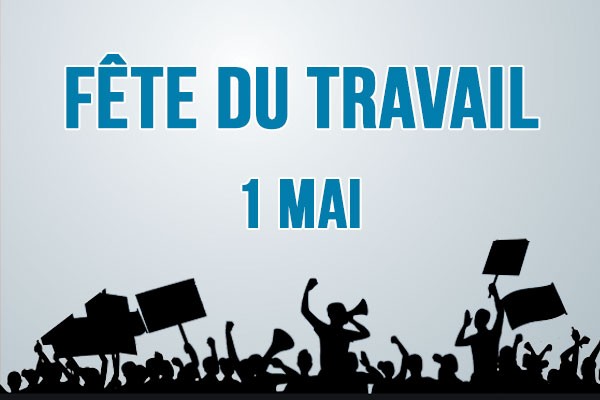
This Wednesday, the working class in Morocco and around the world celebrates May 1st. But where does this paid, non-working day have its origins? And what was the trigger? History of this day like no other.
May 1, International Workers’ Day, is celebrated every year around the world. Since the interwar period, in 1947, this day has been a paid day off. It is an opportunity for workers to renew their demands and their fight for the improvement of their working and living conditions. Historians are clear: this day has its origins in a widespread strike by American workers in 1886. On May 1 of that year, nearly 350,000 American workers abstained from working, paralyzing many factories. Their main demand? An eight (8) hour work day. The bosses oppose this categorically. The protests, particularly in Chicago and Illinois, continued until May 3 and grew to such an extent that the police charged the demonstrators and the army intervened. Results: 6 dead and several injured. The town of McCormick, home to several factories, is under siege. However, nearly 150,000 people braved this state of affairs and gathered in a meeting. A bomb explodes, killing 15 police officers. In the end, the workers won their case. The triple 8But it was in 1889 that May 1 was adopted as “International Workers’ Day”, following a meeting of the Socialist International in Paris, France. If May 1st has its origins in the struggles of the labor movement to obtain the reduction of the working day to eight hours, history also reminds us of this slogan brandished by workers in the United States: 8 hours of work, 8 hours of sleep, 8 hours of leisure. Since then, May 1st has been celebrated in most countries, but the celebration has not always been there. We remember in particular the dramatic events in 1891 in Fourmies in the north of France, which left ten people dead among the crowd. The first May 1st in MoroccoIn Morocco, the first Labor Day took place in 1951. At the call of the unions, at the time clandestine, a rally took place at the Père Jégo stadium in Casablanca. This gathering did not last long: it was dispersed by the occupation forces. Morocco being under French protectorate, the main demand of the workers was naturally that the Kingdom regain its independence. We had to wait until May 1, 1955 to witness a parade of Moroccan workers under the aegis of the Moroccan Labor Union (UMT), created on March 20 of the same year on the basis of three founding principles: union, independence and democracy. The years follow one another, but are not the same: in each period, the appropriate demands and the speeches that go with them. From independence to work for all to freedom of association and expression, the slogans change over time. This is the case on May 1, 2018 when the unions, demanding a substantial increase in wages, raised their voice, promising to make life difficult for the El Othmani government despite its offer of six billion dirhams to “buy” social peace.