
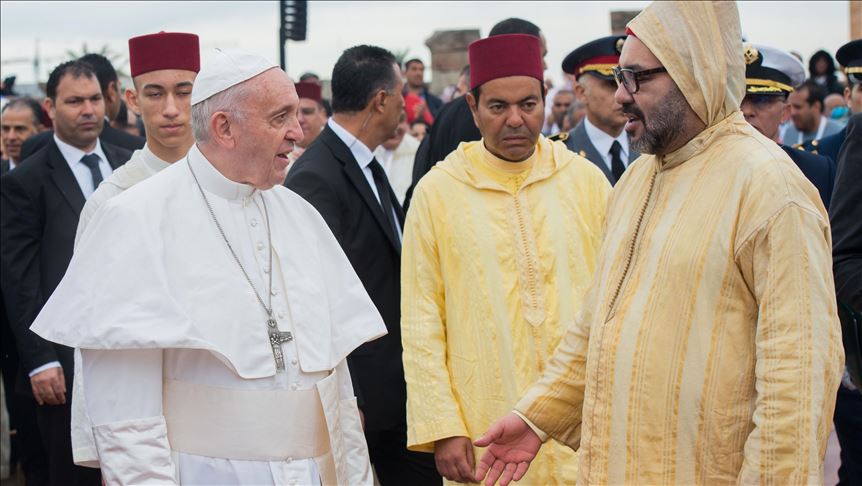
Pope Francis died Monday April 21, at 7:35 a.m., Easter Monday, the Vatican announced in the morning. The sovereign pontiff died of a stroke after “a coma and irreversible cardiocirculatory failure,” said a Vatican press release at the end of the day. The pope died the day after his last public appearance for the celebrations of Easter, the most important holiday of the Catholic faith. The efforts made by the sovereign pontiff who appeared without respiratory assistance and gave his “Urbi et Orbi” blessing may have weakened his body and further deteriorated his health. Pope Francis suffered a stroke believed to be of hemorrhagic origin according to Italian neurologist Francesca Romane Pezzella to Corriere della Sera. The risk of suffering from these strokes increases with age, but so does hypertension. However, the Holy Father was 88 years old and had suffered from hypertension for years. After the death of Pope Francis, the Vatican is busy organizing the funeral which will take place between Friday April 25 and Sunday April 27, according to protocol. The sovereign pontiff left instructions that contrast with tradition in his will. The funeral of Pope Francis will take place this Saturday, April 26 at 10 a.m., the Vatican announced. The appointment of a successor, on the other hand, will not take place for several weeks. According to protocol, the conclave to nominate a new pope must meet between May 5 and 10. Jorge Mario Bergoglio, his birth name, born in 1936 in Buenos Aires, Argentina, was the first non-European pope since the 8th century.