
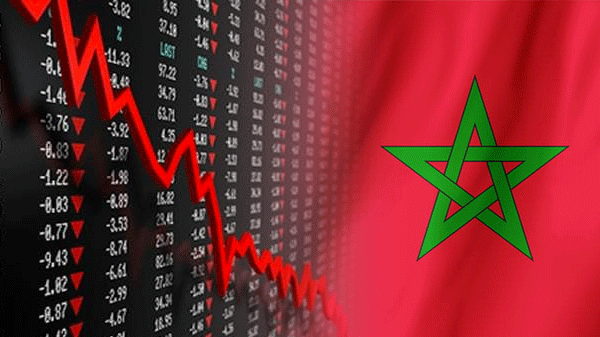
As the global economy goes through tides and valleys, battling high interest rates and persistent inflation, Morocco is emerging as a notable exception, surprising analysts with its resilience and economic growth, according to the Iberian press. Despite challenges such as devastating droughts and earthquakes, the kingdom has managed to maintain growth while controlling inflation and increasing rates. The specialized portal elEconomista scrutinizes this success closely and makes Morocco an example to follow. According to the latest report from the World Bank (WB), the Moroccan economy has become significantly more resilient, with GDP growth of 3.5% in 2023, compared to 1.1% in 2022, thus exceeding the OECD average which slowed to 1.6%. Moroccan resilience: a bouquet of factors Two factors were crucial in this emergence. According to analysts: “Domestic demand has been a major driver of growth despite environmental and economic challenges. Private consumption increased, contributing to an increase of 2.2% to 3.1%, despite inflationary pressures and droughts. This increase in domestic demand has been supported by government efforts to stimulate investment and support local industries. In addition, internationally, Morocco has improved its trade balance thanks to selective restrictions on imports and surprising export resistance. This strategy made it possible to reduce the current account deficit to a historically low level of 0.7% in 2023, thus strengthening the country’s monetary stability. Moroccan exports have benefited from a diversification of sectors, notably automotive, chemicals and agriculture, which have experienced significant growth despite global challenges. Strengthening financial stability and foreign exchange reserves Morocco’s foreign exchange reserves have also climbed, reaching nearly $34.3 billion, providing significant room to support the currency and fight inflation. In addition, “IMF loans have strengthened confidence in the country’s ability to face economic challenges,” announces the Spanish site. This financial stability has allowed Morocco to maintain an environment favorable to investments and economic growth. However, this success is not without its challenges. Bad harvests due to weather conditions have exacerbated employment problems, particularly in rural areas. Although the unemployment rate reached a low of 11.2% this summer, it had already risen to 13% last January. The transition to services has been slow and fraught with obstacles, and employment prospects remain limited in many parts of the country. In addition, “the return of inflation depends on fragile geopolitical factors, notably tense relations with Algeria which could disrupt energy supplies. Growing wage demands could also put additional pressure on public finances, as Morocco seeks to maintain its budgetary balance,” announces the same source. Futuristic outlook: staying the course despite challenges Despite these challenges, Morocco has demonstrated an exemplary capacity to overcome obstacles and prosper in a tumultuous economic environment. Structural reforms and investments in education and innovation could help the Kingdom diversify its economy and create high-quality jobs. The authors of the analysis pose major questions: “Will Morocco be able to maintain its growth trajectory and overcome the challenges ahead in 2024. Collaboration with international partners, prudent management of monetary and budgetary policies, as well as targeted investments in key sectors will be essential to ensure the sustainability of the economic recovery and the well-being of the Moroccan population”.