
In Morocco, the AI Movement center puts artificial intelligence at the service of the African continent

Founded in 2021, the Moroccan International Center for Artificial Intelligence will host the first African summit dedicated to this technological revolution in June.
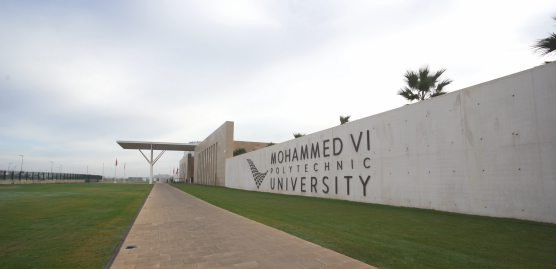
You can share an article by clicking on the share icons at the top right of it. The total or partial reproduction of an article, without the prior written authorization of Le Monde, is strictly prohibited. For more information, consult our general conditions of sale. For any authorization request, contact syndication@lemonde.fr. As a subscriber, you can gift up to five items per month to one of your loved ones using the “Gift an Item” feature. https://www.lemonde.fr/afrique/article/2024/03/21/au-maroc-le-centre-ai-movement-met-l-intelligence-artificielle-au-service-du-continent-africain_6223333_3212.html The 5,000 m² building looks like a Moroccan “MIT” in the suburbs of Rabat. Its dome, in particular, which occasionally serves as an aviary for aerial drones, is a nod to the Massachusetts Institute of Technology, where the emblematic boss of the Office of Cherifians of Phosphates (OCP), Mostafa Terrab, once taught. Co-founded in 2021 by OCP, the Moroccan artificial intelligence (AI) center – called AI movement – is the fertilizer giant’s main investment in this technological revolution. A pioneering project, while Morocco is still slow to adopt an action plan dedicated to AI. Proof of the ambition of its sponsor, who has already invested heavily in education and the energy transition, it is in the premises of AI movement that the first African AI summit will be held from June 3 to 5.
But if MIT is a model for AI Movement, the means deployed by the two institutions are incommensurable: while the American university has invested more than a billion dollars in its faculty dedicated to artificial intelligence, the center Moroccan only receives one million euros each year from OCP, the group also being responsible for paying its employees. In 2023, research contracts financed by companies and income from training brought its budget to 3.5 million euros. An amount higher than that of the Saudi center ICAIRE and its Slovenian counterpart IRCAI.
You can share an article by clicking on the share icons at the top right of it. The total or partial reproduction of an article, without the prior written authorization of Le Monde, is strictly prohibited. For more information, consult our general conditions of sale. For any authorization request, contact syndication@lemonde.fr. As a subscriber, you can gift up to five items per month to one of your loved ones using the “Gift an Item” feature. https://www.lemonde.fr/afrique/article/2024/03/21/au-maroc-le-centre-ai-movement-met-l-intelligence-artificielle-au-service-du-continent-africain_6223333_3212.html Supervised by Amal El Fallah Seghrouchni, from the CNRS-Sorbonne University computer science laboratory (LIP6), the seven teacher-researchers and eighteen doctoral students attached to the center are working on concrete solutions to the problems of inequalities, energy consumption, sustainable cities, etc. One of their flagship projects is a mobile application, which scans documents written in French or English and transforms them into an audio file in Arabic. “There are still a high number of illiterate women in rural areas in Morocco. With this application, they can understand personal documents, such as medical prescriptions, without having to share them with third parties,” explains doctoral student Houda Saffi, who is planning a translation into Darija, the Moroccan dialect of Arabic. Youssef Osrhir, Reda El Marhouch and Yahiya Moukhlis are working on the deployment of swarms of drones by optimizing their energy consumption, ensuring their autonomous navigation and decentralizing decision-making – in order to increase the number of vehicles. “Drones have become essential for civil and military applications, such as precision agriculture, observation of illegal migratory flows and surveillance of sensitive areas,” specify the three doctoral students.