
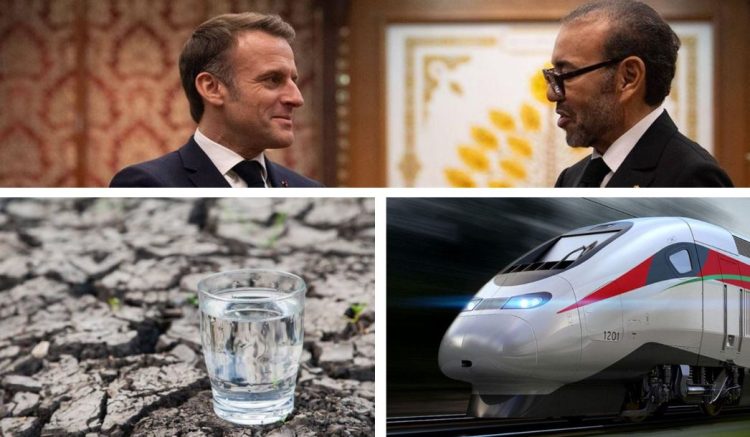
2024 was a defining year for Morocco, marked by events that had a profound impact on its economy, international relations and domestic development. Here is an overview of the main economic and strategic news of the year. The year 2024 was marked by major upheavals for Morocco, both nationally and internationally. Between the fight against the water crisis, progress in energy transition and structural reforms in key sectors such as public enterprises, the country has consolidated its position as a dynamic player in the region. The year 2024 marked a turning point for Morocco, where the country had to face major challenges while continuing its quest for economic and social transformation. The water crisis, exacerbated by a 30% drop in water reserves in dams, has weighed heavily on the agricultural sector, a pillar of the economy representing 13% of GDP and more than 30% of jobs. Faced with this emergency, massive investments have been made in desalination and irrigation efficiency, but the crisis has also revealed structural gaps in the management of natural resources. Read also | Bank Al-Maghrib forecasts growth of 2.6% in 2024 in Morocco Economically, Morocco recorded moderate growth of 3.4%, driven by the tourism and renewable energy sectors. The country continued its energy transition with an installed solar capacity exceeding 3,000 MW, consolidating its role as a regional leader in clean energy. At the same time, major reforms have been undertaken to modernize public companies, which still represent a significant part of the Moroccan economic fabric. These reforms aim to improve their profitability and attract more private investment, although governance and transparency challenges persist. In a context of geopolitical changes and international competition, Morocco has also strengthened its strategic partnerships, particularly with the European Union and African countries, while consolidating its place on the regional scene. However, this progress has been accompanied by internal challenges, particularly around youth unemployment, which remains high at 20%. Through these developments, Morocco strives to respond to economic, social and environmental challenges while building the foundations of its future prosperity. A look back with supporting images of the key moments of the year. The water crisis: a permanent threat to agriculture and the economy The water crisis dominated Morocco’s national agenda in 2024. Faced with historically low water levels in dams, the country faced an immediate threat to its agriculture, a crucial sector for the economy. With a 30% reduction in available water reserves, authorities were forced to put an emergency plan in place. Investments in water desalination and improving irrigation efficiency have been initiated, but long-term solutions remain uncertain. This situation highlighted the country’s dependence on limited natural resources and underlined the urgent need for structural reforms to guarantee water security. The impact of this crisis was particularly felt in agricultural regions, where harvests declined significantly. Hundreds of thousands of farmers found themselves faced with loss of income and precarious living conditions. Read also | LGV: The Chinese Covec still stands out… At the same time, Morocco has intensified its efforts to diversify sify its agricultural model, turning towards more drought-resistant crops and precision agriculture technologies. However, the central question remains: how to balance economic growth with sustainable water management, particularly in the face of climate change? The issue of water management has also provoked a national debate on the governance and management of natural resources. Calls for more transparent and efficient management of public funds for the water sector have multiplied, highlighting a growing awareness of sustainability issues. We remember the Sovereign’s last speech, which called for responsibility in water management. The Sovereign insisted on the need to adopt a sober and responsible approach in our relationship with water, a message which guides Moroccan public policies today. The year 2024 marked a strategic turning point in water conservation and management policies. In a recent release on the subject, Minister Nizar Baraka warned of the fact that all national strategies now take into account the water footprint. Innovative desalination projects: these initiatives rely on renewable energies to reduce their environmental impact, while strengthening Morocco’s industrial sovereignty in this area. Optimization of water resources: a national strategy aims to limit water loss, in particular through the development of drip irrigation, with the ambitious objective of equipping 1 million hectares. On a citizen level: awareness campaigns have been launched to encourage responsible behavior. The minister stressed the importance of popularizing good practices to preserve water, particularly through an ambitious program to protect groundwater. Energy transition: Morocco in pole position Morocco is continuing its ambitious trajectory in terms of energy transition, and 2024 was a milestone year in this dynamic. The country has reached a decisive milestone with installed solar capacity which now exceeds 3,000 MW, thus consolidating its leading role in North Africa in the field of renewable energies. Flagship projects, such as the Noor II power plant in Ouarzazate, continue to attract international attention, not only for their size but also for their potential for green energy production. However, despite this impressive progress, the path remains strewn with pitfalls. Efforts to reach the target of 52% renewable energy in the energy mix by 2030 require continued investment in modern infrastructure and improvements to the national electricity grid. The government has also put in place incentives to encourage companies to invest in solar and wind projects, but the transition remains complex. The challenge lies in integrating these new energy sources while maintaining stability of supply, particularly in remote areas. Read also | What will the FIFA Africa Office that Morocco will host be used for? Economically, the energy transition also represents a strategic opportunity for Morocco. In addition to diversifying its energy mix, the country is seeking to attract foreign investment in the clean technology sector and position itself as a hub of innovation in renewable energy. However, major challenges, such as modernizing infrastructure and managing growing energy demand, remain to be resolved for this transition to take place. is truly sustainable and beneficial for the entire economy. Tourism: A delicate but promising recovery The Moroccan tourism sector has shown signs of recovery in 2024, after difficult years linked to the pandemic. The number of foreign visitors increased by 12%, a modest but significant return, with a total of nearly 12 million tourists welcomed. The most popular destinations such as Marrakech, Agadir and Casablanca have recorded an increase in the number of reservations, and tourism infrastructure has adapted to new expectations, with particular attention paid to sustainability and the integration of digital technologies. However, this recovery remains fragile. Morocco must navigate between the revival of the sector and the challenges of developing local tourism. “Local tourism is an essential pillar for the sustainable development of the sector. In times of crisis, particularly during the Covid-19 pandemic, it enabled the sector to maintain itself in the face of the fall in international arrivals. However, its potential remains underexploited. To promote this segment, it is imperative to offer offers adapted to Moroccan families and to improve infrastructure in lesser-known destinations and particularly in rural areas. This strengthening of domestic tourism would not only support the local economy, but also provide a stable basis for the sector, making Morocco less vulnerable to international fluctuations,” explains tourism policy expert, Zoubir Bouhoute. Read also | RAM anticipates record figures for 2024 At the same time, the question of accessibility and diversification of offers remains a major issue. Efforts to attract tourists from other regions, particularly Asian and American, are still insufficient in the face of increased competition. The sector also remains dependent on global economic fluctuations and crises. However, the overall diversification strategy, combined with targeted promotion policies, could allow Morocco to reposition itself as an essential destination on the global tourism scene. The job market: Between challenge and hope The job market in Morocco remains one of the country’s major economic challenges. In 2024, the unemployment rate remained stable at around 10%, a relatively high figure by international standards. However, young people, particularly those with higher education, are the most affected, with an unemployment rate that exceeds 20%. This phenomenon is fueled by a significant gap between the skills taught in universities and those sought by the job market. The government has launched several initiatives to address this issue, including incubation programs for start-ups and professional training in the digital and industrial sectors. The objective is to create an environment conducive to the emergence of new businesses and the training of a more qualified workforce. However, these efforts remain insufficient in the face of this persistent problem. Read also | Morocco: a historic year for tourism, arrivals up 20% at the end of November Moroccan youth remain in search of opportunities, and the question of creating sustainable jobs remains essential for the elites. And for the PLF 2025, this is the priority project. “It’s a question of economic policy and choice. Morocco must say to itself, my essential priority is to reduce the unemployment rate and to make it a priority for all public policies. For all public policies and above all have the possibility of using all the mechanisms capable of getting the Moroccan economy out of this situation,” confides doctor of economics Driss Aissaoui to us. International relations: an ambitious Morocco on the world stage On the international stage, 2024 was a year of strengthening Morocco’s strategic ties with Europe, Africa and the Middle East. In Europe, Morocco has consolidated its trade agreements and strengthened its cooperation with the EU, particularly in the areas of energy, security and migration. The country has also intensified its partnerships with African nations, seeking to establish leadership on the continent, particularly under the Atlantic initiative. Furthermore, Morocco has sought to strengthen its diplomatic support by intensifying its relations with the United States, particularly in the area of security and the fight against terrorism. International relations in 2024 have thus enabled the country to expand its influence while navigating sometimes turbulent diplomatic waters, such as in the Sahel. “Morocco approaches the Sahel region and West Africa not as a simple space of influence, but as an integral part of its own regional environment. This approach transcends purely opportunistic logic to be part of a relationship of historical, cultural, economic and political belonging. From then on, Moroccan economic operators, supported by the Kingdom’s public policies and diplomacy, operate in familiar territory: they understand local dynamics, adapt to circumstances and better anticipate risks. This intimate knowledge of the African space makes it possible to consolidate long-term economic partnerships, beyond political fluctuations or changing security contexts. Beyond this regional affiliation, Morocco practices strategic neutrality in its bilateral relations. Where other international powers scale back their commitments and investments during regime changes (whether constitutional or military), Morocco chooses to stay the course. It does not align itself with a particular political camp, preferring to maintain institutional proximity with the States, whatever the nature of the alternations in power. This long-term positioning, devoid of economic bias, contributes to forging an image of a reliable and predictable partner,” explains geopolitics expert Anas Abdoun. The digitalization of the economy: a leap forward Morocco has made significant progress in digitalization in 2024. Like Dubai, this year, the Ministry of Digital Transition launched its major strategy Maroc Digital 2030. After Maroc Numeric, Maroc Digital, Morocco Tech, Morocco, through its new strategy, aims to make digitalization one of the pillars of its development and a key asset in improving governance. Read also | Saïd Guemra: “For lack of a local market, young experts in renewable energies are leaving Morocco” In light of the challenges represented by the digital economy, this new strategy aims to be a catalyst for Morocco in the construction of the continental digital hub. In detail, this strategy has given high priority to the digitalization of public services, in a word, making Morocco a platform state. However, even if this roadmap was welcomed by the entire ecosystem, it did not hide the challenges. “In the case of Morocco, the country is endowed with undeniable assets which would allow it to claim sher status. pa by tending towards an unprecedented level of digital sovereignty on the continent. If it succeeded in this transformation, it would then be possible to build on it to benefit its sub-Saharan partners. But for this, it is first necessary to identify the underlying and hitherto unaddressed issues, which range from destabilization to foreign interference, including technological asymmetry,” warned an Imis study. Furthermore, another challenge: the issue of skills. “The employability of talents on the territory and in the national interest is the key to lasting digital sovereignty for the Kingdom. Human capital is the only real capital of a digital economy, or at least the main input that allows other aspects of the digital industry to develop. Without the fundamental ingredient of a qualified workforce with adequate skills, there is no point in racing. It is therefore a question of reducing the gap between digital skills, market and national needs for digital sovereignty, in order to accelerate the acquisition of digital skills for the digital transformation of the national economy,” explains Hicham Kasraoui, IT consultant, expert at the Moroccan Institute of Strategic Intelligence (IMIS). The expansion of the LGV: Morocco of “high speed” In 2024, the extension of the Moroccan High Speed Line (LGV) reached a new decisive stage. This project, estimated at more than 50 billion dirhams, aims to connect the main economic regions of the south to the rest of the country, considerably reducing travel times and strengthening the attractiveness of these regions. Once completed, this extension should help boost tourism and commercial exchanges while improving the mobility of citizens. In fact placing Morocco in the closed circle of speed economies, the economic and social benefits of this project are immense. With increased capacity for the transport of goods and passengers, HSR should promote better integration of local and international value chains. Agadir, the main gateway to the south, could benefit from a new economic boost thanks to a significant increase in tourist flows and easier access to national and foreign markets. In addition, this project is part of an overall sustainable development strategy, focusing on less polluting and more energy efficient rail transport compared to road transport. However, the project is not without challenges. Financing remains a central issue, requiring a balance between public funds, private partnerships and international support. In addition, the complexity of infrastructure works, particularly in the mountainous areas of the Atlas, could extend delays and increase costs. Despite these obstacles, the LGV represents a strong symbol of modernization and national unity, highlighting Morocco’s desire to become a regional hub in terms of transport and connectivity. “Morocco is faced with the obligation to successfully commission the Kenitra-Marrakech TGV line in 2029, which will guarantee the continuity of the existing high-speed link linking Tangier to Casablanca-Rabat-Kénitra and serving the south of the Kingdom. This obligation is linked to the co-organization of the 2030 Football World Cup, which will create, immediately after its entry into service, a spectacular peak in attendance,” warns public policy expert Michel Viallate. France-Morocco, diplomatic renewal The state visit of President Emmanuel Macron to Morocco, from October 28 to 30, 2024, marked a significant step in the strengthening of s bilateral relations between the two countries. During this visit, around forty agreements were signed, totaling more than 10 billion euros of investments, covering various strategic sectors such as renewable energies, transport infrastructure and industrial cooperation. Among the flagship projects, agreements in the railway sector, totaling more than 2 billion dirhams, were concluded, thus strengthening cooperation in mobility and transport. This visit was also an opportunity for France to reaffirm its support for the autonomy plan proposed by Morocco for Western Sahara, marking a major diplomatic turning point. This position was accompanied by the announcement of significant investments in the region, particularly in the areas of renewable energy and infrastructure, thus consolidating the strategic partnership between the two nations. EEP reform: a strategic project for the Moroccan economy In 2024, Morocco has intensified its efforts to reform public enterprises and establishments (EEP), with the aim of modernizing their management and optimizing their contribution to the economy. EEPs, which represent around 60% of public investment in Morocco, face governance and profitability challenges. The reform implemented aims to reduce their dependence on public subsidies, improve their performance and strengthen their transparency, in particular through the adoption of new management and financial reporting mechanisms. Read also | Public debt: the alarm signal from the Court of Auditors Let us recall that it is under the enlightened mantra of Her Majesty that the EEP, in 2020, took the trajectory of strategic reform. In June 2021, framework law No. 50-21, responding to the sovereign call, marked the starting point of this new deal to revitalize the EEPs. The spirit of State shareholding, the creation of an EEP management agency and the restructuring operations mark all actions which reflect the transition from “less State” to “more State”. Indeed, this year 2024 has seen a real renewal of EEP management. “These new appointments are the indicator which shows the good progress of this reform underway. And this operation, long awaited, especially on the eve of major projects in Morocco, launches a strategic dynamic which will bring convincing results in the functioning of these public institutions,” explains economist Driss Aissaoui.