
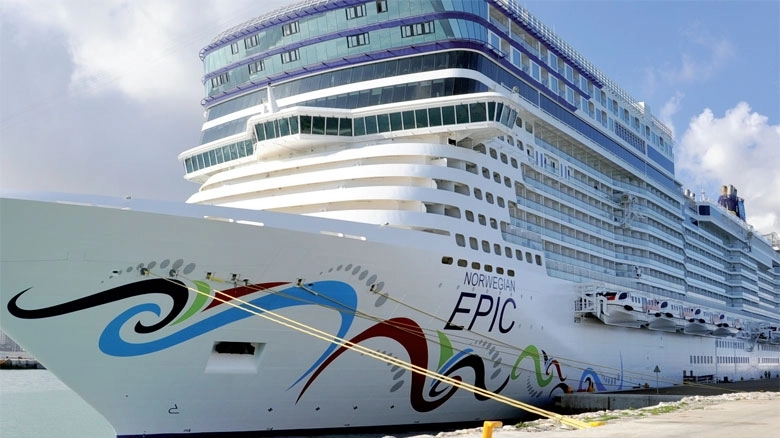
Becoming the equal of cities like Genoa or Barcelona, Tangier dreamed big a few years ago. The capital of the strait even had in mind the objective of recovering its yesteryear past and reviving its status as the region’s leading port in terms of cruising.
Among its aims, to reach 300,000 passengers by 2020 and become an uncontested passage for cruise traffic. A goal that seemed within reach since Tangier is located in one of the most active areas for cruises, the Western Mediterranean, a market that is growing at a dazzling speed of nearly 16% per year.
But the reality is quite different. At the end of August 2017, the number of cruise passengers passing through the port of Tangier did not exceed 20,000 people with 16 liners. A drop of 80,000 people (!) in one year, 2016 having welcomed 100,000 tourists. But the peak never equaled is that of 2015, the year when Tangier received no less than 120,000 visitors aboard 85 ships.
The big problem of illegal migrants
This decline, which is no exception to other national ports such as Casablanca, is due to various factors, some of which are directly linked to the region. “For a cruise passenger who only spends one day in a destination, time is precious and good organization and coordination of the different aspects of the visit count enormously in building the experience,” explains Abdelghani Ragala.
However, the inability to visit the city’s museums before 9 a.m. is a real obstacle. This is why Moroccan operators working in this sector are calling for the hours of these establishments to be adapted by allowing visits early in the morning from 7 a.m., which would improve the conditions of the visit.
Another problem, that of security. This last element seems to have cooled the enthusiasm of many companies, such as Costa, which previously programmed Tangier. Since the number has fallen significantly, some sources put forward the refusal of the Moroccan authorities to put agents in the coaches of excursionists as an excuse for departure for the Italian cruise line. Still, the latter practically no longer schedules Tangier as a stopover for its cruises.
However, Costa was one of the first to bet on the new cruise docks at the port of Tangier city after their refurbishment in 2013. It was followed by others such as the Holland America Line. The latter chose Tangier as a stopover for some of its cruises, including that of the MS Rotterdam. In 2014, the shipowner even canceled planned stops in West African ports in Ghana, Gambia and Senegal and replaced them with a stop in Tangier. The cause was none other than the epidemic of the “Ebola” virus which was raging at the time in different parts of Africa. He is currently one of the few to continue to make a stopover in Tangier.
The question of safety also greatly worries Spanish coach operators. The latter provided a large part of the transport for cruise passengers as well as day trippers coming from Spain via the port of Tarifa, but in recent years their number has fallen significantly. For them, the real problem is that of illegal migrants.
Indeed, the surroundings of the port of Tangier are teeming with minors waiting to cling under buses heading abroad. The number of incidents reported in Europe is such that Spanish coach operators stubbornly refuse to go to Morocco, leading, at the same time, to a drop in the number of tourists by coach. One solution would be to use local carriers, but their number is too small to fill the void. An aspect on which the CRT of the region, as representative of operators in the sector, has not stopped warning for several years.
If we add to this the recurring problems linked to guides and non-compliance with itineraries, we can begin to understand the real reasons which pushed cruise operators to desert Tangier. These operators complain, among other things, about the presentation of the guides and the refusal of some of them to wear the obligatory uniform of the djellaba or, finally, for certain thieves to change the itinerary with a surprise stop at a bazaar in the old medina.
source: the economist