
♦Abderrazak Boutemzazar
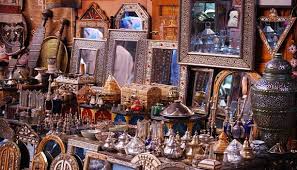
Marrakech has long been renowned for its traditional craft products, fashioned by maâllemin (master craftsmen) with exceptional know-how, which give birth to true masterpieces highlighting the creative genius of Moroccan artisans.
This artisanal heritage particularly shines in so-called “historic” cities, such as Fez, Meknes, Essaouira, Rabat and of course Marrakech, where ancestral trades have forged the reputation of national craftsmanship, enriching the trade of these creations whose notoriety crosses borders, and ltourists, particularly in Marrakech, the Kingdom’s « tourist capital », often make precious souvenirs of their stay
Today, at a time when the tourism sector is suffering severely from the repercussions of tensions in the Middle East and other regions of the world, the remaining maâllemin, witnesses of a bygone golden age, are struggling to survive in a climate marked by growing disinterest in their products.
A silent crisis is taking hold, raising serious questions about the current state of crafts in Marrakech, in a context of decline in the sector, gradual disappearance of master craftsmen, retirements or forced retraining.
It is enough to briefly explore some of the emblematic districts of the medina of Marrakech – like Riad Zitoun, Sidi Bouchich, Kennaria or even Qazzadriya – to see the extent of the transformations. The old artisan workshops have often given way to snack bars, juice bars or stores selling seemingly artisanal products, but whose « Chinese touch » betrays the manufacturing process.
This proliferation of low-cost imported products represents one of the major factors in the regression of traditional Moroccan craftsmanship, but this phenomenon is not new. today the craft sector is in reality the result of a tangle of constraints accumulated over the years.
Many craft trades are now on the verge of extinction, or have even completely disappeared. Among the main difficulties facing the sector are: the surge in raw material prices; the retraining of craftsmen for other activities such as delivery, security in residences, or even work in hotels; the increase in rents for professional premises; the proliferation of ferrakhchia (resellers), who exploit the precariousness of artisans by buying their creations from them at low prices to resell them at high prices to tourists; the absence of bank financing, due to lack of guarantees; the scarcity of industrial zones dedicated to crafts; the control of brokers and intermediaries over craft exhibitions and export circuits.
Added to this is the lack of continuing training, the shortage of apprentices due to low wages and the successive bankruptcies of workshops, as well as the high cost of living in Marrakech – notably the high cost of rent – pushing many artisans to leave the city.
The sector also suffers from the hegemony of certain companies which monopolize the distribution markets, both nationally and internationally, and from the control exercised by tourist guides (official or not) who direct the s visitors to partner shopping centers operating according to the commission system.
And yet, despite the significant contribution of crafts to exports and foreign exchange earnings, the artisan remains the first victim of this situation, in a city whose economy relies almost exclusively on tourism , this marginalized and exploited professional should nevertheless benefit from real support: subsidies for the purchase of raw materials, opening of markets without intermediaries, legal protection of their creations, access to e-commerce, and above all, a thorough clean-up of the sector, freed from the influence of speculators and opportunistic resellers.