
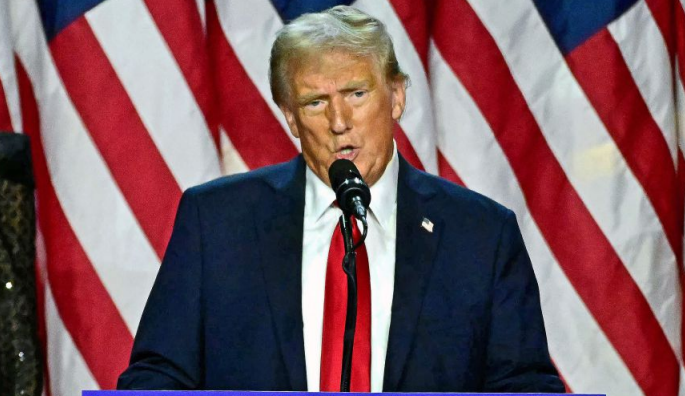
The re-election of Donald Trump in November 2024 revives speculation about its effects for world economies, including that of Morocco. Between protectionism, tax reforms and trade tensions, this second term could well reshape economic relations with foreign partners.
Following a campaign marked by numerous twists and turns, Donald Trump won the elections and thus became the 47th president of the United States, after having been the 45th. He became the second president, after Grover Cleveland in the 19th century, to return to the White House after a defeat. This return of Trump, with his resolutely protectionist approach, raises questions about the possible effects on the United States’ strategic alliances, including with historic partners like Morocco. Since the United States recognized Moroccan sovereignty over the Sahara in December 2020, under Trump’s first term, diplomatic and economic ties between the two countries have been consolidated. This recognition has encouraged an increase in American investments in strategic Moroccan sectors, such as renewable energies and innovative technologies. For the Kingdom, which relies on varied international partnerships and a regional hub strategy, Trump’s political choices for this second term could both open up new opportunities and pose new challenges. It must be said that during his first term, Trump had already made an impression with his trade war against China, imposing massive customs duties on imported products. With this return to the presidency, he seems determined to intensify this protectionist approach. “If the United States increases customs duties up to 60% for certain Chinese products, the impact on the global economy would be much greater than during the first trade war,” explains Yassir Kettani, economist and specialist in international trade. For Morocco, which has had a free trade agreement with the United States since 2006, the repercussions could be complex. On the one hand, Moroccan exports to the United States – in textiles, agri-food and phosphates in particular – could suffer from a general protectionist climate, making access to the American market more difficult. On the other hand, the strengthening of customs tariffs against competitors like China could open up opportunities for Moroccan products, which would remain competitive in certain industrial niches. “This protectionism could paradoxically be favorable to our exports to the United States, if Morocco remains a stable trading partner and less subject to American customs restrictions,” explains Kettani. The other point to watch, according to the expert: Trump’s protectionist approach and hostility to trade with China could also limit the ambitions of certain Chinese groups in the automobile and electric battery sector, which see Morocco as a strategic gateway to the American market. Indeed, many Chinese investors choose Morocco to circumvent the customs barriers imposed on Chinese products in the United States, via the free trade agreement linking Rabat to Washington. A trade policy that is too rigid could therefore constrain these potential investments. A strong Dollar, a double-edged sword for Morocco Trump’s monetary policy could also strengthen the Dollar, which would have contrasting effects for Morocco. By pushing for low rates, Trump hopes to support American exports, but a strong Dollar could actually complicate this dynamic and have global repercussions. For Morocco, a rising Dollar has two main consequences: “on the one hand, it makes Moroccan exports more competitive in markets other than the United States, which would be an asset for export industries. On the other hand, rising costs of American imports could accentuate our trade deficit, particularly for technological and pharmaceutical products. Furthermore, Morocco benefits from a privileged position as a gateway to the African continent. This geostrategic situation, reinforced by the American recognition of Moroccan sovereignty over the Sahara in 2020, could encourage more American companies to invest in Morocco to establish themselves in Africa. “In a context where relations with China remain tense, Morocco could position itself as a strategic relay for American investments,” says Kettani. The infrastructure, finance and renewable energy sectors in particular could attract American capital seeking stability and expansion on the continent. Trump also aims to lower corporate taxes for companies that produce in the United States, as well as to perpetuate the temporary income tax cuts implemented in 2017. Although these reforms are partially conditioned on the control of the House of Representatives, such a measure could have a positive indirect effect on Moroccan investors. Indeed, a tax cut for American companies could energize Wall Street, indirectly stimulating the appetite for stocks around the world, including in Morocco. According to our expert, “if US financial markets benefit from a boost from tax cuts, this could spill over to global markets. Moroccan investors, while benefiting from the growth of American stocks, could also see a positive contagion effect on the Masi. A climate of political cohabitation Although the Senate has a Republican majority, the majority in the House of Representatives remains disputed. This cohabitation situation could restrict the scope of certain Trump projects, notably tax reforms requiring a majority in both chambers. “Trump’s ability to implement his agenda will first depend on his relationship with Congress,” comments Kettani. “Without full legislative support, some of his promises, such as massive corporate tax cuts, could be compromised,” he says. However, protectionist initiatives, such as tariff increases, can be implemented directly by the president without going through Congress. This means that, even with political constraints, Trump could intensify his tariff and protectionist measures thereby influencing the global economy. Faced with this uncertainty, Morocco must strengthen its partnerships with the European Union and sub-Saharan Africa to minimize its dependence on the United States and China. “It is essential for Morocco to diversify its economic relations to reduce its exposure to American policies, especially in such an uncertain context,” he advises. By focusing more on exports to Europe and intensifying its relations with African countries, Morocco could mitigate the effects of possible global trade tensions. In short, the return of Trump, despite protectionist policies and trade tensions strengthened policies, is not without potential benefits for Morocco. Between the increased attractiveness for American investments and the export possibilities to a restricted American market for other partners, the Kingdom has the assets to take advantage of this new economic era and emerge a winner.