
More than 10 years after its implementation, the Biladi Plan, which was to transform internal tourism in a few years, is following in the footsteps of its « great brother” the Plan Azur (intended for international tourism). What is the situation today for this Plan, which is part of Vision 2020, of its objective of creating around ten resorts (for a cumulative capacity of 30,000 beds) and of increasing the annual nights spent by national tourists by 10% per year? With only two years to go until Vision 2020 expires, have the balance sheet already been folded?
If the Court of Auditors has very recently pilloried the strategy of promoting the Moroccan tourist product abroad designed by the various organizations concerned and in particular the Azur Plan which has been the major pillar since 2001 (year of the launch of Vision 2010), the public action put in place to boost domestic tourism and make it a real engine of this key sector of our economy and a cyclical shock absorber (when the international tourism segment is down…and it often happens that it is!) is far, in turn, from deserving praise. Indeed, the Biladi Plan, the other pillar of the national tourism development strategy, should also be included in the category of public policies that have failed miserably to achieve their objectives.
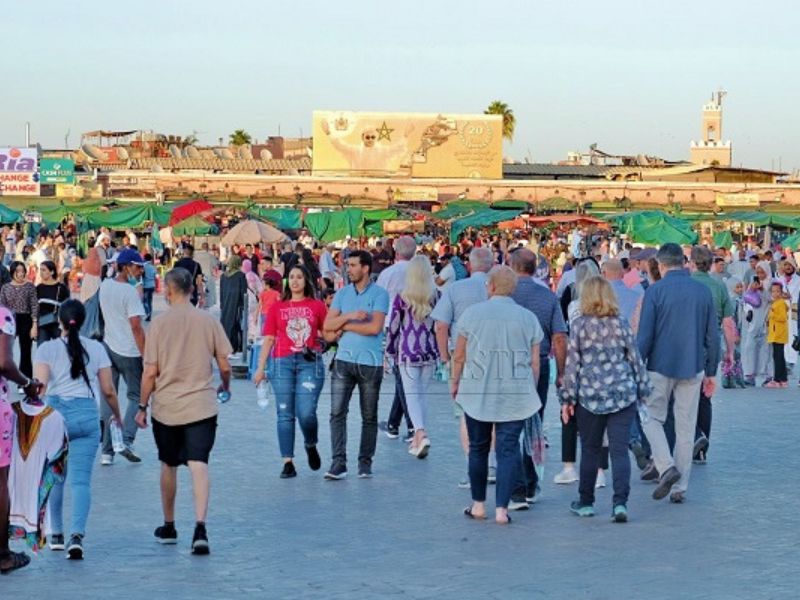
A most bitter observation if we know that in other countries, local tourism is a real boon for domestic consumption and a catalyst for private investment in the tourism sector (by substantially improving hotel occupancy rates and, in turn, the profitability of the underlying investments). In France for example, a country quite comparable to Morocco in terms of the contribution of tourism activity to overall GDP with a rate which stands at a little over 7% (but the comparison stops there!), national tourists generate two thirds of tourist consumption (compared to barely a third for Moroccan tourism) and yet, the country has been the leading global tourist destination for more than two decades (nearly 11.35 million foreign tourists received in 2017)!
Ten years later, what results?
Let’s return to this famous Biladi Plan launched with fanfare in 2007. What was its reason for being? What assessment can we draw up today? What similarities and/or differences with the Azur Plan, particularly in terms of the causes of failure? Finally, is there still hope of seeing this Plan make up for lost time by its final horizon in 2020?
Before providing any answers, it is good practice to recall that, aware of the strategic dimension that internal tourism has for the country, the Ministry of Tourism and the ONMT (Moroccan National Tourist Office) have continued to concoct well before the official launch of the Biladi Plan, and on several occasions, different initiatives intended to promote this segment. The one which made the greatest impression and endured over time was undoubtedly the Kounouz Biladi operation, initiated in its first edition in 2003. This “formula” consisted of bringing together hundreds of hotel establishments (of different categories) around a promotional offer aimed at local customers which was both fairly homogeneous and, as far as possible, adapted to their needs. After the enthusiasm of the first years, Kounouz Biladi began to suffer from increasingly declining support from hoteliers, with the exception of years when the international situation dried up the flow of foreign tourists and people turned to local tourism as a stopgap. And despite the punch operations on the part of the ONMT intended to breathe new life into this emblematic action of its promotional strategy, like that of June 2015 which cost several million dirhams from the budget of this public establishment, the situation has not changed.
These are, moreover, the half-hearted results of Kounouz Biladi and the correlative observation of the non adequacy of the existing standard offer (in particular hotels located in cities oriented towards international tourism) with the expectations and needs of the Moroccan traveler, which pushed the strategists of the Ministry of Tourism to think of a more compact plan including the creation of a completely new and better targeted offer with billions of dirhams of investment in new tourist zones and resorts located in the main areas of attraction for the Moroccan traveler. Just the preliminary studies and the various opinion surveys supposed to guide the State in targeting sites and the content of their offers, had cost the supervisory ministry more than 10 million dirhams at the time. The new Plan should therefore provide a solution for diversification both geographically and in terms of clientele, thus allowing tourist operators to achieve an intelligent combination between resident and foreign tourists. It was also intended to contribute to the territorial development of regions other than the two headliners of Marrakech and Agadir where most of the tourist nights spent by residents were concentrated, by promoting the channeling of a part of national wealth towards local populations and by stimulating the sustainability of jobs and the positive effects induced on transport activities and on other service providers (restaurants, shops, crafts, etc.). Finally, the Biladi Plan was, as such, to act in concert with the Advanced Regionalization that Morocco had announced (a few months apart) as a major structural reform on the political, socio-economic, cultural and demographic levels.
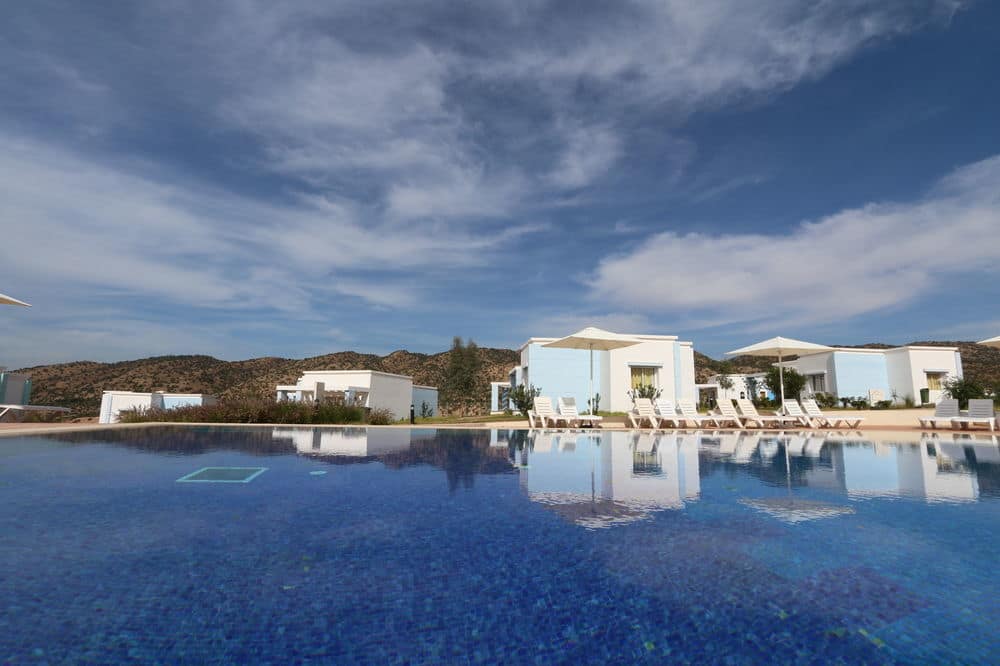
As for the quantitative objectives of the Biladi Plan, they were hardly in terms of ambition, targeting some 7.2 million overnight stays on the horizon 2010 (barely three years after its launch) and more than 9 million overnight stays in 2015 (compared to 5.9 million in 2003). Obviously, the substantial increase in the tailor-made offer had to be there to allow such a shift. Hence the objective assigned to said Plan, in its aspect inherent to the infrastructure, namely the injection of an additional litter capacity of 30,000 beds including 19,000 beds in campsites and 11,000 units in horizontal (chalets and villas) and vertical (hotels and apart-hotels) hotel residences. All distributed between eight new integrated tourist zones with an area ranging from 25 to 45 hectares each. These are Nador (Ras El Ma near Saidia), Marrakech-Tensift-Al Haouz, Tangier-Tétouan (Kaa Srass near Assilah), Sous-Massa-Draâ (Immi Ouaddar near Agadir), Rabat-Salé-Gharb (My Bousselham and Mehdia), Doukkala-Abda (Lalla Aïcha El Bahria near from Azemmour and Sidi Abed to El Jadida), from Fès-Meknes-Ifrane (Ifrane Ville) and from the Oriental (Lazzanane). And to show the speed and determination of the Ministry of Tourism to move quickly forward, the calls for tenders relating to the first three zones whose files were the most advanced, in this case Sidi Abed in El Jadida, Lunja Village in Imi Ouaddar near Agadir and Farah Inn in Ifrane were quickly launched and awarded in the wake of the baptism of fire of what would become a few years later Feu Plan Biladi !
Eleven years later, the results are unfortunately very poor. Firstly, from a strictly quantitative point of view, the rate of achievement of the intermediate objective, namely additional litter capacities, is very low (less than 30% on average for all stations and 0% for those which have never seen the light of day!). As for the final objective, namely to substantially increase the share of national tourists in the total nights spent by tourist and hotel establishments in the Kingdom, the observation is even sadder because if this ratio was 25% in 2002, it is even today much lower than that!
Reasons for failure
So what happened in the execution of this Plan? How did we arrive at a situation quite comparable (without probably being as scandalous) to the fiasco of the Azur Plan, whose rate of achievement of hotel capacities initially targeted is only 3% more than fifteen years after its implementation!?
Back to the facts. Between April and June 2008, barely a few months after revealing the details of the Biladi Plan, the Moroccan State had already signed three investment agreements with the successful bidders, including some big names in real estate and tourism investment in Morocco such as the CGI (armed arm of the Caisse de Dépôt et de Gestion in real estate) for Lunja Village and CMKD (later to become Al Ajial) for Farah Inn and Sidi Abed. Work was to start in 2009 with deliveries scheduled between 24 and 36 months later. Only two stations, in this case Ifrane and Imi Ouaddar, among those initially launched, will eventually see the light of day gradually with delays on the initial schedule between 1 year (for Ifrane) and four years (for the one entrusted to the CDG subsidiary). As for that of Sidi Abed, whose concessionary developer nevertheless fulfilled his contract in Ifrane (in this case CKMD), it was not able to see the light of day. Official cause: unresolved land problem. And yet if the Ministry of Tourism had started with the aforementioned resorts it is because, it seems, of their already cleaned up land situation! Furthermore, two other stations were relaunched several years after the first ball in spring 2008. These are that of Mehdia, still under construction by SGTM Immobilier (subsidiary of SGTM, the Moroccan leader in construction) since the “Royal” launch of its work in September 2012 in the presence of King Mohammed VI and the Ras El Ma station (in the Nador region) including the concession agreement with the investor Moroccan-Saudi Asma Invest was signed in December 2013. Since then, the city of Kénitra where tourism has been moribund for decades and the region of Saidia which is seeking to consolidate the offer around its eponymous resort of Plan Azur (about fifteen km from Ras El Ma) are still waiting for these deliveries which turn out to be Arlesian.
Finally, for the majority of the other stations, they never found any takers until their calls for tenders were actually launched (no information filter on this subject), which definitively buries the chances of the Biladi Plan to achieve its 2020 objectives (only two years from this deadline). Asked to answer our questions, the Ministry of Tourism through the Moroccan Society of Tourism Engineering (SMIT), which is piloting the program, withdrew at the last minute. But if the observation of desolation is comparable to that of the Azur Plan, and apart from a few cases of the Biladi Plan where the blockage perhaps emanates from an unsanitized land situation, the underlying reasons for this umpteenth collapse of a strategic plan for the country are fundamentally different. Because if several Plan Azur stations remained at the model or abortive stage, it is rather because of the successful bidders themselves who failed (or those who selected them!), when it was not the Moroccan State which failed in its commitments in terms of support (air services, support for promotion and/or off-site infrastructure, etc.). Whereas for the Biladi Plan, it is probably the business model which was rather ill-fated by seeking to escape market logic by imposing fixed prices on bidders per category of offers. Certainly, the objective of the granting State to ensure that the marketing prices by the concessionaire operating the station are accessible and attractive to the Moroccan consumer is defensible. But unfortunately, with an evolving scale ranging from 100 to 150 DH per night for camping up to 300 to 500 DH for horizontal hotel residences, passing through the range of 200 DH to 400 DH per night for vertical hotel residences, the search for an optimum between sufficiently attractive prices and sustainable pricing for investors’ business plans has proven unsuccessful, even catastrophic for resorts suffering from the origin of the seasonality of demand, like that of Ifrane. The concessionaire of the latter, the Société d’Aménagement et de Valorisation d’Ifrane (subsidiary of Al Ajial) has, moreover, suffered nearly 400 million dirhams to date (in less than 5 years of operation!). For certain experts consulted, as long as the Biladi Plan’s offer is not yet marketed in an « industrial » way, like mass international tourism, around the triad Hotel Establishment – Tour Operator – Travel Agency (increasingly digitalized), it will suffer from its overly rigid and dirigiste design.
Moreover, the Biladi Plan embodies another vital project for the national economy which will have sinned so much by its design, notably in the lack of subordination of this to the economic and financial realism which governs any success in terms of public policies inducing substantial investments, as well as in its execution with a mix-up in the choice of the sites in question and in the preliminary work of cleaning up the underlying land bases.
source: challenge.ma