
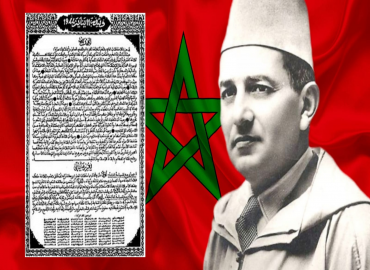
Anniversary of the presentation of the Independence Manifesto: an essential milestone in the fight for freedom and national sovereignty

The Moroccan people and the family of the national movement, the resistance and the Liberation Army are celebrating, on Saturday, the 81st anniversary of the presentation of the Independence Manifesto, a historic event and an essential milestone in the epic struggle for freedom, independence, national sovereignty and the completion of the territorial integrity of the Kingdom. In a press release published on this occasion, the High Commission for former resistance fighters and former members of the Liberation Army (HCAR), the family of the national movement, the resistance and the Liberation Army remember with pride this national epic rich in lessons, which appeals to the younger generations through the deep meanings that it embodies, symbolizes the high values of national awakening and the strong symbiosis between the Throne and the people to defend the constants of the Nation and look forward to the future with confidence and serenity. This anniversary, deeply anchored in the memory of all Moroccans, due to the deep meanings it embodies, symbolizes the high values of national awakening and the strong symbiosis between the Throne and the people to defend the constants of the nation and foresee the future with confidence and serenity, adds the same source. It offers the opportunity to pay tribute to the valor of the men of the national resistance and the members of the Liberation Army who deigned, without procrastination, to counter the duplicitous aims of the colonizer and who gave of themselves in order to free the country from the yoke of colonialism and preserve freedom and national dignity. Throughout history, the Kingdom has always fought ardently against the plans of the colonizer who wanted to take control, at the beginning of the previous century, of the national territory, by dividing it into zones distributed between the French protectorate, in the center of Morocco, and the Spanish protectorate in the north and south of the Kingdom, while Tangier was made an international zone, recalls the HCAR. This fragmentation of the territory made the mission of the national movement difficult, giving rise to a long fierce struggle of the Throne and the people, marking this period of sacrifices and decisive events, including the uprising against the segregation dahir known as « the Berber dahir » of 1930, the presentation to the French government of a reform plan (1934 and 1936), then the presentation of the Independence Manifesto on January 11. 1944. During these different stages, the late HM King Mohammed V, Father of the nation and hero of liberation, never ceased to maintain the flame of the resistance of Moroccans and to direct its objectives, since his accession to the Throne of his glorious ancestors on November 18, 1927. The late Sovereign indeed embodied the values of resistance and patriotism in his noble actions and his historic mobilizing speeches inciting the people Moroccan to strengthen its ties to the constants of the nation and to preserve its identity. In this context of national fervor, the Anfa Conference of January 1943 was an opportunity for the late Sovereign to include Moroccan Independence on the agenda, highlighting the effective participation of Moroccan soldiers alongside the allies in their fight against Nazism. The ambition formulated by Sultan Mohammed V during this conference therefore obtained the support of the United States of America, expressed by President Franklin Roosevelt who considered it to be just and legitimate. This event was the trigger for a new dynamic in the political process leading to the liberation of the Kingdom to the extent that it instilled more courage and determination in the actors. of the national movement to demand more rights going as far as demanding independence. This surge of mobilization and fervor resulted in the emergence of a national awakening inspired and guided by the leadership of the late HM Mohammed V which gave rise to the Independence Manifesto, enriched and nourished by the foresight of the late Sovereign and in which all the sensitivities and living forces of the nation are represented. The Independence Manifesto included a set of political demands, including those relating to general policy and which provide, among other things, the independence of Morocco under the reign of the legitimate Sovereign of the Kingdom Sidi Mohammed Ben Youssef and the accession of Morocco to the Atlantic Charter. The second part of the demands concerns internal policy embodied by the Sultan’s determination to lead a broad dynamic of reforms, based on a Shura political system similar to that of Arab and Islamic countries capable of preserving the rights and duties of all segments of Moroccan society. This historic Manifesto was a true national revolution reflecting the patriotism of all Moroccans and their spirit of sacrifice and mobilization. This is concrete proof of the awakening of a people capable of taking their destiny in hand and continuing their march of liberation and progress in perfect symbiosis with the Glorious Alaouite Throne, underlines the press release. To this end, the HCAR recalls the content of the Speech addressed by His Majesty King Mohammed VI to Parliament on the occasion of the opening of the 1st session of the 4th legislative year of the 11th Legislature, in which the Sovereign called for « moving from the management phase to the phase of change », reiterating his unwavering support for the territorial integrity of the Kingdom and the Moroccanness of the southern provinces and his constant mobilization behind His Majesty King Mohammed VI for the defense of the territorial integrity of the Kingdom. The High Commission also welcomes the successive diplomatic victories achieved thanks to the wise and far-sighted leadership of HM the King, leading to the recognition by the United States, Spain, France, Finland and the Dominican Republic as well as several other countries of the sovereignty of the Kingdom over its southern provinces, and the strengthening of the diplomatic dynamic translated by the opening of numerous consulates in the Moroccan Sahara which, to date, number 29 consulates, distributed between Laâyoune (12) and Dakhla (17). In this regard, the HCAR announces the organization, on Saturday, of a meeting within the national space for the preservation of the memory of the resistance during which speeches will be given about this indelible national event which abounds in lessons whose content and noble messages must be remembered and relearned to younger generations. Tribute will also be paid to veterans and members of the liberation army in recognition of their sacrifices and bravery in the service of the homeland. Furthermore, regional and provincial delegations as well as local HCAR offices have developed, in concert with the network of spaces dedicated to the historical memory of resistance and liberation which includes 104 units on the national territory, programs of educational, cultural and communication activities during the period between January 3 and 31, in coordination and in partnership with government sectors, public establishments, elected bodies, associations and civil society organizations.