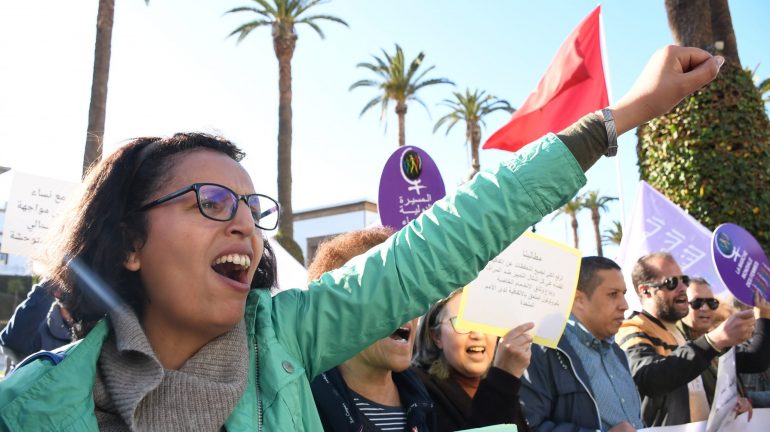

On this October 10, Moroccan Women’s Day, gender equality is at the center of discussions. While undeniable progress has been made in terms of women’s rights in the Kingdom, certain issues continue to divide, starting with parity in inheritance. According to a recent survey, more than 86% of Moroccans are opposed to the idea of equality between men and women in the transmission of family property. This rejection is particularly pronounced in urban areas, where 89.2% of respondents say they reject this reform, compared to 82.8% in rural areas. This figure shows the extent of societal resistance to a reform that is nevertheless supported by some human rights actors. Opposition to this reform is much more pronounced among men. Nearly 92.3% of them are opposed to this equality, a resistance which could be explained by deeply rooted cultural and religious reasons. For women, the situation is more nuanced, although the majority remains resistant to this change. Indeed, 81.4% of Moroccan women surveyed share this opposition, believing that parity in inheritance is in contradiction with long-established religious and societal principles. This paradox raises an essential question: why are the main potential beneficiaries of such a reform themselves opposed to it? On the one hand, this undoubtedly reflects the strong imprint of traditions in the Moroccan family structure. Women, although aware of inequalities in the distribution of goods, seem to accept a system that they consider more legitimate because it is based on values transmitted from generation to generation. On the other hand, inheritance represents more than a simple question of material sharing. It touches on the symbolism of the role of men in the family and in society, a role which, for many, must remain distinct from that of women. What role for the reform of the Moudawana? The question of equality in inheritance cannot be dissociated from the ongoing discussions around the reform of the Family Code (Moudawana), adopted in 2004, and a revision of which is currently in preparation. After six months of consultations, a first version of the text was submitted to King Mohammed VI on March 30, 2024. This highly anticipated reform could well open up new perspectives for women’s rights in Morocco, including on subjects as sensitive as inheritance. If the Moudawana has already allowed notable advances in terms of personal status, such as easier access to divorce for women or the limitation of marriage of minors, the question of inheritance remains one of the last bastions to reform. Defenders of this revision believe that it is time to reconcile the legal texts with social developments in the country. However, there is strong reluctance, particularly from conservatives who consider that any reform of the Moudawana must remain in line with the religious principles of Islam. Because the religious framework which establishes the rules of inheritance in Morocco, as in most Muslim countries, is deeply rooted in people’s minds. And any attempt to revise the laws in this area comes up against cultural, but also religious, resistance, even among those who would benefit from it. In short, on this day dedicated to Moroccan women, this debate highlights the extent to which the emancipation of women is not limited to a series of laws, but also requires a profound transformation of mentalities. Because beyond the figures, it is the entire conception of the role of women in Moroccan society that is at stake here.