

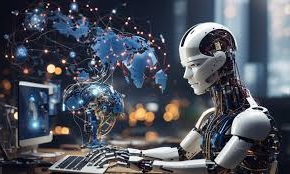
Morocco at the technological crossroads: How is Artificial Intelligence reshaping the job market?

MUSTAPHA AL-ABYAD
The Moroccan economy today faces a historic challenge and opportunity imposed by the rising wave of Artificial Intelligence (AI) on a global scale. If AI is a driver for increased productivity and a qualitative leap in services, it at the same time raises existential questions about the future of millions of jobs, particularly in sectors based on routine and repetitive tasks.
It is no longer a question of slow adaptation, but of a strategic race towards the reconversion of the national workforce. Recent Moroccan investments in digital infrastructure and the expansion of sectors such as offshoring and IT services place the country in a critical position. On the one hand, Morocco has a base of educated young people who can be trained in AI tools.
On the other hand, vital sectors like call centers and data entry are under enormous pressure due to the automation of tasks by generative AI systems. The challenge here is not to prevent automation, but to transform threatened jobs into support or supervisory roles requiring analytical and interactive skills that the machine has difficulty simulating.
At the strategic level, Moroccan vocational training centers and universities must transform from simple degree providers to innovation laboratories in AI and related disciplines (such as data science, cybersecurity and AI ethics). This requires massive investments in the training of “trainers” and the integration of AI tools into the educational programs themselves, in order to create a generation that not only consumes the technology, but contributes to its design and development in line with the Moroccan cultural and economic context.
In conclusion, Artificial Intelligence can be a blessing or a curse, In Morocco, the answer will depend on the ability of decision-makers to adopt a proactive and bold policy that ensures a fair transition from a labor-based economy to a knowledge-based economy, The success of this transformation will rely on our ability to create a work environment that welcomes the machine as a intelligent partner freeing humans for reflection and creativity, instead of being a replacement.