
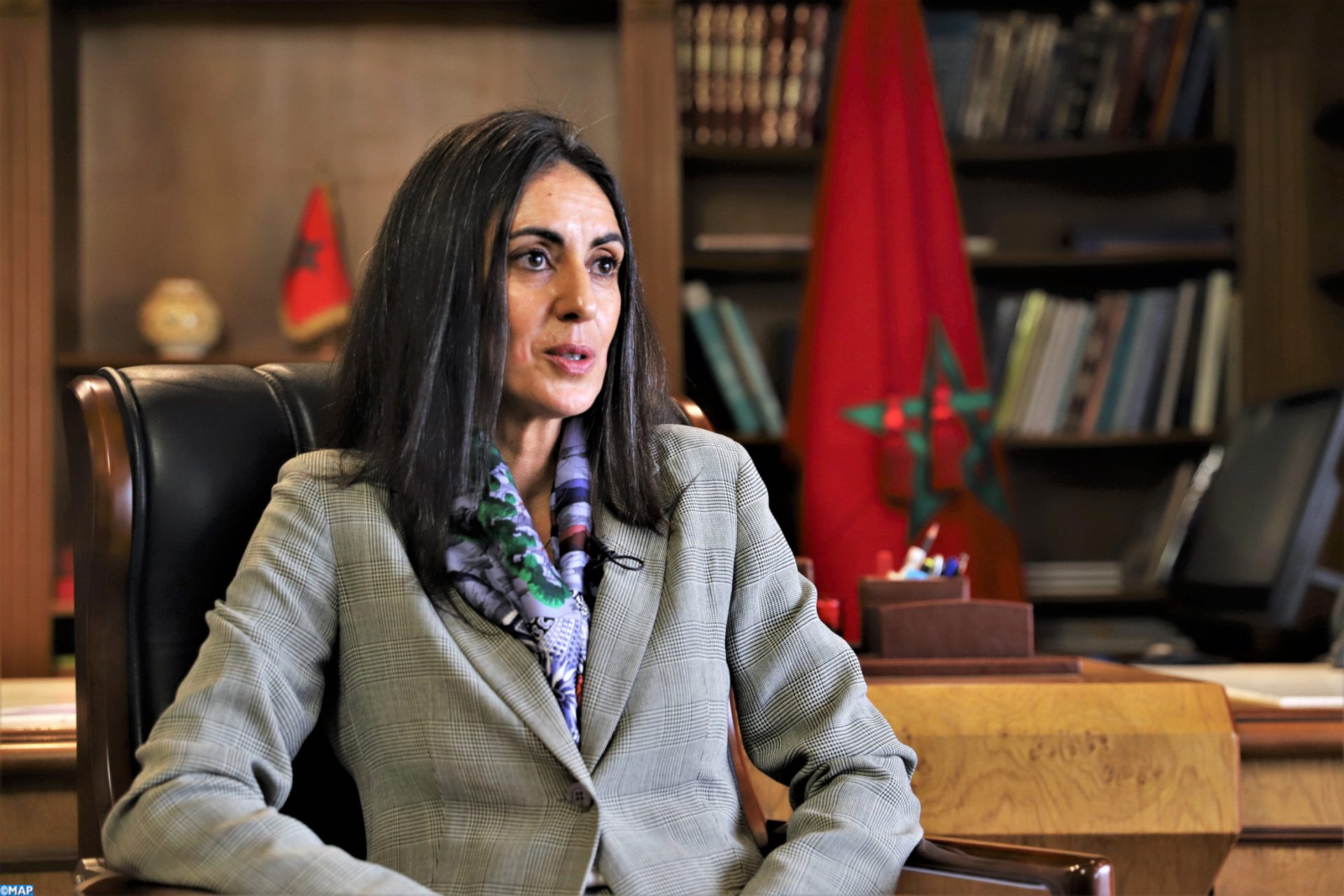
National economic growth should improve to 4.6% in 2025, based on the assumptions made, said Thursday in Rabat, the Minister of Economy and Finance, Nadia Fettah. This rate comes after a forecast growth of 3.3% in 2024, with the appearance of signs of remission in the global economy and the continued recovery of the national economy.
In the medium term, the growth rate would exceed the target of 4%, explained Nadia Fettah who presented the execution of the 2024 Budget, the general framework for the development of the 2025 finance bill (PLF) and the budgetary programming triennium 2025-2027 during a joint meeting of the finance committees of the two Houses of Parliament.
« These forecasts are likely to be revised in the event of a deterioration in global growth prospects, particularly in Europe, due to the repercussions of geopolitical tensions, or in the event of another year of drought with an agricultural harvest below average », underlined the minister during this meeting chaired by the President of the House of Advisors, Enaam Mayara, in the presence of the Minister Delegate in charge of the Budget, Fouzi Lekjaa. Furthermore, Ms. Fettah affirmed that the development of the PLF 2025 and the three-year budget programming 2025-2027 are part of a « phase where government action shifts into high gear to complete the process of implementing major projects and achieving the commitments of the government program, in application of the High Royal Guidelines and in line with the recommendations of the new development model. » Regarding the preliminary hypotheses of the 2025-2027 macroeconomic framework, the minister specified that cereal production would reach 70 million quintals (Mqx), the price of a barrel of Brent oil would be at 80 dollars, the price of a ton of butane at 450 dollars and the dollar exchange rate at 9.8 dirhams, while inflation should stand at 2%. Furthermore, Ms. Fettah considered that effective budgetary policy and control of the debt level are the cornerstones to guarantee the sustainability of public finances, highlighting the importance of continuing the gradual reduction of the budget deficit to maintain this sustainability which constitutes one of the major pillars of government action. In this regard, she noted that reducing the budget deficit would ensure a balance between the sustainability of the implementation of reform projects and development projects, in addition to strengthening budgetary margins to preserve the resilience of the national economy in the face of possible shocks. “Continuing the budgetary efforts necessary to meet the requirements of economic and social development requires optimal programming of expenditure by all ministerial departments, taking into account the financial capacities of the State, in parallel with the execution of reforms and the achievement of expected results,” she said. Regarding the trajectory of the target budget deficit for the period 2025-2027, she noted that the budgetary programming for the next three years is based on the continued adjustment of this trajectory, with the objective of reducing the deficit to 3.5% of gross domestic product (GDP) in 2025 and to 3% in 2026 and 2027. In terms of the debt ratio, the minister noted that this indicator should continue to follow a trend bearish trend in the medium term, going from 69.5% of GDP in 2023 to around 66% at the end of 2027, adding that this would ensure debt sustainability and reconstitute the budgetary margins to face future risks and crises. As for the execution of the 2024 Budget, Ms. Fettah indicated that inflation should return to levels consistent with the price stability objective, with an average of 1% in the first half of 2024, compared to 7.9% during the same period in 2023, due to the significant decline in food prices. During this same period, she continued, exports increased by 4.4%, imports by 2.3%, while the trade deficit decreased by 1%, or 1.2 billion dirhams (billion dirhams). According to the minister, the current account deficit of the balance of payments should not exceed 2% of GDP in 2024, with foreign exchange reserves with Bank Al-Maghrib covering 5 and a half months of imports. The budget deficit, for its part, saw a reduction compared to H1-2023, decreasing to MAD 27.5 billion, which represents approximately 44.3% of the level provided for by the finance law.