

Morocco has not usurped its reputation, it is indeed the country of welcome, of warm welcome and of palaver which strengthens ties. All it takes is a rug, steaming mint tea and a smile. Why is it possible in this country and impossible in our old Europe.
Quite simply because the passage of time is not the same here as elsewhere. The steps of the shepherd who travels the mountain with his sheep, the women who tirelessly weave, the ironworker who strikes the metal or the carpenter who works a piece of wood all have one thing in common, they do not count time, at least neither in minutes nor in hours. The daily rhythm is never broken up by a quarter of an hour or a half hour which forces the press without really knowing why. Here it is the meals or the sun or the moon which will determine whether or not we should do things faster or do things differently.
When everything stops for a palaver it is out of greed. The delight in the words we exchange, the news we pass on, the silences full of good nature, with no particular expectations other than fraternal contact.
This way of living, which is diminishing today due to modernity, is the result of ancestral customs. Everything had to be decided over tea or a meal. The meetings had to be long and bitter, otherwise they would not be truly serious affairs. During the moussem, these popular festivals, what matters most are the palaver, the exchange of information, news from distant families, the coming together for a marriage or business and all this done on a carpet around tea or couscous. Because efficiency, speed, synthetics do not belong to this world,direct relationships, human contact remain the sure value, the only mode of operation. Respect is also very important, the more affection or admiration one has, the longer the palaver must be, the more important the tea, the more copious the meal. This is what we have lost, time is no longer a standard, only exchange counts.
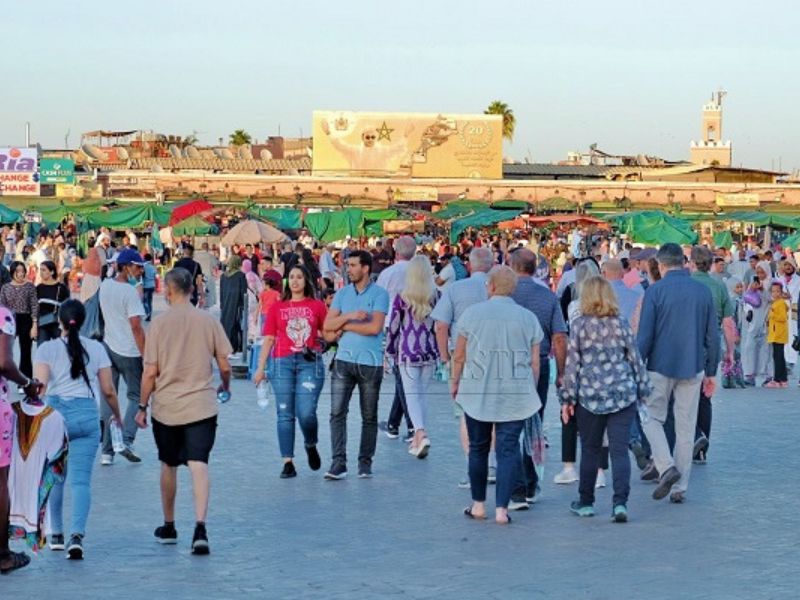
When in the souk a merchant offers tea, it is not to keep the customer, it is to make him talk. If you happen to sit on a small stool in a busy derb to enjoy this national drink, the spectacle on the street becomes more intense. The merchant, proud of his profession and his country, talks and tells, he expects the same thing from the taken aback and unaccustomed customer.
The tea and the carpet are the pretextsto sit down and talk about it, the anecdote like the story which is like a tale is worth listening to and savoring. Discovering Morocco is learning to detach yourself from the passing hour, to only conceive of time in wandering and discourse, in conviviality without purpose and without reason, outside of rationality.
The smallest oasis lost on the edge of the desert welcomes you in the same way. It hurts you not to accept the hospitality of the village chief, who presides over his carpet and intends to learn from you about the world, this big world which remains foreign to him but which is a source of laughter, smiles and discovery. The vegetable tagine is simple, but hearts are open. This Morocco demands to be unearthed before disappearing.