
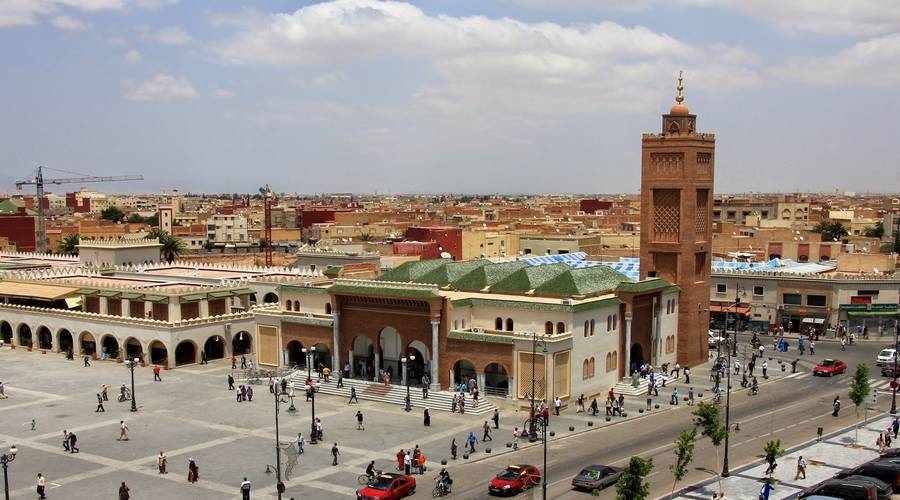
Ooujda is moving on to the 2nd phase of development of its medina and is spending 20 million DH to upgrade three “Kissariats” (19th century), two commercial souks, an old Ahl El Jamel district (18th century) and part of the city wall (15th century).
A new makeover which is part of the Oujda 2020 vision to organize and revitalize traditional commerce. This new restoration will mobilize hundreds of artisan maâlams (wood, zelije and plaster), mason workers for 12 months and will be managed by a company specializing in the restoration of old medinas.
Technically, the work will concern the rehabilitation of courtyards, walls and roofs and their reinforcement with wooden arches and domes. The waterproofing of the terraces will be corrected and reinforced with a light and standardized material to create a welcoming and practical setting. All around traditional fountains and squares with Marinid architecture.
The medina of Oujda is home to a rich architectural heritage with around twenty sites with strong cultural and tourist attractions. Monuments which require an integrated approach for their valorization. The various upgrade actions undertaken during this decade required more than 95 million dirhams. It was the first phase of revaluation of historical monuments. “Babs”, alleys, mosques and fondouks, have undergone restoration and beautification work.
The medina of Oujda is a heritage of 1,250 houses, 41% of which are traditional. It is under the leadership of the Wilaya of Oriental and in close collaboration with Al Omrane/Oujda and the other housing departments that several projects were carried out concerning the paving of alleys, the clearing of ruins, the consolidation of houses threatened with collapse, the development of squares located inside the medina.
The wall which runs along the old medina has been rebuilt several times, “Bab Elgharbi” as well as the famous “Bab Sidi Abdelouahab” have benefited from a “touch of youth” which has really enhanced their value. The Lalla Meryem museum also underwent a complete overhaul of its space.
“Cultural and historical aspects, sources of inspiration and income, play a key role in perpetuating heritage and preserving an authentic culture,” underlines Zakaria Lazraq, general director of Al Omrane/Oujda. They can also be attractive in terms of tourism and trigger significant commercial activity. It is also essential to initiate real monitoring actions to protect them from the danger that threatens them.
“Institutions engaged in this architectural, cultural and commercial development are expected to propose thoughtful solutions that promote the preservation of heritage,” notes Badr El Maqri, historian and author of several books on Oujda.
And to go on, the first role of elected officials and local authorities is to ensure real protection of historic sites through tangible measures to preserve their cultural identity. This is not always the case. Despite these upgrading efforts, informal commercial activity is developing around these monuments and jeopardizes all restoration initiatives.
source: leconomiste