
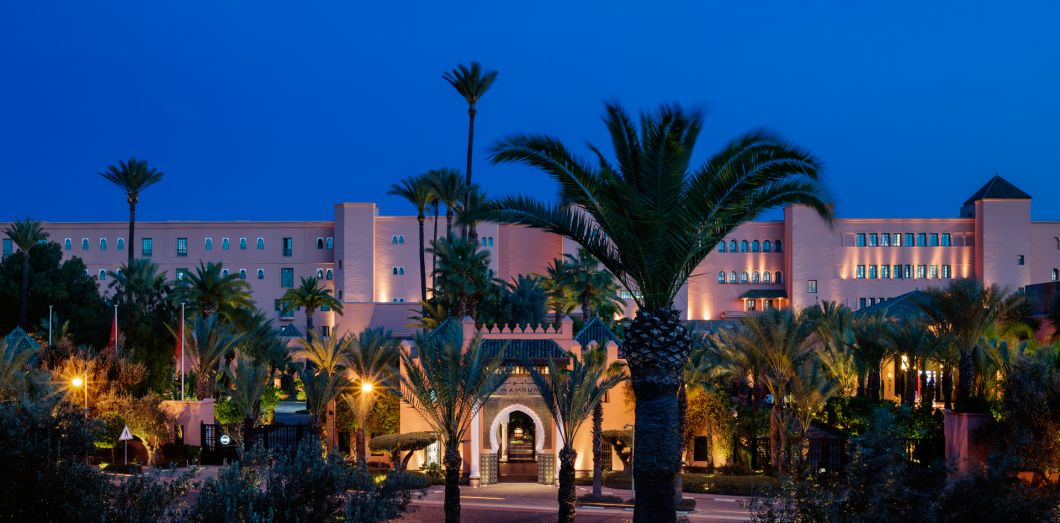
Marrakech all in greenery and luxury. For almost a century, prestigious guests have made their habits at the Mamounia, a plush hotel in the Red City. The profusion of large hotels developing in the Moroccan city – Sofitel, Mandarin, Es Saadi, Royal Mansour, Four Seasons, Naoura Barrière… – has not weakened its image or its attractiveness. The centenary of Mamounia is approaching, it will be in 2023.
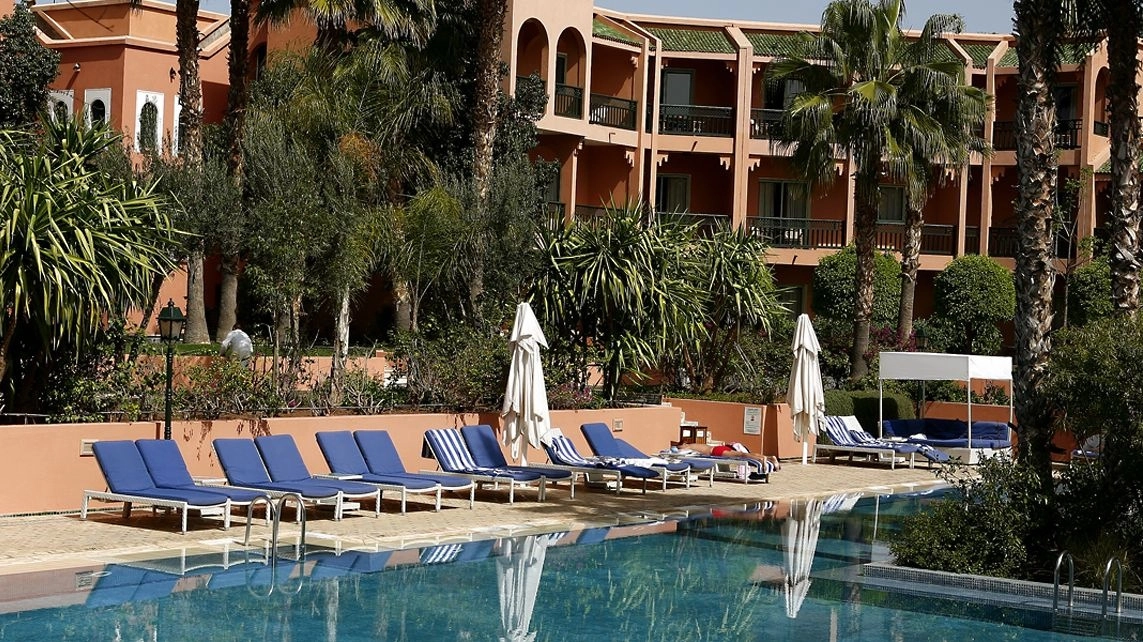
The ocher-colored hotel, inaugurated at the beginning of the 20th century, was built, during the protectorate, by French architects who clearly saw the beauty of the site overlooking a thirteen-hectare park with rare species. The land is planted with century-old olive trees, palm trees, orange trees, lemon trees, fig trees. Added to this lush and flowery green setting are mulberry trees, pines, tipuana tipu, banana trees, but also 2,500 plants such as ginger, delphinium, cosmos, twenty-one species of cacti and an armada of rose bushes. All this in addition to the vegetable garden with thirty species of vegetables: salads, tomatoes, aromatic plants and other peach trees. Some residents choose this historic hotel if only to study the gardens’ tasty gifts.
Winston Churchill came there to paint the peaks of the Atlas which emerge on the horizon, live scenes, and colorful bouquets. An exhibition of twelve paintings by the great man took place in these walls in 2014. Sir Winston, who today has a bar in his name in the Marican hotel, even invited Roosevelt and de Gaulle for a weekend of secrets – a bed the size of the great Charles had been installed in his suite.
The marvel of modernity and the best of tradition
Since the creation of the Mamounia, which had 50 rooms in 1923, the European gentry adopted this hotel near the Majorelle garden and the Djemaa El Fna square, a serene refuge bristling with Arab-Andalusian style buildings. In Marrakech, along the ramparts, the large hotel, owned by the Moroccan railway company, has no rival capable of transmitting this art of living.
Have no doubt, La Mamounia managed by the great French hotelier Robert Bergé, then by Didier Picot for the 2006 renovation, and today by Pierre Jochem from Raffles in Singapore, remains a destination in its own right. The old riad has shaped its legend over time. We respected the layout of the premises, the architecture, the comfort of the rooms and suites with terraces heated by the sun. Yes, Morocco is a cold country where the sun can be scorching: at the beginning of March 2017, the temperature rose from 24 to 30 degrees. In the Mamounia park, we enjoyed ice cream cones.
Let’s say it, the original Mamounia has maintained its aura, its splendor. Because we took care of her, the great Arab-Andalusian lady overcame the scars of time, weather, harsh winters and sultry summer. We cared about its future and, above all, we preserved its offered beauty, this something fabulous, so overwhelming to experience.
Let’s listen to Jacques Garcia, actor and author of the last renovation in 2006: “An eternal palace. Once upon a time there was Mamounia… It sounds like a tale from the depths of time. And yet, what could be newer, better anchored in our world than such a haven of life, rest, abundance and pleasure! Combining the marvelousness of modernity with the best of tradition is the privilege of such rare places that have remained faithful to their myth.» Quite a program.
Mixture of Berber arts and Arab-Andalusian traditions
Before Jacques Garcia, decorator André Paccard had added the fifth floor and infused Art Deco into the Marrakech ensemble, which was supposed to give a facelift to the declining Mamounia – the borrowed artifice was crude and out of place. Twenty years later, it is Jacques Garcia who inherits the challenge, the restoration of the palace that its executives and decision-makers wish to place in its historical heritage: the Arab-Andalusian architecture of which the princely Mamounia represents a reference monument. For the architect-decorator, it is a question of relying on Moroccan artists and craftsmen, bearers of two main sources: Berber arts and Arab-Andalusian traditions.
There are, in aesthetic forms, trades, techniques and know-how passed down from generation to generation. Jacques Garcia will rely on Moroccan artisans, virtuosos combining lines, repetition of patterns and a fascinating creative imagination. In these places of fervor, the eye is on the alert.
It will take three full years – and 120 million euros – to arrange the wood, the morocco leather, the terracotta mosaics, the colored zelliges (mosaic), the bejmat (earth tiles), the red stones (around the outdoor swimming pool), the sculpted plasters in the decorations, the tadelakt (the red, orange, yellow, tan wall coverings), the marble (modeled), the metal hammered for doors, coppers and bronzes, locks, precious objects… a true reconstitution of Moroccan art.
Lavish resurrection
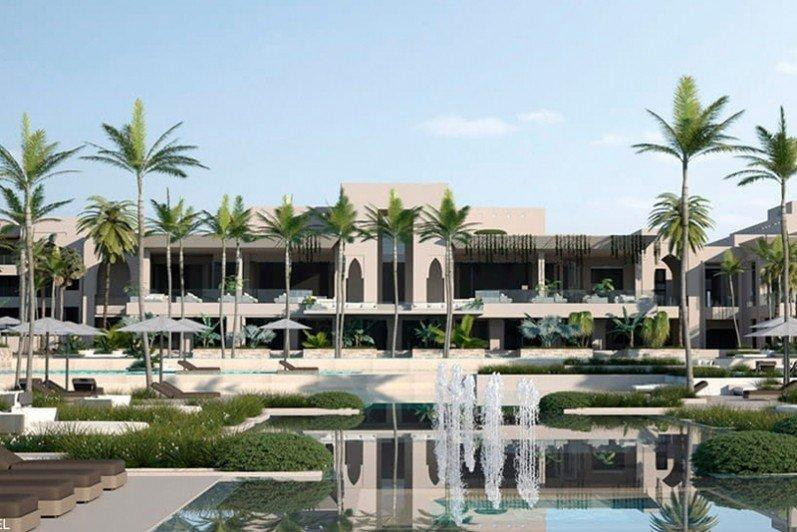
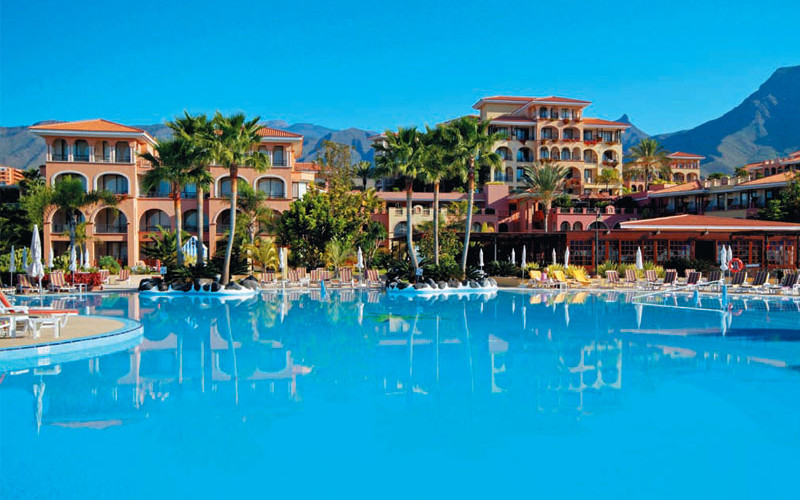
Thus took place, in the space of the buildings and oriental gardens, the rebirth of the calm and grandiose Mamounia thanks to the conductor Jacques Garcia and the teams of craftsmen who built the columns and the pillars, the moucharabieh (window grills), without forgetting the water supply, the fountains, the seven swimming pools and jacuzzi – it took 750 square meters of Italian marble, as for a palace Florentine.
Yes, this reconstruction lives up to the past and the myth rejuvenated, embellished like the palace of the Arabian Nights, all this coupled with a cultural, sensual experience which surpasses you and commands admiration. In 2015, La Mamounia was voted the best hotel in the Middle East and Africa by the readers of Condé Nast, a recognized name in the world of travel and a well-deserved distinction.
The most astonishing thing about this resurrection that is sumptuous and discreet at the same time, never flashy, is that the bucolic former princely riad has kept all its magic and soul from its origins.
The residence welcomes clients from all countries (French, Moroccan, English, German, Swiss, etc.) united by the splendor of the place. We feel so good there that certain regulars – some come three to four times a year – do not leave these places of aesthetic pleasure, and do not even have the desire to stroll around the city and wander around the Djemaa El Fna square.
Happiness is waiting for the caress of the senses near the orange trees, in the heart of the tended gardens like in Versailles, or reading near the turquoise swimming pool, taking mint tea near the menzeh, this Moroccan house under the leaves, and contemplating the peaks of the Atlas on the horizon, visible from some of the terraces of the 126 rooms, 71 suites, and 3 riads.
As strange as it may seem, you never get the impression that 680 employees are there to serve you like at the Ritz, the Plaza Athénée or the Palais in Biarritz. In fact, in Marrakech, the more large international chain hotels appear in the city (Pavillon Naoura Barrière nearby), outside towards the Palmeraie or further away (the Royal Palm), the more the luxury hotel offer increases (the Oberoi in sight and the Radisson inaugurated), the more the Mamounia with 5,000 rosebushes seems to you to be the place to be.
Sometimes, we might come across King Mohamed VI crossing the surrounding walls to treat himself to a family meal at a Moroccan restaurant, in the company of his wife and two children.
Royal, the aristocratic residence has 37,000 pieces of porcelain, sublime plates, in the spirit of the place, signed by Bernardaud, silk brocatelles on the walls: the smallest decorative detail seems to have been invented for the Mamounia.
source: slate