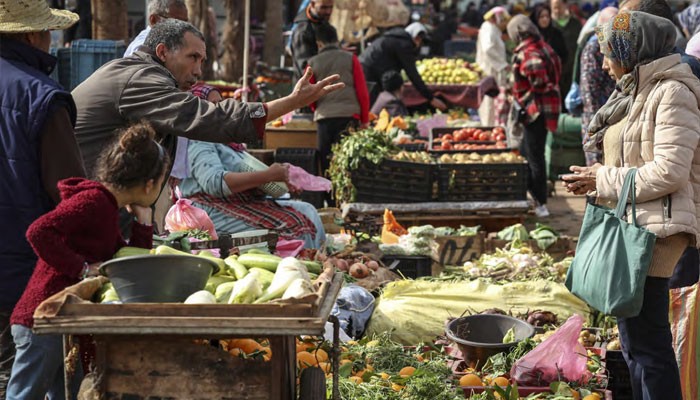

The Moroccan economy, despite encouraging signals such as the drop in the inflation rate, is sailing through troubled waters. While positive indicators emerge, including some price stabilization, economists warn of lingering risks that could jeopardize this lull, particularly in light of the geopolitical and regional challenges weighing on the national economy. Recently, Bank Al-Maghrib reported that, “although inflation has seen some lull, it is premature to conclude that inflationary risks have been overcome.” According to the specialized portal “Iktissadkom”, experts underline that “the Moroccan economy remains vulnerable to global economic fluctuations”. Indeed, the complexity and volatility of these fluctuations could cause inflation to rise at any time, especially given current geopolitical tensions. Quoted by the same source, Ali Rhanbouri, president of the Center for Economic Prospecting, stressed that maintaining the main interest rate at 2.75% reflects a prudent and thoughtful strategy of Bank Al-Maghrib since the start of the inflationary crisis. “This management has always been marked by a certain degree of restraint and prudence,” he said. This indicates that the central bank favors a gradual approach to monetary policy, choosing to increase interest rates by 0.5% when necessary, while avoiding abrupt adjustments that could destabilize the economy. Signs of improvement, however… Forecasts for the next two years suggest stability in core inflation around 2%, which represents a notable improvement from the peaks reached in 2022 and 2023, when inflation rates stood at 6.6% and 6.1%, respectively. This decrease is mainly attributed to the drop in prices of food products with volatile prices, which play a crucial role in price formation in Morocco. However, this lull could quickly come up against unfavorable external factors. The Russo-Ukrainian war, for example, continues to disrupt global supply chains and impact commodity prices, including oil. These external factors, combined with geopolitical tensions in the Middle East, create an uncertain economic environment that could have direct repercussions on the national economy. Another worrying factor is the impact of climatic conditions on Moroccan agriculture, the backbone of the national GDP. Recurring years of drought have already begun to take a heavy toll on agricultural production. Forecasts indicate an alarming drop in cereal production, from 55 million quintals in 2023 to less than 33 million in 2024. This highlights the vulnerability of the agricultural sector, which represents a significant part of the Moroccan economy and constitutes an essential source of income for many farmers. As a result, Bank Al-Maghrib was forced to revise its economic growth forecast downwards, adjusting them from 3.7% to 2.8%. This review illustrates the need for policymakers to implement robust and adaptive economic strategies to address these challenges. Towards a sustainable economic policy According to specialists, it is crucial that Morocco adopts a proactive approach to global economic fluctuations. Implementing economic resilience measures and diversifying sectors of activity could help reduce the dependence of the national economy on external factors. That could include increased investment in renewable energy, improving agricultural infrastructure to face climate challenges, and promoting innovation and technology in various sectors. Experts agree that close collaboration between government, the private sector and financial institutions will be essential to navigate these uncertain times. Maintaining a prudent monetary policy, combined with initiatives aimed at strengthening economic resilience, will be essential to protect the Moroccan economy and guarantee its sustainability in the face of future challenges.