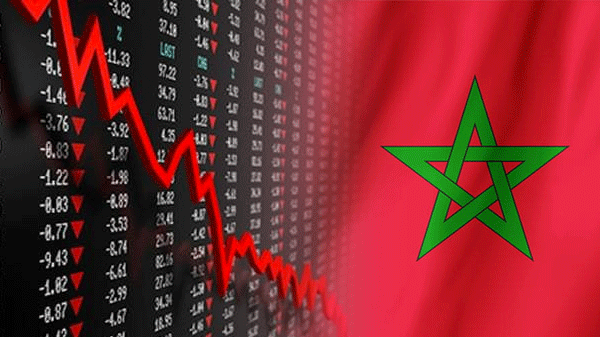

Since the start of 2023, the Moroccan economy has resisted international economic and geopolitical shocks. The monetary policy initiated by the Kingdom has made it possible, among other things, to maintain monetary stability. But it has not managed to curb the inflationary effect which has been hovering for a year now.
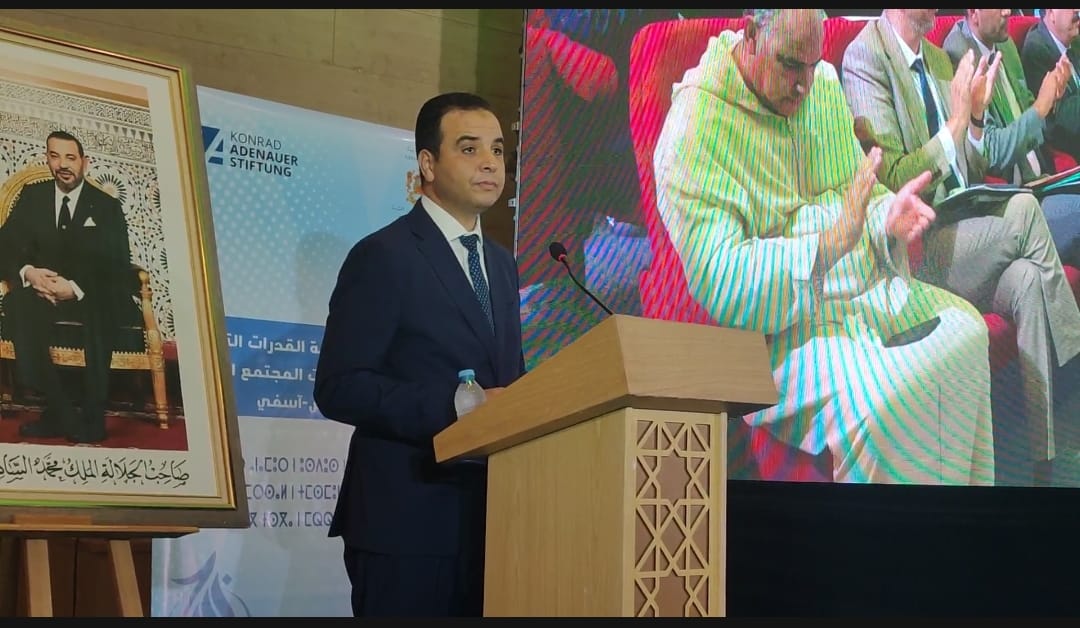
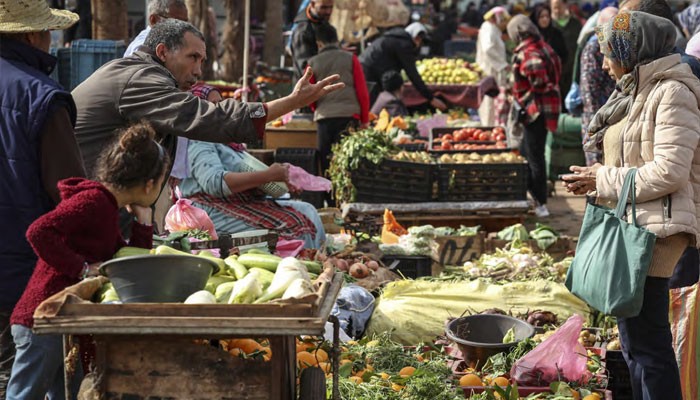
During the first quarter of 2023, the key rate increased by 50 basis points, going from 2.5% to 3%. This monetary policy implemented by Bank Al-Maghrib (BAM), in this case the increase in the key rate, was to influence the inflationary trend which has reached a worrying level in Morocco. This monetary tightening measure came in a critical context where inflation had reached 10.1% in February 2023. Described as worrying, the inflation phenomenon had reached a record level during the first three months of 2023, going from 8.9% in January to 10.1% in February, then to 8.7% in March of the same year. An upward trend which has been systematically accompanied by an increase in the consumer price index (CPI). The increase in the key rate should indirectly put a brake on the skyrocketing price of food products. But the opposite happened. This observation makes it legitimate to consider that the phenomenon of inflation is not the result of purely and simply internal factors, explains Kamal Zahraoui, assistant professor at the faculty of economic, legal and social sciences in Casablanca. Part of this inflation is imported, underlines Mehdi El Fakir, economic analyst. Despite the tightening monetary policy initiated by BAM since the beginning of this year, the rise in food prices does not seem to be contained. Indeed, the consumer price index (CPI) showed, in February 2023, an increase of 4% – the largest over the whole of 2023, of which fruits and vegetables contributed greatly. The fruit and vegetable component closed the first quarter of 2023 with a slight drop in the CPI, which increased significantly by 0.3%. “The national economy is increasingly demonstrating that we are an economy that has managed to maintain its fundamentals,” explains Mr. El Fakir. Despite the inflationary spiral, the national economy has maintained currency stability. “And even that of the key rate,” he continues. Economic growth estimated at 2.7% in 2023 is at an honorable level according to our interlocutor. External factors Macroeconomic fundamentals are good. However, Morocco’s economic model suffers from many inadequacies on the microeconomic level. In this regard, the economist points to the erosion of savings, the unemployment rate and the drop in confidence among households. Measures have been implemented to encourage savings such as, for example, the increase in the rate of term deposits and that of passbook accounts, but are they really sufficient to encourage households to save, especially since in this current context, the household basket has suffered the full brunt of the negative effect of inflation. For Kamal Zahraoui, the Moroccan economy faces a major challenge. On the one hand, the economic situation in Morocco is mainly impacted by purely external and exogenous factors. “In America, there was significant dollar printing,” he recalls. “This is a record level in the history of the world economy,” he says. This mass in circulation contributed to the depreciation of the currency of the dollar and the euro. Given that the dirham is indexed to the euro (60%) and the dollar (40%), and given that the two foreign currencies have seen their value fall, the impact on our currency has been felt, he analyzes. The Moroccan economic situation has paid the price. In short, the rise in prices is not a temporary cyclical fact but rather a structural one. Societal issues The sustainability of economic development is dependent on domestic demand, and de facto that of the middle class whose purchasing power has been heavily impacted. “We must accelerate structuring projects to create a solid economy,” advises Mr. El Fakir. “Social and societal disappearances risk harming our economy,” he notes. We must relaunch reforms rather than opting for procedural measures, he concludes. In addition, the unemployment rate recorded in Morocco since the start of 2023 has reached 12.4%, which is alarming. “The explosion of unemployment shows to what extent our economy suffers from societal problems, unfortunately,” he regrets.
source: maroc-hebdo.press.ma