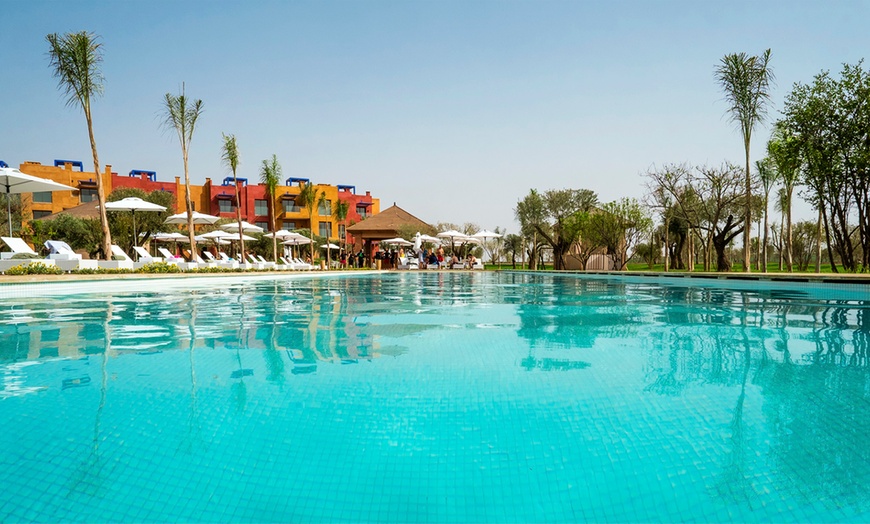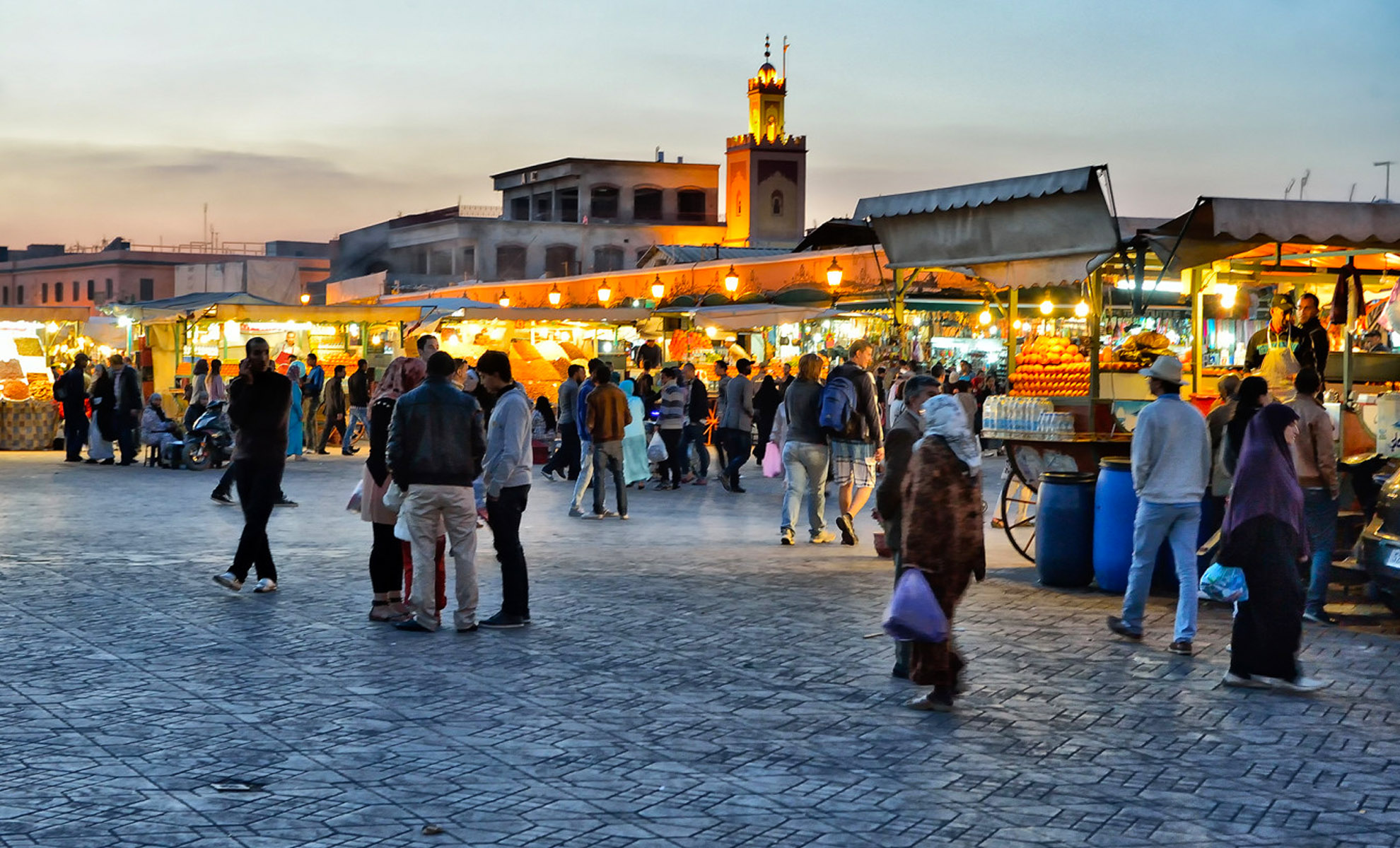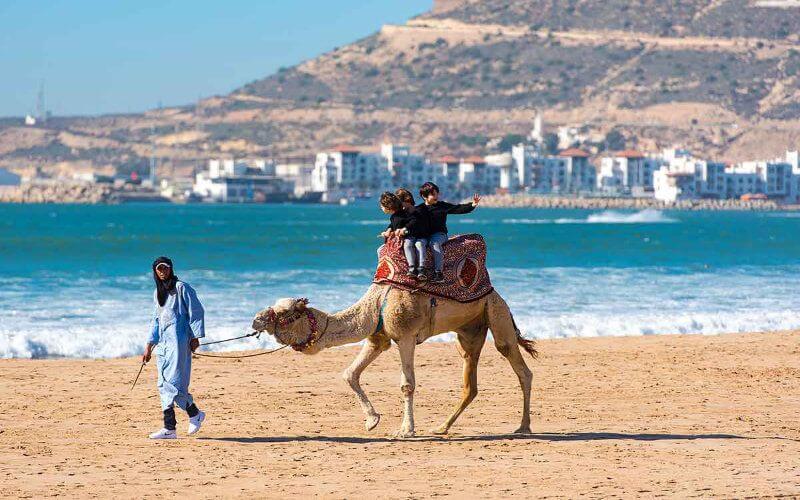

It’s (almost) over for Plan Azur. In a report of 120 pages relayed in particular by Jeune Afrique, the Court of Auditors no longer hides the wreck of this vast tourist project which has made more than one operator salivate. The document was developed at the expense of the Moroccan Society of Tourism Engineering (SMIT), manager of Plan Azur. The latter had placed the cursor very high by announcing the creation, by 2020, of six seaside resorts: Saïdia (Berkane), Khmis Sahel (Larache), El Haouzia (El Jadida), Mogador (Essaouira), Taghazout (Agadir) and Plage blanche (Guelmim).
The objective was clearly announced during the royal speech of January 10, 2001 in Marrakech: to boost the attractiveness of the Morocco destination. More precisely, it was a question of welcoming 10 million tourists per year to the kingdom in 2010. “A threshold of tourist arrivals that ‘the most beautiful country in the world’ can barely ensure in 2016, while it intends to double this objective by 2020…”, quips the weekly.
At the end of Vision 2010, another tourism development strategy, “Vision 2020” was launched through the 2011-2020 program contract of November 30, 2010, signed between the State and the private sector.
Empty beds and fire sales
Sixteen years later, the ambitions expected by this megaproject have been withdrawn in favor of a sidereal void. As evidenced by some figures from the report: “Halfway through Vision 2020 (end of June 2015, editor’s note), the results of the product project seem very weak. Indeed, in terms of litter capacity, out of an overall objective of 58,540 tourist beds for the six resorts, only 1,576 beds were created, i.e. a rate of 2.7% compared to the objective. »
Beyond a disappointing assessment in terms of litter capacity, the means mobilized by the State to bring the Plan Azur stations out of the ground have also been scrutinized. Thus, the document mentions land sold “at very advantageous conditions” for the investor. More than “advantageous”, their sale is akin to a generous discount: “For example, for Taghazout station, SMIT, a public company, sold the land to the investor at 50 DH/m2, a difference compared to the market price of 200 DH/m2, which constitutes a concession of 1.3 billion DH.”
Investors looking elsewhere
In addition to unoccupied beds and land sold for a modest sum, there is the backpedaling of certain private investors. The American Colony Capital withdrew from the Taghazout station, “leaving significant bank arrears outstanding”, deplores the Court of Auditors. The agreement was terminated in 2009.
It must be said that the operators contacted for this project, particularly in the North African and Middle Eastern region (MENA), were unconvincing: “The prospects approached by SMIT (…) are not always tourism specialists, but are generally investment funds, already having interests in real estate and tourism projects or seeking to diversify into tourism. Said prospects mainly come from Saudi Arabia, the United Arab Emirates, Turkey and China. In this regard, it should be noted the absence, among the prospects approached in the MENA zone, of major managers in the hotel industry or even in tourist activities,” further regrets the Court of Driss Jettou.