
On January 4, around 200 representatives of travel agencies gathered in front of the headquarters of the Ministry of Tourism to protest against the closure of borders, and to demand the application of emergency measures.
This January 4, several professionals belonging to different branches, but all linked to the tourism sector, gathered in front of the premises of the Ministry of Tourism to make their voices heard. In unison, they denounced the “dramatic collapse” of the sector, even going so far as to implore the government to have “pity on the economy and the people”.
As a reminder, Morocco’s borders have been closed since November 29. Initially planned for a period of two weeks, this closure was extended until January 31, 2022 due to the appearance of a case of the Omicron variant on the national territory on December 15. To date, there is nothing to suggest that this deadline will not be extended again.
Moroccan specificity
New Year festivities were canceled and a curfew from midnight to 6 a.m. was introduced on the night of December 31 to January 1. These measures, poorly received by part of the population, illustrate a Moroccan specificity, that of prevention, which some consider excessive.
A constant method of managing the health crisis that transcends political divisions. Former head of government Saâdeddine El Othmani (PJD) had already decided to close the borders in the middle of March 2020 with the countries most affected by the pandemic, including France, Italy, and Spain, after the appearance of a seventh case of contamination with the new coronavirus.
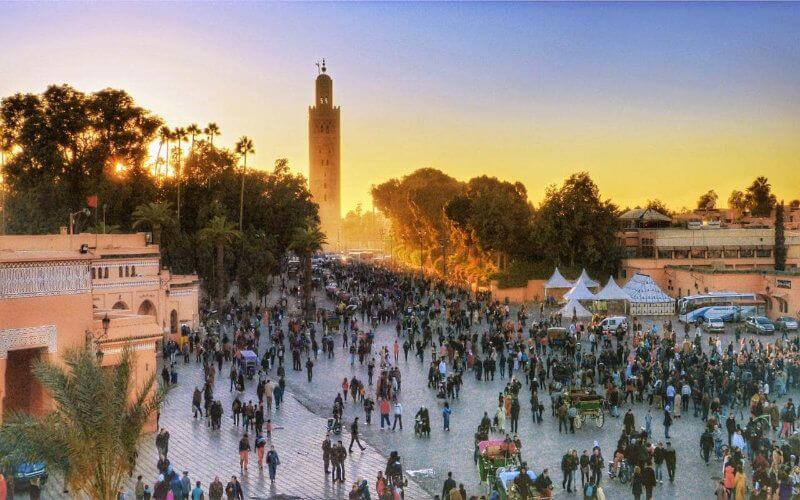
However, in a country where tourism represented 11% of GDP and 5% of jobs in 2019 and where cities like Marrakech are entirely dependent on tourism, the authorities’ prevention policy has turned into a nightmare for operators in the sector.
The drastic measures, often taken at the last moment, combined with a lack of visibility regarding their repeal, have caused distress among restaurateurs, hoteliers, and travel agencies, who have been calling for several months for a “Marshall Plan” to save the tourism industry.
The president of the National Federation of the Hotel Industry (FNIH), Lahcen Zelmat, no longer hesitates to directly blame the government. Contacted by JA, he denounces the non-application of an agreement in principle negotiated with the Minister of Tourism, Fatim-Zahra Ammor, in August 2021, containing ten measures, including the exemption from local taxes for closed establishments, or the postponement of credit deadlines. Lahcen Zelmat also calls for the State to take charge of its interests and, above all, for the reopening of borders.
source: jeuneafrique.com