DISCOVER MOROCCO
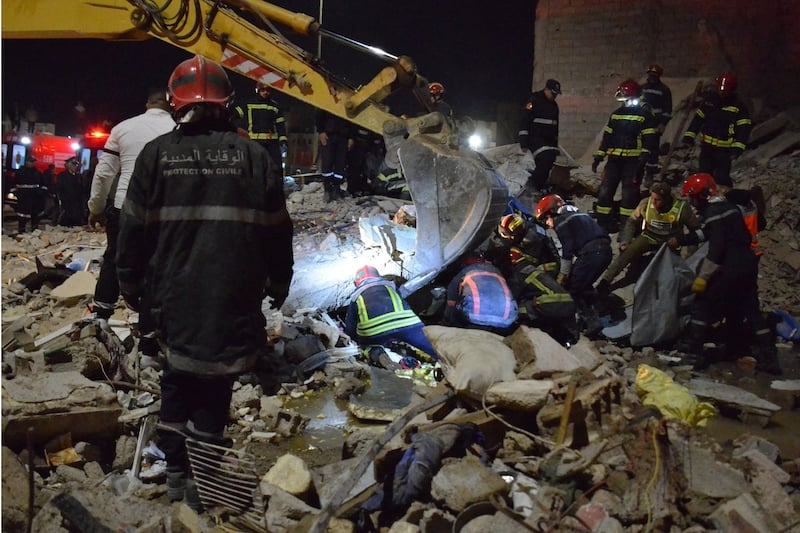
The tragedy of the collapse of buildings in Fez has revived the debate on urban security and the fundamental right to decent housing in high-density neighborhoods,Beyond emotion aroused, this event highlights the limits of public policies intended to guarantee the protection of citizens in the face of structural risks
The National Human Rights Council recalled, in a press release, the urgent need to strengthen citizens’ access to dignified housing, in accordance with Morocco’s constitutional and international commitments. warns against the repetition of collapses, which constitutes a direct attack on the right to housing as defined by international standards, calling for an anticipatory national strategy based on prevention, surveillance and transparency
The Council also insisted on the publication of the results of the ongoing judicial investigation and on the establishment of responsibilities, in application of the principle of correlation between responsibility and accountability. He underlined the importance of strengthening institutional coordination between the sectors concerned, the territorial administration and elected councils in order to place the security of residents at the heart of public policies. of an outdated management model”, which is still based on a vertical approach, far from the effective participation of citizens. He believes that it is becoming essential to involve residents and community stakeholders in the diagnosis, planning and monitoring of development operations, in order to avoid “the mechanical reproduction of the same errors”
According to him, families are still forced to live in unsanitary or cramped housing, despite the slogans of “cities without slums”, are exposed daily to latent risks of collapse, like those observed in Fez, Abdelilah El Khoudri, president of the Moroccan Center for Human Rights, shares the same observation. For him, the disaster reveals the failures of the “Cities without slums” program, which, despite its progress, suffers from structural weaknesses: lack of control over self-construction, unauthorized exceedances of technical standards, slowness in processing alerts, as well as cases of corruption hindering compliance with urban planning rules. true citizen participation must go beyond formal speeches to become an obligatory institutional mechanism: listening to grassroots associations, involvement of residents in the monitoring and maintenance of construction, transparent complaint mechanisms and protection of whistleblowers. The Fez tragedy thus underlines the need for a profound overhaul of housing policy, which is no longer limited to eradicating slums, but guarantees safe, sustainable and controlled construction
The housing of cent is not a simple administrative program, recalls El Khoudri, but a constitutional and international commitment which requires a culture of responsible and open governance. It remains to be seen whether this tragedy will constitute a turning point towards real reform, or whether it will join the long list of forgotten incidents. In all cases, the reconstruction of trust requires an urban model that truly puts the citizen at the center.