
Detection of a neutrino in the Mediterranean: Moroccan scientists at the heart of a historic discovery

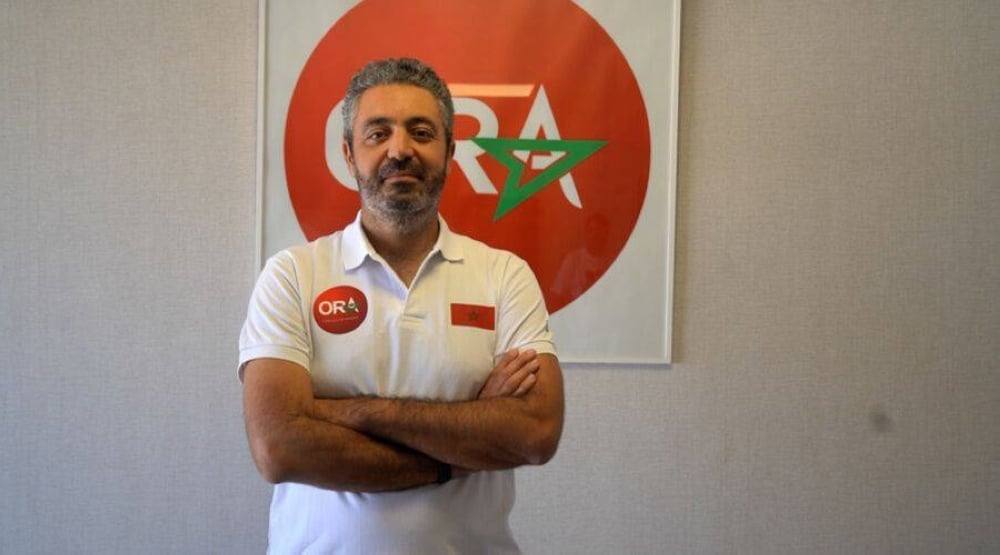
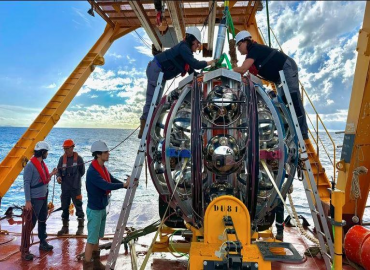
Moroccan scientists were at the heart of the recent historic discovery in the Mediterranean by the international KM3NeT telescope of a neutrino (particle) of an energy never before recorded in the field of high-energy astrophysics. This exceptional discovery, published in the prestigious journal “Nature”, was made possible thanks to this international telescope, a gigantic detector resulting from an international collaboration of which Morocco is an active member, the national coordinator of the KM3NeT project in Morocco, Pr. Yahya Tayalati, told MAP. Professor at the Mohammed V University of Rabat and affiliated professor at the Mohammed VI Polytechnic University of Benguerir (UM6P), Mr. Tayalati explains that the KM3NeT telescope is a large multidisciplinary research infrastructure made up of a network of underwater detectors installed in the Mediterranean abyss at a depth of 3,000 m. The detection and study of neutrinos constitute the main objective, through the detection of the light emitted following the passage and interaction of particles in sea water. The KM3Net telescope is produced thanks to an international collaboration bringing together renowned institutes and researchers belonging to 21 countries, including Morocco, he said. The Moroccan consortium is represented by the Universities Mohammed V of Rabat, Mohammed I of Oujda, Cadi Ayyad of Marrakech and Mohammed VI Polytechnique of Benguerir as official members, in addition to the National Center for Energy, Nuclear Sciences and Techniques (CNESTEN) as an observer member. Evoking aspects of this discovery, Pr. Tayalati recalls that the signal, called KM3-230213A and with an energy of 220 PeV (220 million billion electron volts), was captured on February 13, 2023 by the KM3NeT detector, located in the depths of the Mediterranean. This discovery, equivalent to ten thousand times the energy produced by the largest particle collider in the world, opens new perspectives on extreme astrophysical phenomena, such as supermassive black holes, Supernovas and gamma-ray bursts, sources of ultra-energetic cosmic neutrinos capable of crossing the Universe, he explains. Highlighting Morocco’s role as a partner of KM3NeT, Pr. Tayalati underlines that the Kingdom, which joined the collaboration in 2016, has established two construction sites for KM3NeT, the only ones outside of Europe, one at the Faculty of Sciences in Rabat dedicated to the integration of digital optical modules detecting the light trail from neutrinos, and the other at the Faculty of Sciences. from Oujda for the integration of electronics allowing communication with these optical modules. The scientist highlights Morocco’s commitment to this international project, with Moroccan researchers playing a key role in the various physical programs. “The Kingdom’s commitment to this major breakthrough clearly illustrates the importance that Moroccan universities attach to scientific research and their strategic role in cutting-edge projects on a global scale,” he said, noting that this initiative represents a real opportunity for the transfer of cutting-edge high technology to Morocco, thus strengthening the mastery of tools and know-how which will open up opportunities for industrialists as well as new perspectives for young researchers in the country. According to him, this major scientific advance is the result of high-level collaborative work, involving teams of researchers whose expertise and commitment have pushed the frontiers of our understanding of the Universe. And to note that the publication of this result by the The specialized journal “Nature” is recognition of the quality and global impact of this work. “We are proud to bring Moroccan research to the world stage and to contribute to a scientific and technological advance that will mark the history of particle astrophysics,” he rejoices. For his part, the coordinator of the KM3NeT project at the Mohammed I University of Oujda, Abdelilah Moussa, notes that “this discovery is the result of an exceptional collective effort which demonstrates that scientific excellence can be achieved by young researchers engaged in leading international projects”. He also underlines that “this success illustrates the importance of structured and lasting support for actors who actively contribute to the influence of scientific and technological research”. Strengthening these initiatives represents a valuable opportunity to stimulate innovation and enhance Morocco’s scientific potential, while promoting the emergence of a new generation of scientists through targeted mentoring programs, he said.